THE CLASSIC COLLECTION✦Letters on LiteratureCLASSIC FREE BOOKS
Letters on Literature
Andrew Lang
THE CLASSIC COLLECTION · 1901
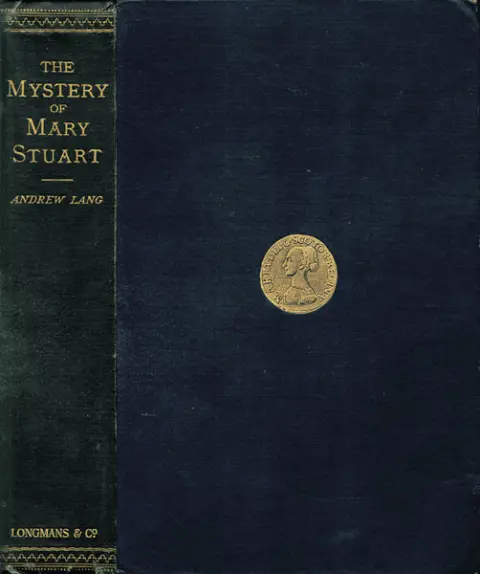
"The Mystery of Mary Stuart" by Andrew Lang is a historical account written in the late 19th century. It explores the complexities surrounding the life and reign of Mary Stuart, Queen of Scots, particularly focusing on her trials, enemies, and the controversial "Casket Letters" which implicated her in various conspiracies. Lang aims to unravel the truth behind the historical events that led to her downfall, scrutinizing both her character and the motives of those around her. The opening of the text introduces the intricate web of personalities involved in the tragic story of Mary Stuart, providing a rich prelude to her struggles for power amidst political intrigue and personal betrayal. Lang illustrates the historical setting, emphasizing the socio-political climate of Scotland during Mary’s reign and the pivotal figures that shaped her narrative, including her husbands, noble adversaries, and loyal aides. The insight into her characterized traits, motives, and the events leading up to her troubles, including the infamous murder of her second husband, Darnley, sets a compelling stage for a deeper exploration of her life. The reader is invited to reflect on the multifaceted interactions of these historical figures and the enduring debate over Mary Stuart's guilt or innocence in the eyes of history.
Introduction adapted from the source catalogue; source summaries may be automatically generated.
Free to read · English · 123,454 words · No account needed
MAKE TIME FOR A GOOD BOOK
On by default. Untick to stop anonymous reading totals. Each page counts after 10 seconds in view. How this works.
Anonymous counting is on unless you have switched it off.
[364] ‘Je m’en deferay au hazard de la faire entreprandre:’ the translators, not observing the gender referring to the maid, have blundered.
[365] It appears that they did not officially put in this compromising Ainslie paper. Cecil’s copy had only such a list of signers ‘as John Read might remember.’ His copy says that Mary approved the band on May 14, whereas the Lords allege that she approved before they would sign. Bain, ii. 321, 322. A warrant of approval was shown at York. Bain, ii. 526. Cf. supra, p. 254, note 3.
[366] Labanoff, ii. 32-44.
[367] Maitland of Lethington, ii. 224.
[368] Lethington to Beaton, October 24, 1566; cf. Keith, ii. 542.
[369] ‘The safety,’ ‘la seurete.’ Mr. Henderson’s text has ‘la seincte.’ The texts in his volume are strangely misleading and incorrect, both in the English of Letter II. and in the copies of the original French.
[370] This means a ring in black enamel, with representations of tears and bones, doubtless in white: a fantastic mourning ring. Mary left a diamond in black enamel to Bothwell, in June, 1566.
[371] This coincidence was pointed out to me by Mr. Saintsbury.
[372] By the way, she says to Norfolk, in the same Letter, ‘I am resolvid that weale nor wo shall never remove me from yow, If yow cast me not away.’ Compare the end of this Letter VIII.: ‘Till death nor weal nor woe shall estrange me’ (jusques à la mort ne changera, car mal ni bien oncque ne m’estrangera). Now the forger could not copy a letter not yet written (Labanoff, iii. 5). This conclusion of her epistle is not on the same level as the customary conclusion--the prayer that God will give the recipient long life, and to her--something else. That formula was usual: ‘Je supplie Dieu et de vous donner bonne vie, et longue, et a moy l’eur de votre bonne grasse.’ This formula, found in Mary’s Letters and in the Casket Letters, also occurs in a note from Marguerite de France to the Duchesse de Montmorency (De Maulde, Women of the Renaissance, p. 309). A forger would know, and would insert the stereotyped phrase, if he chose.
[373] On the point of wearing a concealed jewel in her bosom, the curious may consult the anecdote, ‘Queen Mary’s Jewels,’ in the author’s Book of Dreams and Ghosts.
[374] In Laing, ii. 234.
[375] Cecil’s Journal.
[376] Cecil’s Journal.
[377] Laing, ii. 285.
[378] Laing, ii. 289.
[379] Laing, ii. 325, 326. Laing holds that between April 21 and April 23 Mary wrote Letters V. VI. VII. VIII. and Eleven Sonnets to Bothwell: strange literary activity!
[380] Froude, iii. 75, note 1.
[381] Teulet, ii. 169, 170.
[382] Labanoff, iii. 5.
[383] Labanoff, iii. 64.
[384] Spanish Calendar, i. 659.
[385] Bain, ii. 329, 330.
[386] Privy Council Register.
Your reading position is saved on this browser. Take it to another device with a library code. Reading pages adapt to text, rather than matching a printed edition.
Andrew Lang
Andrew Lang
Andrew Lang

Andrew Lang
BEHIND THE BOOK
This eBook is for the use of anyone anywhere in the United States and most other parts of the world at no cost and with almost no restrictions whatsoever. You may copy it, give it away or re-use it under the terms of the Project Gutenberg License included with this eBook or online at www.gutenberg.org. If you are not located in the United States, you will have to check the laws of the country where you are located before using this eBook. Read the source licence.
The original source file, including credits and licence, is retained by this library. Request an original-format copy at no charge. Please include the book title and Project Gutenberg identifier #42910.
KEEP YOUR CURIOSITY GOING
Cécile Tormay

Moritz Busch
John L. Ransom
Frances Wright
Cécile Tormay

Mabel Potter Daggett