THE CLASSIC COLLECTION✦Letters on LiteratureCLASSIC FREE BOOKS
Letters on Literature
Andrew Lang
THE CLASSIC COLLECTION · 1901
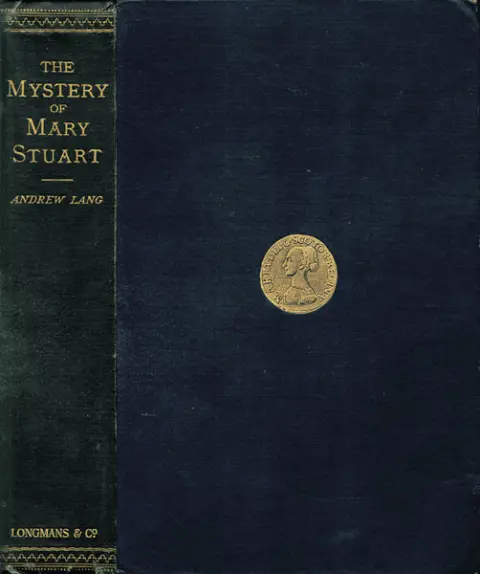
"The Mystery of Mary Stuart" by Andrew Lang is a historical account written in the late 19th century. It explores the complexities surrounding the life and reign of Mary Stuart, Queen of Scots, particularly focusing on her trials, enemies, and the controversial "Casket Letters" which implicated her in various conspiracies. Lang aims to unravel the truth behind the historical events that led to her downfall, scrutinizing both her character and the motives of those around her. The opening of the text introduces the intricate web of personalities involved in the tragic story of Mary Stuart, providing a rich prelude to her struggles for power amidst political intrigue and personal betrayal. Lang illustrates the historical setting, emphasizing the socio-political climate of Scotland during Mary’s reign and the pivotal figures that shaped her narrative, including her husbands, noble adversaries, and loyal aides. The insight into her characterized traits, motives, and the events leading up to her troubles, including the infamous murder of her second husband, Darnley, sets a compelling stage for a deeper exploration of her life. The reader is invited to reflect on the multifaceted interactions of these historical figures and the enduring debate over Mary Stuart's guilt or innocence in the eyes of history.
Introduction adapted from the source catalogue; source summaries may be automatically generated.
Free to read · English · 123,454 words · No account needed
MAKE TIME FOR A GOOD BOOK
On by default. Untick to stop anonymous reading totals. Each page counts after 10 seconds in view. How this works.
Anonymous counting is on unless you have switched it off.
[355] Nelson, according to Miss Strickland (Mary Stuart, ii. 178, 1873), left Edinburgh for England, and was detained by Drury for some months at Berwick. For this Miss Strickland cites Drury to Cecil, Berwick, February 15, 1567, a letter which I am unable to find in the MSS. But the lady is more or less correct, since, on February 15, Mary wrote to Robert Melville, in England, charging him, in very kind terms, to do his best for Anthony Standen, Darnley’s friend, who was also going to England (Frazer, The Lennox, ii. 7). A reference to Cal. For. Eliz. viii. 193, No. 1029, shows that a letter of Mary to Drury, asking free passage for Standen and four other Englishmen, is really of March 15, not of February 15. Again, a letter of March 8, 1567, from Killigrew, at Edinburgh, to Cecil, proves that ‘Standen, Welson, and Guyn, that served the late king, intend to return home when they can get passport’ (Bain, ii. 347, No. 479). Now ‘Welson’ is obviously Nelson. On June 16, Drury allowed Standen to go south (Cal. For. Eliz. viii. 252, No. 1305). Nelson, doubtless, also returned to Lennox. It is odd that Lennox, having these two witnesses, should vary so much, in his first indictment, from the accepted accounts of events at Kirk o’ Field. This Anthony Standen is the younger of the two brothers of the same name. The elder was acting for Darnley in France at the time of the murder. He lived to a great age, recounting romances about his adventures.
[356] Mr. Hay Fleming suggests that ‘Jhone a Forret’ may be Forret of that ilk--of Forret near Cairnie. Of him I have no other knowledge.
[357] Hatfield MSS. Calendar, i. 376, 377.
[358] Melville, Memoirs, 173, 174. Hosack’s Mary, i. 536 (The Book of Articles). Anderson, ii. 18, 19 (Detection). Cecil’s Journal, under date Saturday, February 8, has ‘She confronted the King and my lord of Halyrodhouse conforme to hir letter wryttin the nycht before:’ that is, this Letter III.
[359] Mr. Hosack makes an error in averring that no letter as to this intrigue was produced at Westminster or later; that the letter was only shown at York in October, 1568. There and then Moray’s party ‘inferred, upon a letter of her own hand, that there was another meane of a more cleanly conveyance devised to kill the King’ (Goodall, ii. 142; Hosack, i. 409, 410). The letter was that which we are now considering.
[360] The Scots has ‘handling.’ The Cambridge MS. of the Scots translation reads ‘composing of thame,’ from ‘le bien composer de ceux’ in the original French.
[361] Dr. Bresslau notes several such coincidences, but stress cannot be laid on phrases either usual, or such as a forger might know to be favourites of Mary’s.
[362] Laing, ii. 286.
[363] Mary Queen of Scots, vol. ii. No. 63.
Your reading position is saved on this browser. Take it to another device with a library code. Reading pages adapt to text, rather than matching a printed edition.
Andrew Lang
Andrew Lang
Andrew Lang

Andrew Lang
BEHIND THE BOOK
This eBook is for the use of anyone anywhere in the United States and most other parts of the world at no cost and with almost no restrictions whatsoever. You may copy it, give it away or re-use it under the terms of the Project Gutenberg License included with this eBook or online at www.gutenberg.org. If you are not located in the United States, you will have to check the laws of the country where you are located before using this eBook. Read the source licence.
The original source file, including credits and licence, is retained by this library. Request an original-format copy at no charge. Please include the book title and Project Gutenberg identifier #42910.
KEEP YOUR CURIOSITY GOING
Cécile Tormay

Moritz Busch
John L. Ransom
Frances Wright
Cécile Tormay

Mabel Potter Daggett