THE CLASSIC COLLECTION✦Letters on LiteratureCLASSIC FREE BOOKS
Letters on Literature
Andrew Lang
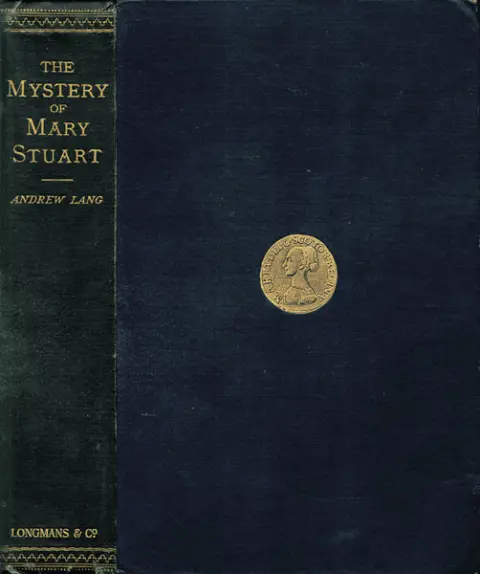
THE CLASSIC COLLECTION · 1901
"The Mystery of Mary Stuart" by Andrew Lang is a historical account written in the late 19th century. It explores the complexities surrounding the life and reign of Mary Stuart, Queen of Scots, particularly focusing on her trials, enemies, and the controversial "Casket Letters" which implicated her in various conspiracies. Lang aims to unravel the truth behind the historical events that led to her downfall, scrutinizing both her character and the motives of those around her. The opening of the text introduces the intricate web of personalities involved in the tragic story of Mary Stuart, providing a rich prelude to her struggles for power amidst political intrigue and personal betrayal. Lang illustrates the historical setting, emphasizing the socio-political climate of Scotland during Mary’s reign and the pivotal figures that shaped her narrative, including her husbands, noble adversaries, and loyal aides. The insight into her characterized traits, motives, and the events leading up to her troubles, including the infamous murder of her second husband, Darnley, sets a compelling stage for a deeper exploration of her life. The reader is invited to reflect on the multifaceted interactions of these historical figures and the enduring debate over Mary Stuart's guilt or innocence in the eyes of history.
Introduction adapted from the source catalogue; source summaries may be automatically generated.
Free to read · English · 123,454 words · No account needed
MAKE TIME FOR A GOOD BOOK
On by default. Untick to stop anonymous reading totals. Each page counts after 10 seconds in view. How this works.
Anonymous counting is on unless you have switched it off.
De Foix (French ambassador), Cecil’s account to him of Riccio’s murder,
68
De Silva (Spanish ambassador) discusses, with Elizabeth, Mary’s share in Darnley’s murder, 171, 172; knowledge of the Casket Letters, 197; mentions their existence to Elizabeth, 201; statement made to him by Mary’s confessor, 210; Moray reports a guilty letter of Mary’s, 211, 214; notifies Elizabeth of the Lords’ possession of the Casket Letters, 353
‘Detection,’ on the Craigmillar conference, 96;
on the Casket Letters, 200
‘Diurnal of Occurrents,’ quoted, 36, 139, 292, 378, 380
Douglas, Archibald (cousin of Morton), the ‘parson of Glasgow,’ 30, 31;
in Riccio’s murder, 31;
in Darnley’s murder, 31, 147, 148, 274;
Morton’s go-between, 31;
judge of Court of Session, 32, 147;
career of treachery, 32, 33;
states the existence of the Darnley murder band, 87, 90;
letter to Mary in exile, 89;
account of the band signed by Moray, 91;
endeavours to propitiate Mary, 117, 118, 119;
considered as a forger of the Letters, 362
Douglas, George, concerned in Riccio’s murder, 65; witness against Moray and Lethington, 76
Douglas, Lady (Moray’s mother), 20
Douglas, Robert (brother of Archibald), at the discovery of the Casket
Letters, 275
Douglas, Sir George (father of the Earl of Morton), his treacherous
character, 29
Douglas, William, rescuer of Mary from Loch Leven, 6, 7, 34
Douglas, William (of Whittingham), accuses his brother Archibald of forging letters, 32, 362
Dragsholm, Castle of, in Denmark, where Bothwell died, 372, 373
Drummond Castle, Mary at, 112
Drumquhassel, 35
Drury, quoted, on Captain Cullen, 152;
aware of Bothwell’s projected seizure of Mary, 180;
stays Nelson at Berwick, 319 note
Du Croc (French ambassador), on Bothwell’s courage, 16; on differences between Darnley and Mary, 85, 86, 95; high opinion of Mary, 87; on Bothwell’s wound, 93; declines to meet Darnley, 106; finds Mary in tears at Stirling, 107; opposed to Mary’s marriage with Bothwell, 183; on Lethington’s interview with Mary after Carberry, 188; leaves Scotland with copies of Casket Letters, 197, 198, 199
Dunbar, Mary at, 180, 186
Dunblane, Bishop of, letter presented by him to the Court of France in excuse of Mary’s marriage with Bothwell, 331, 333; coincidence of Mary’s instruction to, with Letter VII., 359, 360
Durham, Sandy (Bothwell’s servant), asks Paris for the key of Kirk o’
Field, 163
Durie, Rev. John, receives Morton’s confession, 148
Edinburgh, Mary’s midnight revels in, 4;
in Mary’s time, 40, 41, 42;
insanitariness, 41;
street brawling, 43;
social condition, 43;
house in, referred to in Mary’s letters, 316, 317, 318
Edinburgh Castle, Bothwell prisoner in, 51, 53;
Mary gives birth to James VI. at, 75;
Sir James Balfour holds, 274
Eglintoun, Lord, an untrustworthy Lennoxite, 110, 111; evades subscription to the Ainslie band, 178
Your reading position is saved on this browser. Take it to another device with a library code. Reading pages adapt to text, rather than matching a printed edition.
Andrew Lang
Andrew Lang
Andrew Lang

Andrew Lang
BEHIND THE BOOK
This eBook is for the use of anyone anywhere in the United States and most other parts of the world at no cost and with almost no restrictions whatsoever. You may copy it, give it away or re-use it under the terms of the Project Gutenberg License included with this eBook or online at www.gutenberg.org. If you are not located in the United States, you will have to check the laws of the country where you are located before using this eBook. Read the source licence.
The original source file, including credits and licence, is retained by this library. Request an original-format copy at no charge. Please include the book title and Project Gutenberg identifier #42910.
KEEP YOUR CURIOSITY GOING
Cécile Tormay

Moritz Busch
John L. Ransom
Frances Wright
Cécile Tormay

Mabel Potter Daggett