THE CLASSIC COLLECTION✦Letters on LiteratureCLASSIC FREE BOOKS
Letters on Literature
Andrew Lang
THE CLASSIC COLLECTION · 1901
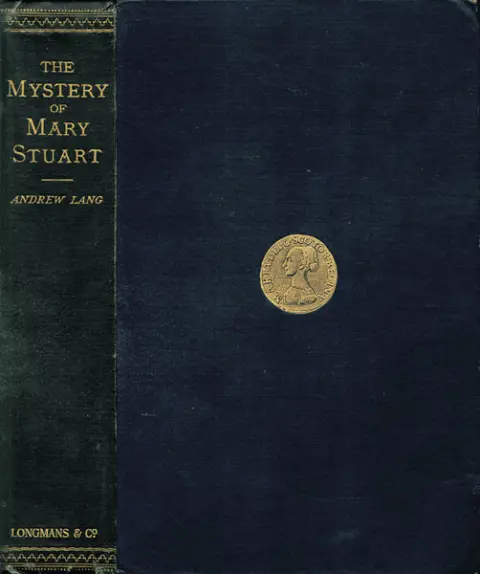
"The Mystery of Mary Stuart" by Andrew Lang is a historical account written in the late 19th century. It explores the complexities surrounding the life and reign of Mary Stuart, Queen of Scots, particularly focusing on her trials, enemies, and the controversial "Casket Letters" which implicated her in various conspiracies. Lang aims to unravel the truth behind the historical events that led to her downfall, scrutinizing both her character and the motives of those around her. The opening of the text introduces the intricate web of personalities involved in the tragic story of Mary Stuart, providing a rich prelude to her struggles for power amidst political intrigue and personal betrayal. Lang illustrates the historical setting, emphasizing the socio-political climate of Scotland during Mary’s reign and the pivotal figures that shaped her narrative, including her husbands, noble adversaries, and loyal aides. The insight into her characterized traits, motives, and the events leading up to her troubles, including the infamous murder of her second husband, Darnley, sets a compelling stage for a deeper exploration of her life. The reader is invited to reflect on the multifaceted interactions of these historical figures and the enduring debate over Mary Stuart's guilt or innocence in the eyes of history.
Introduction adapted from the source catalogue; source summaries may be automatically generated.
Free to read · English · 123,454 words · No account needed
MAKE TIME FOR A GOOD BOOK
On by default. Untick to stop anonymous reading totals. Each page counts after 10 seconds in view. How this works.
Anonymous counting is on unless you have switched it off.
Craig (Protestant preacher), denounces Mary’s marriage with Bothwell, 183; Lethington’s statement to him of his offer to Mary, 188
Craigmillar Castle, conference at, 91, 95, 96, 98, 99, 103, 319, 320
Crawford, Thomas (Lennox’s retainer), 35;
on Mary’s visit to Darnley at Glasgow, 113;
Lennox’s letter to him, 226;
deposition at Westminster, 276;
second deposition, 280, 310;
substantiates part of Letter II., 297;
verbal identities of his deposition with, and differences from, Letter
II., 303, 304, 305, 306, 307, 385, 389, 390;
his private character, 309, 310, 312;
one indication of the truth of his oath, 311;
deposition anglicised from the Scots, 312;
full text of his deposition, 427-431
Crokat, May (Mrs. Stirling), sees the murderers of Darnley, 147
Cullen, Captain James (a soldier of fortune), 35;
officer of the guard to Mary, 151;
share in the Darnley murder, 152;
executed, 153;
his evidence burked, 156
Cunningham, Robert (Lennox’s retainer), Lennox’s letter to him, 226
Dalgleish, George (Bothwell’s valet), his confession regarding Darnley’s murder, 84, 143, 144, 145, 146, 167, 195, 274, 278; under torture reveals the Casket, 275; executed, 144
Darnley, Henry Lord (son of Earl of Lennox), genealogy, 10;
letter to Mary Tudor, 10;
physical, moral and mental characteristics, 11, 18;
influence on Mary, 12;
marries her, 13, 57;
petulance and arrogance of his disposition, 13;
habits and health, 13;
on the possessions of Moray, 19;
his tragic end foretold in spiritual visions, 37;
at feud with the Lennox Stewarts, 58;
estranged from Mary, 59;
fondness for hunting, 60, 61, 62, 63;
removed from Mary’s Council, 60, 62;
at Peebles, 62;
affects to believe in, and have proofs of, Riccio’s amour with Mary,
63, 65, 67;
schemes with his father to obtain the crown, 66;
in league with Ruthven and Morton, 67;
present at Riccio’s slaying, 67;
list of those who aided him in the murder, 67;
his treachery to his associates after Riccio’s murder, 71;
Mary’s growing dislike of him, 73;
tale of Mary’s proposal to him to make Lady Moray his mistress, 74, 86;
urged to ruin Moray and Lethington, 76;
Mary’s gift of a bed to him, 81;
at Meggatdale with Mary, 81;
threatens to fly the country, 84, 85;
invited to state his grievances before the Council, 85;
powerful nobles against him, 85, 87;
determined not to be present at the baptism of his son, 86;
evidence of a signed ‘band’ against him, 87, 88, 90;
visits Mary at Jedburgh, 95, 96;
warned by Lennox of a plan to put him in ward, 101;
does not attend his son’s baptism, 105;
denied his title to the kingship, 106;
will not associate with the English therefor, 106;
anecdote of his treatment by Mary, at Stirling, 107;
wild projects attributed to him, 108;
complains of Mary to the Pope and Catholic Powers, 109;
rumours of his intended arrest, 111;
falls ill at Glasgow, 112;
his reply to Mary when she offers to visit him, 112;
Crawford’s account of his interview with Mary, 113;
returns with her to Edinburgh, 113;
the poison suggestion of his illness, 114;
brought to Kirk o’ Field, 115;
situation, environs, and interior of Kirk o’ Field, 123-133;
his letter to Lennox three days before his death, 133;
Mary’s interview with him on the eve of the explosion, 135;
his last hours, 136;
statements and theories of the manner of his death, 136, 138, 139,
140, 141, 142, 149, 150;
confessions of some of his murderers, 141-153;
his probable murderers, 169;
the band for his murder, 381-385
Your reading position is saved on this browser. Take it to another device with a library code. Reading pages adapt to text, rather than matching a printed edition.
Andrew Lang
Andrew Lang
Andrew Lang

Andrew Lang
BEHIND THE BOOK
This eBook is for the use of anyone anywhere in the United States and most other parts of the world at no cost and with almost no restrictions whatsoever. You may copy it, give it away or re-use it under the terms of the Project Gutenberg License included with this eBook or online at www.gutenberg.org. If you are not located in the United States, you will have to check the laws of the country where you are located before using this eBook. Read the source licence.
The original source file, including credits and licence, is retained by this library. Request an original-format copy at no charge. Please include the book title and Project Gutenberg identifier #42910.
KEEP YOUR CURIOSITY GOING
Cécile Tormay

Moritz Busch
John L. Ransom
Frances Wright
Cécile Tormay

Mabel Potter Daggett