The Owls’ House
Crosbie Garstin
THE CLASSIC COLLECTION · 1919
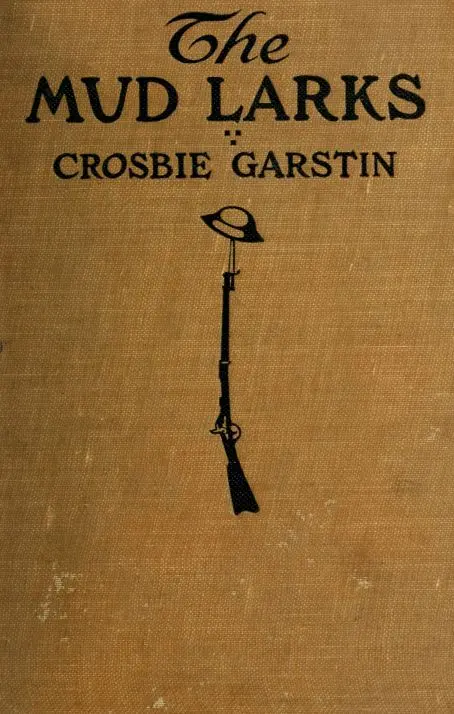
"The Mud Larks" by Crosbie Garstin is a novel written in the early 20th century, likely during or just after World War I. This work is characterized by its humorous and satirical take on military life and war experiences, centering around the interactions and antics of soldiers in the trenches and the absurdity of their situations. The narrative introduces characters such as Frederick Delano Milroy, a comical figure from the protagonist's past, setting the stage for a blend of camaraderie and dark humor against the backdrop of war. The opening of the novel presents a vivid portrayal of life in the trenches, highlighting the protagonist's reunion with Milroy, now a fellow soldier. Their reunion leads to a series of humorous anecdotes, such as Milroy's previous literary failures and a troubling experience shared with ferrets in their cramped dugout. This sets the tone for the story, combining light-hearted banter with grim realities of war. The narrative feels lively with wit, showcasing both the absurdity of military life and the friendships that form in such challenging circumstances.
Introduction adapted from the source catalogue; source summaries may be automatically generated.
Free to read · English · 45,443 words · No account needed
MAKE TIME FOR A GOOD BOOK
On by default. Untick to stop anonymous reading totals. Each page counts after 10 seconds in view. How this works.
Anonymous counting is on unless you have switched it off.
"That you, Flossie? No, you can't go with them tail feathers missing to the General's cat. Jellicoe--no, you can't go neither, you've 'ad a 'ard day out with them tanks. Nasty cough you've got, Gaby; I'll give you a drop of 'ot for it presently. You're breathin' very 'eavy, Joffre; been over-eatin' yourself again, I suppose--couldn't fly a yard. Eustace, you're for it."
He backed down the ladder, grasping the unfortunate Eustace, stuffed it in a basket and handed it to me.
"I hope this is a good bird," said I, "nippy and all that?"
The fancier snorted, "Good bird? Nothing can't stop 'im, barrages, smoke, nothing. 'E's deserved the V.C. scores of times over; 'e's the best bird in the army, an' don't you forget it, sir."
I promised not to, caught up the basket and fled.
I reached the neighbourhood of the line at about 2 a.m. It was snowing hard and the whole front was sugared over like a wedding-cake, every track and landmark obliterated. For some hours I groped about seeking Battalion H.Q., tripping over hidden wire, toboganning down snow-masked craters into icy shell-holes, the inimitable Eustace with me. Finally I fell head-first into a dug-out inhabited by three ancient warriors, who were sitting round a brazier sucking cigarettes. They were Brigade Scouts, they told me, and were going over presently. They were also Good Samaritans, one of them, Fred, giving me his seat by the fire and a mug of scalding cocoa, while his colleagues, Messrs. Alf and Bert, attended to Eustace, who needed all the attention he could get. I caught snatches of their conversation here and there: "Shall us toast 'im over the brazier a bit, Alf?" "Wonder if a drop o' rum would 'earten 'im?" "Tip it into his jaws when 'e yawns, Bert."
At length Eustace's circulation was declared restored and the three set about harnessing themselves for the war, encasing their legs in sand-bags, winding endless mufflers round their heads and donning innumerable odd overcoats, so that their final appearance was more that of apple-women than scouts.
We then set out for the battle, Bert leading the way towards the barrage which was cracking and banging away in yellow flashes over the Boche lines.
Presently we heard a muffled hail ahead.
"Wazzermatter, Bert?" Alf shouted.
"They've quit--slung their 'ook," came the voice.
Fifty yards brought us bumping up against Bert, who was prodding through the débris of a German post with the point of his bayonet.
"So the swines have beat it?" said Fred. "Any soovenirs?"
"Nah!" said Bert, spitting, "not a blinkin' 'am-sandwich."
"Is this really our objective?" I asked.
Your reading position is saved on this browser. Take it to another device with a library code. Reading pages adapt to text, rather than matching a printed edition.
Crosbie Garstin
BEHIND THE BOOK
This eBook is for the use of anyone anywhere in the United States and most other parts of the world at no cost and with almost no restrictions whatsoever. You may copy it, give it away or re-use it under the terms of the Project Gutenberg License included with this eBook or online at www.gutenberg.org. If you are not located in the United States, you will have to check the laws of the country where you are located before using this eBook. Read the source licence.
The original source file, including credits and licence, is retained by this library. Request an original-format copy at no charge. Please include the book title and Project Gutenberg identifier #59900.
KEEP YOUR CURIOSITY GOING
Coulson Kernahan

Maurice Baring
Frances Wright
Cécile Tormay

Frederic Jesup Stimson

W. H. P. (William Henry Pope) Jarvis