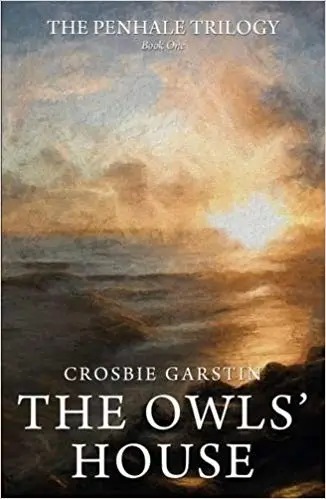
The Owls’ House
Crosbie Garstin
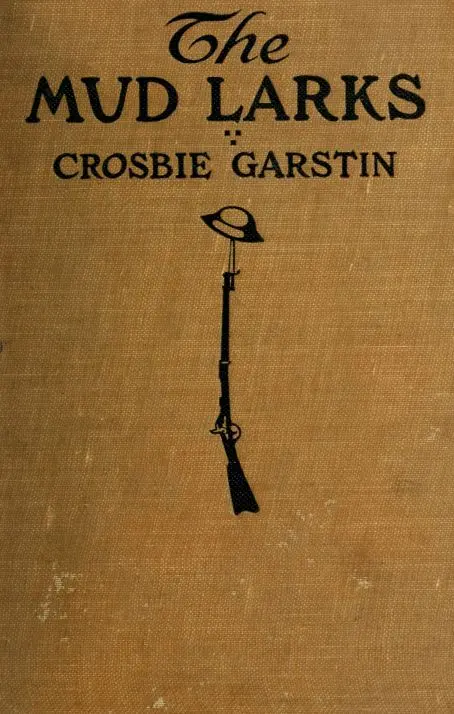
THE CLASSIC COLLECTION · 1919
"The Mud Larks" by Crosbie Garstin is a novel written in the early 20th century, likely during or just after World War I. This work is characterized by its humorous and satirical take on military life and war experiences, centering around the interactions and antics of soldiers in the trenches and the absurdity of their situations. The narrative introduces characters such as Frederick Delano Milroy, a comical figure from the protagonist's past, setting the stage for a blend of camaraderie and dark humor against the backdrop of war. The opening of the novel presents a vivid portrayal of life in the trenches, highlighting the protagonist's reunion with Milroy, now a fellow soldier. Their reunion leads to a series of humorous anecdotes, such as Milroy's previous literary failures and a troubling experience shared with ferrets in their cramped dugout. This sets the tone for the story, combining light-hearted banter with grim realities of war. The narrative feels lively with wit, showcasing both the absurdity of military life and the friendships that form in such challenging circumstances.
Introduction adapted from the source catalogue; source summaries may be automatically generated.
Free to read · English · 45,443 words · No account needed
MAKE TIME FOR A GOOD BOOK
On by default. Untick to stop anonymous reading totals. Each page counts after 10 seconds in view. How this works.
Anonymous counting is on unless you have switched it off.
We fell asleep with goose feathers of snow whirling against the carriage windows, and woke to see a shot-silk sea flinging white lace along a fairy coast on one side and pink and yellow villas nesting among groves of palm and orange on the other.
"Of course this sort of thing doesn't happen in real life," said Albert Edward, flattening his proboscis against the pane. "Either it's all a dream or else those oranges will suddenly light up; George Grossmith, in a topper and spats, will trip in from the O.P. side; girls will blossom from every palm, and all ranks get busy with song and prance--tra-la-la!"
The Babe kicked his blankets off and sat up. "Nothing of the sort. We've arrived in well-known Italy, that's all. Capital--Rome. Exports--old masters, chianti and barrel-organs. Faces South and is centrally heated by Vesuvius."
We rattled into a cutting, the sides of which were decorated with posters: "Good Healt at the England," "Good Luck at Tommy," and drew up in a flag-festooned station, on the platform of which was a deputation of smiling signorinas who presented the Atkinses with postcards, fruit and cigarettes, and ourselves with flowers.
"Very bon--eh, what?" said the Babe as the train resumed its rumblings. "All the same I wish we could thank them prettily and tell them how pleased we are we've come. Does anybody handle the patter?"
Albert Edward thought he did. "Used to swot up a lot of Italian literature when I was a lad; technical military stuff about the divisions of Gaul by one J. Cæsar."
"Too technical for everyday use," I objected. "A person called D'Annunzio is their best seller now, I believe."
"Somebody'd better hop off the bus at the next stop and buy a book of
the words," said the Babe.
At the next halt I dodged the deputation and purchased a phrase-book with a Union Jack on the cover, entitled The English Soldier in Italy, published in Milan.
Among military terms, grouped under the heading of "The Worldly War," a garetta (sentry-box) is defined as "a watchbox," and the machine-gunner will be surprised to find himself described as "a grapeshot-man." It has also short conversations for current use.
"Have you of any English papers?"
"Yes, sir, there's The Times and Tit-Bits."
(Is it possible that the land of Virgil, of Horace and Dante knows
not The Daily Mail?)
"Give me, please, many biscuits."
"No, sir, we have no biscuits; the fabrication of them has been
avoided by Government."
"Waiter, show me a good bed where one may sleep undisturbated."
In the train:--
"Dickens! I have lost my ticket."
"Alas, you shall pay the price of another."
Your reading position is saved on this browser. Take it to another device with a library code. Reading pages adapt to text, rather than matching a printed edition.
Crosbie Garstin
BEHIND THE BOOK
This eBook is for the use of anyone anywhere in the United States and most other parts of the world at no cost and with almost no restrictions whatsoever. You may copy it, give it away or re-use it under the terms of the Project Gutenberg License included with this eBook or online at www.gutenberg.org. If you are not located in the United States, you will have to check the laws of the country where you are located before using this eBook. Read the source licence.
The original source file, including credits and licence, is retained by this library. Request an original-format copy at no charge. Please include the book title and Project Gutenberg identifier #59900.
KEEP YOUR CURIOSITY GOING
Coulson Kernahan

Maurice Baring
Frances Wright
Cécile Tormay

Frederic Jesup Stimson

W. H. P. (William Henry Pope) Jarvis