THE CLASSIC COLLECTION✦The haunts of menCLASSIC FREE BOOKS
The haunts of men
Robert W. (Robert William) Chambers
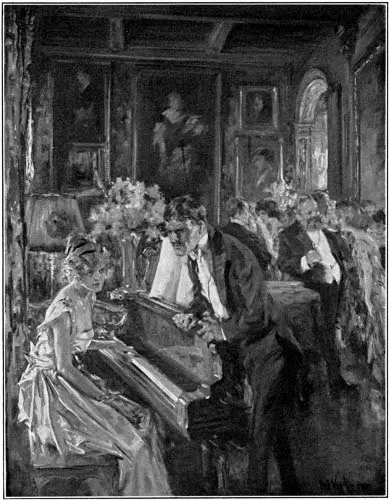
THE CLASSIC COLLECTION · 1919
"The Moonlit Way: A Novel" by Robert W. Chambers is a fictional narrative written in the early 20th century. The story unfolds in an enchanting, moonlit setting, primarily in Constantinople, where intrigues of European nobility and a captivating dancer named Nihla Quellen intertwine with themes of love, betrayal, and ambition. The plot hints at layers of complex relationships against a backdrop of rising political tensions and the glamour of the East. At the start of the novel, the atmosphere is rich with vivid imagery of the moonlit Bosphorus, inviting the reader into the opulence of a gathering at the German Embassy, where various characters discuss their fascination with Nihla, a beautiful dancer who has just made a striking entrance. Set among a cast of diplomats and socialites, we are introduced to Count d’Eblis, who is eager to make Nihla the center of attention while Ferez Bey, an influential figure, schemes behind the scenes. As the prologue unfolds, Nihla is revealed as not just an alluring performer but also a pawn in a complex game of power and desire, setting the stage for her dramatic entanglements that echo themes of fate and the quests for personal gain.
Introduction adapted from the source catalogue; source summaries may be automatically generated.
Free to read · English · 105,024 words · No account needed
MAKE TIME FOR A GOOD BOOK
On by default. Untick to stop anonymous reading totals. Each page counts after 10 seconds in view. How this works.
Anonymous counting is on unless you have switched it off.
"I saw none finer at Kiel," said the attache, staring at Gerhardt through his monocle, with the habitual insolence and disapproval of the Prussian junker. "To me it exhibits bad taste"--he turned to the Count d'Eblis--"particularly when the Meteor is there."
"Where?" asked the Count.
"At Kiel. I speak of Kiel and the ostentation of certain foreign yacht owners at the recent regatta."
Gerhardt, redder than ever, was still German enough to swallow the meaningless insolence. He was not getting on very well at the Embassy of his fellow countrymen. Americans, properly presented, they endured without too open resentment; for German-Americans, even when millionaires, their contempt and bad manners were often undisguised.
"I'm going to get out of this," growled Gerhardt, who held a good position socially in New York and in the fashionable colony at Northbrook. "I've seen enough puffed up Germans and over-embroidered Turks to last me. Come on, d'Eblis----"
Ferez detained them both:
"Surely," he protested, "you would not miss Nihla!"
"Nihla?" repeated d'Eblis, who had passed his arm through Gerhardt's. "Is that the girl who set St. Petersburg by the ears?"
"Nihla Quellen," rumbled Gerhardt. "I've heard of her. She's a dancer,
isn't she?"
Ferez, of course, knew all about her, and he drew the two men into the embrasure of a long window.
It was not happening just exactly as he and the German Ambassador had planned it together; they had intended to let Nihla burst like a flaming jewel on the vision of d'Eblis and blind him then and there.
Perhaps, after all, it was better drama to prepare her entrance. And who but Ferez was qualified to prepare that entree, or to speak with authority concerning the history of this strange and beautiful young girl who had suddenly appeared like a burning star in the East, had passed like a meteor through St. Petersburg, leaving several susceptible young men--notably the Grand Duke Cyril--mentally unhinged and hopelessly dissatisfied with fate.
"It is ver' fonny, d'Eblis--une histoire chic, vous savez! Figurez
vous----"
"Talk English," growled Gerhardt, eyeing the serene progress of a pretty Highness, Austrian, of course, surrounded by gorgeous uniforms and empressement.
"Who's that?" he added.
Ferez turned; the gorgeous lady snubbed him, but bowed to d'Eblis.
"The Archduchess Zilka," he said, not a whit abashed. "She is a ver'
great frien' of mine."
"Can't you present me?" enquired Gerhardt, restlessly; "--or you, d'Eblis--can't you ask permission?"
The Count d'Eblis nodded inattentively, then turned his heavy and rather vulgar face to Ferez, plainly interested in the "histoire" of the girl, Nihla.
"What were you going to say about that dancer?" he demanded.
Ferez pretended to forget, then, apparently recollecting:
Your reading position is saved on this browser. Take it to another device with a library code. Reading pages adapt to text, rather than matching a printed edition.
Robert W. (Robert William) Chambers
Robert W. (Robert William) Chambers

Robert W. (Robert William) Chambers
Robert W. (Robert William) Chambers
BEHIND THE BOOK
This eBook is for the use of anyone anywhere in the United States and most other parts of the world at no cost and with almost no restrictions whatsoever. You may copy it, give it away or re-use it under the terms of the Project Gutenberg License included with this eBook or online at www.gutenberg.org. If you are not located in the United States, you will have to check the laws of the country where you are located before using this eBook. Read the source licence.
The original source file, including credits and licence, is retained by this library. Request an original-format copy at no charge. Please include the book title and Project Gutenberg identifier #33557.
KEEP YOUR CURIOSITY GOING
Coulson Kernahan

Maurice Baring
Frances Wright
Cécile Tormay

Frederic Jesup Stimson

W. H. P. (William Henry Pope) Jarvis