THE CLASSIC COLLECTION✦The haunts of menCLASSIC FREE BOOKS
The haunts of men
Robert W. (Robert William) Chambers
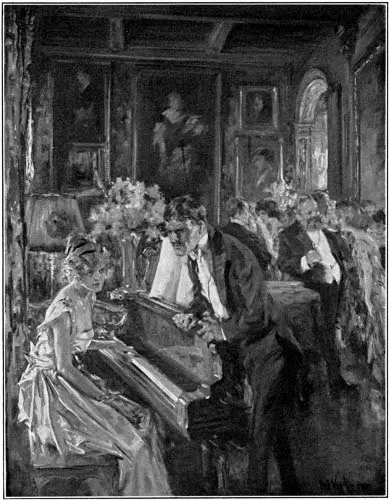
THE CLASSIC COLLECTION · 1919
"The Moonlit Way: A Novel" by Robert W. Chambers is a fictional narrative written in the early 20th century. The story unfolds in an enchanting, moonlit setting, primarily in Constantinople, where intrigues of European nobility and a captivating dancer named Nihla Quellen intertwine with themes of love, betrayal, and ambition. The plot hints at layers of complex relationships against a backdrop of rising political tensions and the glamour of the East. At the start of the novel, the atmosphere is rich with vivid imagery of the moonlit Bosphorus, inviting the reader into the opulence of a gathering at the German Embassy, where various characters discuss their fascination with Nihla, a beautiful dancer who has just made a striking entrance. Set among a cast of diplomats and socialites, we are introduced to Count d’Eblis, who is eager to make Nihla the center of attention while Ferez Bey, an influential figure, schemes behind the scenes. As the prologue unfolds, Nihla is revealed as not just an alluring performer but also a pawn in a complex game of power and desire, setting the stage for her dramatic entanglements that echo themes of fate and the quests for personal gain.
Introduction adapted from the source catalogue; source summaries may be automatically generated.
Free to read · English · 105,024 words · No account needed
MAKE TIME FOR A GOOD BOOK
On by default. Untick to stop anonymous reading totals. Each page counts after 10 seconds in view. How this works.
Anonymous counting is on unless you have switched it off.
Darker at night than any capital in the world, its huge, solid and ancient shapes bulking gigantic in the night, its noble ruins cloaked, its cheap filth hidden, its flimsy Coney Island aspect transfigured and the stylographic-pen architecture of a hundred minarettes softened into slender elegance, Constantinople lay dreaming its immemorial dreams under the black shadow of the Prussian eagle.
The German Embassy was lighted up like a Pera cafe; the drawing-rooms crowded with a brilliant throng where sashes, orders, epaulettes and sabre-tache glittered, and jewels blazed and aigrettes waved under the crystal chandeliers, accenting and isolating sombre civilian evening dress, which seemed mournful, rusty, and out of the picture, even when plastered over with jewelled stars.
Few Turkish officials and officers were present, but the disquieting sight of German officers in Turkish uniforms was not uncommon. And the Count d'Eblis, Senator of France, noted this phenomenon with lively curiosity, and mentioned it to his companion, Ferez Bey.
Ferez Bey, lounging in a corner with Adolf Gerhardt, for whom he had procured an invitation, and flanked by the Count d'Eblis, likewise a guest aboard the rich German-American banker's yacht, was very much in his element as friend and mentor.
For Ferez Bey knew everybody in the Orient--knew when to cringe, when to be patronising, when to fawn, when to assert himself, when to be servile, when impudent.
He was as impudent to Adolf Gerhardt as he dared be, the banker not knowing the subtler shades and differences; he was on an equality with the French senator, Monsieur le Comte d'Eblis because he knew that d'Eblis dared not resent his familiarity.
Otherwise, in that brilliant company, Ferez Bey was a jackal--and he knew it perfectly--but a valuable jackal; and he also knew that.
So when the German Ambassador spoke pleasantly to him, his attitude was just sufficiently servile, but not overdone; and when Von-der-Hohe Pasha, in the uniform of a Turkish General of Division, graciously exchanged a polite word with him during a moment's easy gossip with the Count d'Eblis, Ferez Bey writhed moderately under the honour, but did not exactly squirm.
To Conrad von Heimholz he ventured to present his German-American patron, Adolf Gerhardt, and the thin young military attache condescended in his Prussian way to notice the introduction.
"Saw your yacht in the harbour," he admitted stiffly. "It is astonishing how you Americans permit no bounds to your somewhat noticeable magnificence."
"She's a good boat, the Mirage," rumbled Gerhardt, in his bushy red beard, "but there are plenty in America finer than mine."
"Not many, Adolf," insisted Ferez, in his flat, Eurasian voice--"not ver' many anyw'ere so fine like your Mirage."
Your reading position is saved on this browser. Take it to another device with a library code. Reading pages adapt to text, rather than matching a printed edition.
Robert W. (Robert William) Chambers
Robert W. (Robert William) Chambers

Robert W. (Robert William) Chambers
Robert W. (Robert William) Chambers
BEHIND THE BOOK
This eBook is for the use of anyone anywhere in the United States and most other parts of the world at no cost and with almost no restrictions whatsoever. You may copy it, give it away or re-use it under the terms of the Project Gutenberg License included with this eBook or online at www.gutenberg.org. If you are not located in the United States, you will have to check the laws of the country where you are located before using this eBook. Read the source licence.
The original source file, including credits and licence, is retained by this library. Request an original-format copy at no charge. Please include the book title and Project Gutenberg identifier #33557.
KEEP YOUR CURIOSITY GOING
Coulson Kernahan

Maurice Baring
Frances Wright
Cécile Tormay

Frederic Jesup Stimson

W. H. P. (William Henry Pope) Jarvis