THE CLASSIC COLLECTION✦Tropical AfricaCLASSIC FREE BOOKS
Tropical Africa
Henry Drummond
THE CLASSIC COLLECTION · 1897
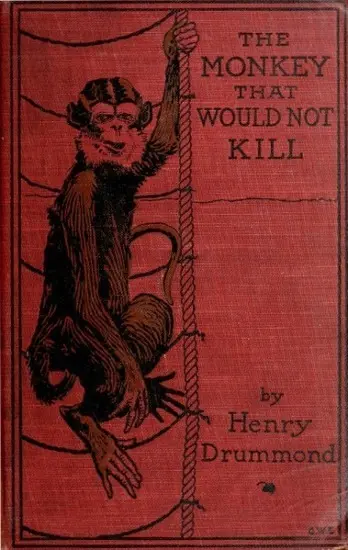
"The Monkey That Would Not Kill" by Henry Drummond is a children's narrative published in the early 20th century, around the 1910s, though its original copyright dates back to the late 1890s. This whimsical tale revolves around a mischievous monkey named Tricky, who seems to possess an uncanny ability to evade death and bring chaos wherever he goes. The book combines elements of adventure and humor, making it an entertaining read for young audiences. The story follows the antics of Tricky, who is adopted by a missionary after being rescued from a rough life. Despite his initial trouble-making ways, such as causing havoc in the household and on a ship, Tricky survives various attempts at his life, including hanging, drowning, and being shot at. Each time, he narrowly escapes, much to the frustration of his would-be executioners. Ultimately, the story weaves in themes of friendship and loyalty, as Tricky breaks into a shepherd’s life, leading to unexpected adventures, including rescuing the family from a house fire. The narrative humorously concludes with Tricky living happily as a lighthouse keeper's pet, proving that he truly won't kill and will protect those around him.
Introduction adapted from the source catalogue; source summaries may be automatically generated.
Free to read · English · 10,758 words · No account needed
MAKE TIME FOR A GOOD BOOK
On by default. Untick to stop anonymous reading totals. Each page counts after 10 seconds in view. How this works.
Anonymous counting is on unless you have switched it off.
When the thieves reached home, after a hasty breakfast, they continued the discussion as to how the purse was to be opened and the nugget secured. Unfortunately for them the monkey had struggled out of the pillow-case, as soon as it reached the house, and the robbers' children at once seized upon it, and claimed it as their pet. When they were told it would have to be killed, the youngest child, a little girl so lovely that even a bad father could not help loving her, burst into tears, and, putting her arms round the robber's neck, prayed and entreated him to spare its life, and let her play with it. Now, wicked as this man was, this child had a mysterious influence over him, and though he was resolved to kill Gum, and that immediately, he determined that she should not see it done, nor even know that he had done it. Besides this, it would never do to let the people in the valley know that they had killed the monkey, for Donald would surely go in search of it; so after consulting together for some time, the robbers decided on a plan for killing Gum without anybody being any the wiser. They knew that if they shot it, or drowned it, or slew it with a knife, the children would be angry, and the story would certainly be told to their playmates and passed on in time to Donald's family. So a very diabolical scheme was hatched. The only way they could think of for killing Gum without any one seeing, or without either of them being actually present at the death, was to blow it up with gunpowder. This method had another advantage, which neither of the men liked to confess weighed with them, but in reality it was this more than anything else that made them think of the gunpowder. At the bottom of their hearts these men were cowards, and after the strange threat which Donald had uttered as they were leaving his house, they were secretly afraid 'to lay a hand' upon Gum. A monkey was a very mysterious creature. They had never had anything to do with one before. Gum's face had a curious human look, and to murder it in cold blood was almost like murdering a man. So the gunpowder idea seemed the very solution that was needed, and they set about their preparations at once. While one of the men remained at the kitchen fire with the family to allay suspicion, the other, after pocketing a little can of miners' blasting-powder, a couple of feet of fuse, and a piece of string, strolled out to the wood behind the cabin on the pretence of giving the monkey a walk. As soon as a low thicket screened the pair from view, the robber tied the monkey to the trunk of a tree. Then he lashed the can of gunpowder tightly to the monkey's tail, passed one end of the fuse into it through a small hole, struck a match, and lighted the other end. As soon as he saw the fuse was fairly lit, and the red fire slowly creeping upwards, he ran back as fast as he could to the house. Meantime the other man had got a concertina from the shelf, and was playing with all his might to drown the sound of the explosion. When the executioner arrived, out of breath though he was, he joined noisily in the dance which the children had set up the moment the concertina began to play, and presently such a stamping and shouting was going on in the cottage that the sound of an earthquake would have been quenched. Suddenly an awful interruption occurred. Through the open door the monkey bounded in, and taking up its place in the midst of the circle joined in the dance. From its neck dangled a piece of string, burnt at the point; but what made the children shriek with laughter was a small tin can tied to its tail, which clattered about with every turn of the body, and strange to say, had a sort of little tail of its own which appeared to be on fire, for little puffs of smoke were coming from it, and a red colour glowed at the tip. The moment the robbers caught sight of this apparition there was a yell of fear which paralysed the children into rigid statues. The men's faces were livid with terror, and some seconds passed before either had recovered his senses sufficiently to act. Then one man, with a great sweep of his arms, caught up all the children into one tumble bunch, and flung them screaming with pain and surprise under the bed of the adjoining room. The other, who was directly responsible for the mischief, seeing that the only chance to save his house and himself was to get Gum outside, clutched the smoking monkey in his arms and rushed to the door. Quick as the movement was, it was not quick enough. Those inside heard a deafening report; the house was filled with smoke; the doorway became a heap of fallen timber, and the blackened body of a man lay groaning among the charred ruins. One of the robbers, their wives, and all the children were safe. But when the smoke cleared away, and the body by the door was examined, life was all but extinct. For weeks the robber hung between life and death. It forms no part of this story to tell what pains he suffered, or what agonies of mind he passed through, or how, when months after he was able to crawl from his bed and go out into the air it was to see never more the sunlight or the flowers with his sightless eyes. Certainly Donald's words had come true. When the miner heard that evening what had happened, although he had already sent off word to the nearest police-station with the names of the guilty men, he took no further action in the matter. God's punishment was quicker than man's.
Your reading position is saved on this browser. Take it to another device with a library code. Reading pages adapt to text, rather than matching a printed edition.
Henry Drummond
Henry Drummond
Henry Drummond
Henry Drummond
BEHIND THE BOOK
This eBook is for the use of anyone anywhere in the United States and most other parts of the world at no cost and with almost no restrictions whatsoever. You may copy it, give it away or re-use it under the terms of the Project Gutenberg License included with this eBook or online at www.gutenberg.org. If you are not located in the United States, you will have to check the laws of the country where you are located before using this eBook. Read the source licence.
The original source file, including credits and licence, is retained by this library. Request an original-format copy at no charge. Please include the book title and Project Gutenberg identifier #29254.
KEEP YOUR CURIOSITY GOING
Coulson Kernahan

Maurice Baring
Frances Wright
Cécile Tormay

Frederic Jesup Stimson

W. H. P. (William Henry Pope) Jarvis