THE CLASSIC COLLECTION✦The lion’s shareCLASSIC FREE BOOKS
The lion’s share
Octave Thanet
THE CLASSIC COLLECTION · 1897
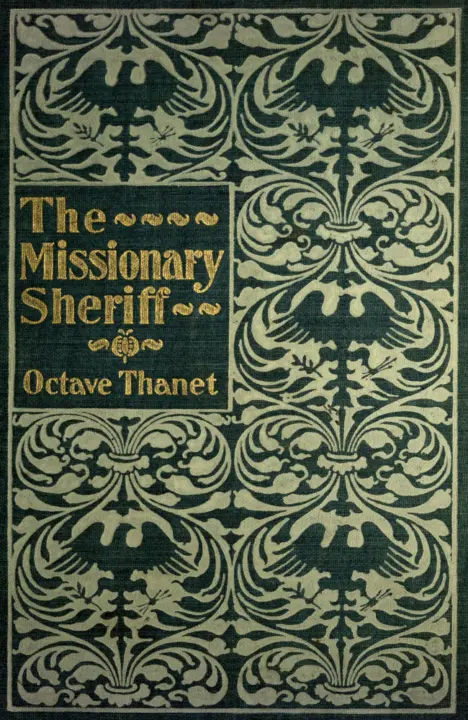
"The Missionary Sheriff" by Octave Thanet is a novel written in the late 19th century. The story revolves around Sheriff Amos Wickliff, a plain and honorable man who navigates the complexities of morality and duty within his role. As he interacts with various characters, including a troubled young man named Ned Paisley, themes of compassion, redemption, and the societal challenges of the time begin to unfold. The opening of the novel introduces Sheriff Wickliff as he observes local boy soldiers during a parade, reflecting on his position of authority and influence within the community. His character is depicted as large and imposing, yet kind-hearted—particularly in his dealings with the inmates of the jail, including the swindler Ned Paisley. The sheriff discovers a photograph belonging to Paisley that sparks sympathy in him for the young man's mother. As the narrative progresses, Sheriff Wickliff aims to shield her from the truth about her son’s life of crime and the realities of the justice system. The opening establishes the sheriff’s dual role as a law enforcer and a compassionate man determined to do right by those in his care.
Introduction adapted from the source catalogue; source summaries may be automatically generated.
Free to read · English · 52,461 words · No account needed
MAKE TIME FOR A GOOD BOOK
On by default. Untick to stop anonymous reading totals. Each page counts after 10 seconds in view. How this works.
Anonymous counting is on unless you have switched it off.
“Perhaps they will get tired of it,” Mysie proffered for consolation. But they did not tire. They never played later than nine o’clock at night again, but until that hour the music-loving and unmusical family played and sang to their hearts’ content. And the Beaumonts saw them at the Thomas concert, Ike and his mother and Jim, applauding everything. Henriette said the sight made her ill.
Time did not soften her rancor. She caught cold at the concert, and for two weeks was confined to her chamber with what Mrs. Armstrong called rheumatism, but Henriette called gout. During the time she assured Mysie that what she suffered from the Armstrong organ exceeded anything that gout could inflict.
“Do let me speak to Mrs. Armstrong,” begged Mysie.
“I spoke to that boy, the one with the freckles, myself yesterday,” replied Henriette, “out of the window. I told him if they didn’t stop I would have them indicted.”
“Why, how did you see him?” Mysie was aghast, but she dared not criticise
Henriette.
“He came here with a bucket of water. Said his mother saw us taking water out of the well, and it was dangerous. The impertinent woman, she actually offered to send us water from their cistern every day.”
“But I think that was—was rather kind, sister, and it would be dreadful to have typhoid fever.”
“I would rather die of typhoid fever than have that woman bragging to her vulgar friends that she gives the Beaumonts, Governor Beaumont’s daughters, water! I know what her kindness means.” Thus Henriette crushed Mysie. But when the organ began, and it was evident that Tim Armstrong intended to learn “Two Little Girls in Blue,” if it took him all the afternoon, Mysie rose.
“Mysie,” called Henriette, “don’t you go one step to the Armstrongs’.”
Mysie sat down, but in a little while she tried again.
“I wish you’d let Paula, then; she is going by there every day, and she has had no dispute with them. She often stops to talk.”
“Talk to whom?” said Henriette, icily.
“Oh, to any of them—Tim or Pete or Mrs. Armstrong.”
“Does she talk to them long?”
“Oh no, not very long—just as she goes by. I think you’re mistaken, sister. They don’t think such mean things. Truly they are—nice; they seem very fond of each other, and they almost always give Paula flowers.”
“What does she do with the flowers?”
“She puts them in the vases, and wears them.”
“Do they give her anything else?” Henriette’s tone was so awful that Mysie dropped her work.
“Do they?” persisted Henriette.
Your reading position is saved on this browser. Take it to another device with a library code. Reading pages adapt to text, rather than matching a printed edition.
BEHIND THE BOOK
This eBook is for the use of anyone anywhere in the United States and most other parts of the world at no cost and with almost no restrictions whatsoever. You may copy it, give it away or re-use it under the terms of the Project Gutenberg License included with this eBook or online at www.gutenberg.org. If you are not located in the United States, you will have to check the laws of the country where you are located before using this eBook. Read the source licence.
The original source file, including credits and licence, is retained by this library. Request an original-format copy at no charge. Please include the book title and Project Gutenberg identifier #67357.
KEEP YOUR CURIOSITY GOING
Coulson Kernahan

Maurice Baring
Frances Wright
Cécile Tormay

Frederic Jesup Stimson

W. H. P. (William Henry Pope) Jarvis