THE CLASSIC COLLECTION✦The lion’s shareCLASSIC FREE BOOKS
The lion’s share
Octave Thanet
THE CLASSIC COLLECTION · 1897
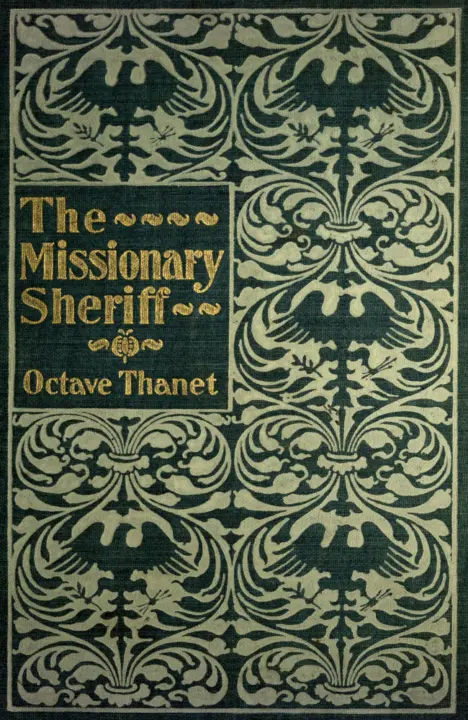
"The Missionary Sheriff" by Octave Thanet is a novel written in the late 19th century. The story revolves around Sheriff Amos Wickliff, a plain and honorable man who navigates the complexities of morality and duty within his role. As he interacts with various characters, including a troubled young man named Ned Paisley, themes of compassion, redemption, and the societal challenges of the time begin to unfold. The opening of the novel introduces Sheriff Wickliff as he observes local boy soldiers during a parade, reflecting on his position of authority and influence within the community. His character is depicted as large and imposing, yet kind-hearted—particularly in his dealings with the inmates of the jail, including the swindler Ned Paisley. The sheriff discovers a photograph belonging to Paisley that sparks sympathy in him for the young man's mother. As the narrative progresses, Sheriff Wickliff aims to shield her from the truth about her son’s life of crime and the realities of the justice system. The opening establishes the sheriff’s dual role as a law enforcer and a compassionate man determined to do right by those in his care.
Introduction adapted from the source catalogue; source summaries may be automatically generated.
Free to read · English · 52,461 words · No account needed
MAKE TIME FOR A GOOD BOOK
On by default. Untick to stop anonymous reading totals. Each page counts after 10 seconds in view. How this works.
Anonymous counting is on unless you have switched it off.
“Then the curtains will have to wait, Mysie,” said Henriette, cheerfully, “for we must have the music to-morrow.”
Mysie threw a deprecating glance at Pauline. “There was a bargain in chintzes,” she began, feebly, “but of course, sister, if Paula doesn’t mind—”
“I don’t mind, Mysie,” said Pauline.
Why should she make Mysie unhappy and Henriette cross for a pair of cheap curtains? The day was beautiful, and she attended church. She was surprised, looking round at the choir, to discover young Armstrong in the seat behind her. She did not know that he attended that church. But surely there was no harm in a neighbor’s walking home with Mysie and her. How well and modestly he talked, and how gentle and deferential he was to Mysie! Mysie sighed when he parted from them, a little way from the house.
“That young man is very superior to his station,” she declared, solemnly; “he must be of good though decayed family.”
“His grandfather was a Vermont farmer, and ours was a Massachusetts farmer,” retorted Pauline; “I dare say if we go back far enough we shall find the Armstrongs as good as we—”
“Oh, pray don’t talk that way before Etty, dear,” interrupted Mysie, hurriedly: “she thinks it so like the anarchists; and if you get into that way of speech, you might slip out something before her. Poor Etty, I wish she felt as if she could go to church. I hope she had a peaceful morning.”
Ah, hope unfounded! Never had Miss Henriette Beaumont passed a season more rasping to her nerves. Looking out of the window, she saw both the younger Armstrongs and their mother. The boys had been picking vegetables.
“Now, boys,” called Mrs. Armstrong, gayly, “let’s come and play on the
organ.”
Henriette’s soul was in arms. Unfortunately she was still in the robes of rest (attempting to slumber after her tumultuous night), and dignity forbade her shouting out of the window.
The two boys passed a happy morning experimenting on the different stops, and improvising melodies of their own. “Say, mummy, isn’t that kinder like a tune?” one or the other would exclaim. Mrs. Armstrong listened with pride. The awful combination of discords fell sweetly on her ear, which was “no ear for music.”
“It’s just lovely to have an organ,” she thought.
When Miss Beaumont could bear no more she attired herself and descended the stairs. Then the boys stopped. In the afternoon several friends of the Armstrongs called. They sang Moody and Sankey hymns, until Henriette was pale with misery.
“I think I prefer the untutored Armstrong savages themselves, with their war-cries,” she remarked.
Your reading position is saved on this browser. Take it to another device with a library code. Reading pages adapt to text, rather than matching a printed edition.
BEHIND THE BOOK
This eBook is for the use of anyone anywhere in the United States and most other parts of the world at no cost and with almost no restrictions whatsoever. You may copy it, give it away or re-use it under the terms of the Project Gutenberg License included with this eBook or online at www.gutenberg.org. If you are not located in the United States, you will have to check the laws of the country where you are located before using this eBook. Read the source licence.
The original source file, including credits and licence, is retained by this library. Request an original-format copy at no charge. Please include the book title and Project Gutenberg identifier #67357.
KEEP YOUR CURIOSITY GOING
Coulson Kernahan

Maurice Baring
Frances Wright
Cécile Tormay

Frederic Jesup Stimson

W. H. P. (William Henry Pope) Jarvis