THE CLASSIC COLLECTION✦An outlaw’s diary: the CommuneCLASSIC FREE BOOKS
An outlaw’s diary: the Commune
Cécile Tormay
THE CLASSIC COLLECTION · 1895
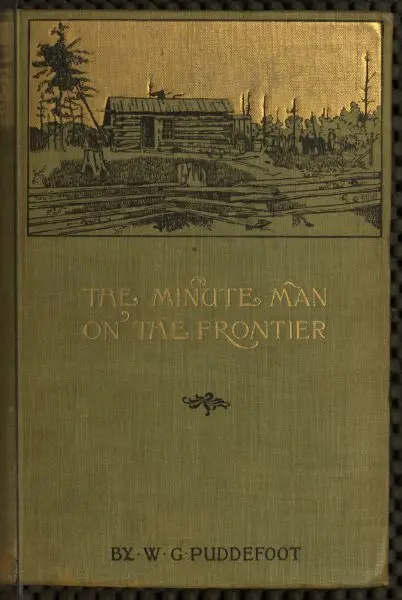
"The Minute Man on the Frontier" by William George Puddefoot is a historical account written in the late 19th century. This work captures the experiences and reflections of a frontier missionary, detailing the challenges and transformations happening in the American frontier as well as the impact of immigration and pioneering spirit on society and the economy during that time. The central character is the "minute man," a term for these frontier missionaries who play a critical role in shaping communities amidst hardship and rapid change. The opening of the book introduces readers to the profound changes occurring on the American frontier, particularly focusing on the relationships between these changes and broader global contexts. Puddefoot shares vivid anecdotes about the lives of early settlers, the development of towns, and the challenges faced by immigrants who seek new opportunities. He underscores the social dynamics of frontier life, including the varying conditions among settlers, and establishes the missionary's crucial role in navigating and responding to the needs of both the land and its people, while highlighting the importance of faith amidst adversity.
Introduction adapted from the source catalogue; source summaries may be automatically generated.
Free to read · English · 55,106 words · No account needed
MAKE TIME FOR A GOOD BOOK
On by default. Untick to stop anonymous reading totals. Each page counts after 10 seconds in view. How this works.
Anonymous counting is on unless you have switched it off.
"It is a true flowing well in the midst of a valley. Ah! those fifteen who met thirty years ago next October made no mistake. They were within God's artesian belt. Their divining-rod was not misleading. Their call was genuine; their aim unerring. They struck the vein. The flow of the rivers breaking out from bare heights did not disappoint them. And now behold this wide expanse of spiritual fertility! This church was not, in form, a daughter of the American Home Missionary Society. Its name does not appear upon your family record, and yet, in the true sense, it is your daughter. In its infant days it sucked the breasts of churches which had sucked yours. Its swaddling bands you made. It was glad to get them even at second hand. The other instance I have to quote is of but recent standing,--of not thirty years, but only three.
"On the 26th of May, three years ago, a pastor in Central California was called five hundred miles into the southern part of the State to assist in organizing a Pilgrim church. A good part of the proposing members being from his own flock, their appeal was urgent, and was acceded to. An infant organization of a few persons was brought together, and christened the Pilgrim Church of Pomona. The organization was effected in a public hall, loaned for the occasion; the church's stipulated tenure of the premises expiring at precisely 3 P.M., in order that the room might be put in order for theatrical occupancy at night. The accouchment was therefore naturally a hurried one. The constituting services had to be abbreviated. Among the things cast out was the sermon, which the visiting pastor from the north had come five hundred miles to preach. Well, sweet are the uses of adversity! Never, apparently, did loss so small gain work so great. On the lack of that initiatory sermon the Pilgrim Church of Pomona has most wonderfully thriven. The church was poor at the outset. It possessed no foot of ground, no house; only a Bible, a dozen hymn-books, and as many zealous members. Over this featherless chick was spread the brooding wing of the American Home Missionary Society. 'It was a plucky bird,' said the wise-hearted pastor, already on the ground. 'Here's a case where the questionable old saw, "Half a loaf better than no bread," won't work at all. If this new well is to be driven, it must be driven to the vein. If there is to be but surface digging, let there be none. If the American Home Missionary society will supply us with six hundred dollars for the first six months, we'll make no promises, but we'll do the best we can.' Well, the G. O. S.--Grand Old Society--responded, and gave the six hundred for the desired six months. At the expiration of that period the Pilgrim Church of Pomona, located upon land and in a house of its own, bade its temporary foster-mother a grateful good-by; and, as it did so, put back into her hand two hundred of the six hundred dollars which had been given. What has been the outcome? That noble church, headed by a noble Massachusetts pastor, has become in the matter of home missions at least--but not in home missions only--the leading church of Southern California. It has to-day an enrolment of two hundred and twenty; has contributed this year three hundred and fifty dollars to your society. Alert in all activities of its own, it is a stimulus to all those of its neighbors. It had not yet got formally organized--the audacious little strutling!--before it had made a cool proposition to the handful of Pilgrim churches then existing in Southern California for the creation of a college; secured the location in its own town; itself appointed the first board of trust; and named it Pomona College. It never waited to be hatched before it began to crow; and to such purpose that it crowed up a college, which now owns two hundred acres of choice land, has a subscription-list of twenty-five thousand dollars for buildings, besides a present building costing two hundred and five thousand dollars. It has in its senior class eleven students, in its preparatory department seventy-one; and in a recent revival interest numbers a goodly group of converts; and, finally, the general association of Southern California, at its meeting within a month, committed its fifty churches fully to the subject of Christian education, to the annual presentation of the advantages and claims of Pomona College, and to an annual collection for its funds. All this, brethren, out of one of your flowing wells in three years."
Your reading position is saved on this browser. Take it to another device with a library code. Reading pages adapt to text, rather than matching a printed edition.
BEHIND THE BOOK
This eBook is for the use of anyone anywhere in the United States and most other parts of the world at no cost and with almost no restrictions whatsoever. You may copy it, give it away or re-use it under the terms of the Project Gutenberg License included with this eBook or online at www.gutenberg.org. If you are not located in the United States, you will have to check the laws of the country where you are located before using this eBook. Read the source licence.
The original source file, including credits and licence, is retained by this library. Request an original-format copy at no charge. Please include the book title and Project Gutenberg identifier #40783.
KEEP YOUR CURIOSITY GOING
Cécile Tormay

Moritz Busch
John L. Ransom
Frances Wright
Cécile Tormay

Mabel Potter Daggett