THE CLASSIC COLLECTION✦An outlaw’s diary: the CommuneCLASSIC FREE BOOKS
An outlaw’s diary: the Commune
Cécile Tormay
THE CLASSIC COLLECTION · 1895
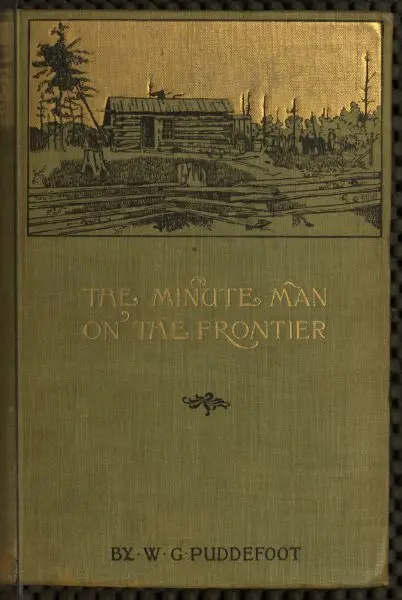
"The Minute Man on the Frontier" by William George Puddefoot is a historical account written in the late 19th century. This work captures the experiences and reflections of a frontier missionary, detailing the challenges and transformations happening in the American frontier as well as the impact of immigration and pioneering spirit on society and the economy during that time. The central character is the "minute man," a term for these frontier missionaries who play a critical role in shaping communities amidst hardship and rapid change. The opening of the book introduces readers to the profound changes occurring on the American frontier, particularly focusing on the relationships between these changes and broader global contexts. Puddefoot shares vivid anecdotes about the lives of early settlers, the development of towns, and the challenges faced by immigrants who seek new opportunities. He underscores the social dynamics of frontier life, including the varying conditions among settlers, and establishes the missionary's crucial role in navigating and responding to the needs of both the land and its people, while highlighting the importance of faith amidst adversity.
Introduction adapted from the source catalogue; source summaries may be automatically generated.
Free to read · English · 55,106 words · No account needed
MAKE TIME FOR A GOOD BOOK
On by default. Untick to stop anonymous reading totals. Each page counts after 10 seconds in view. How this works.
Anonymous counting is on unless you have switched it off.
After all the hopes and fears and toil of the summer, the farmer's most beautiful sight is to see the last great load safe in the barn, the stock fattening on the rich, sweet aftermath, the golden fruit in the orchard, and the big, red, harvest moon smiling over all. This is a frequent sight, despite poor crops and bad weather. The successful farmer does not rely on one, but a variety of crops. Then, if the season is bad for corn, it will be good for oats or wheat. Some crop will repay his labor.
Here is a hint for the home missionary who goes forth to sow spiritual seed. If he expects to get a crop of Congregationalists, he will often lament over poor returns. Often the missionary finds himself in a miscellaneous gathering, like that of Pentecost in its variety, and no mere "ism" will crystallize them. One is of Paul, another of Apollos or Cephas, and he must "determine not to know anything among them save Christ and him crucified." He must drop minor points, and adopt that plan on which all can agree.
Here is a bit of experience. In a community of seven hundred souls, the following denominations were represented: Baptists, three kinds; Presbyterians, two kinds; Methodists, four kinds; Christians, "Church of God," Episcopalians, Roman Catholics, Seventh-day Adventists, Lutherans of all branches, Quakers, and Congregationalists. One day I found three married women making ready to keep house in what had been a large store, the only vacant place in which to live; their husbands were working and living in camp. I said, "I am glad to see you. I suppose you are all Christians?"
To my surprise, they all cheerfully responded, "Yes."
"Well, that is good news," I said. "And to what church do you belong?"
"Church of God," was their answer.
"Good; so do I. Have you brought your letters?"
"No."
"But do you really belong to the 'Church of God'?" said one. "Well, I
am glad to think we should find a 'Church of God' minister way up
here!"
This she said addressing the other women.
"Oh, well," said one, "he means that every church is a church of God!"
"Oh!" was the answer, with a shade of disappointment on her face.
"Well, well," I said, "is not that true?"
"Y-a-as; but it is not like ourn."
"What do you believe different from me?"
"Well, we believe in feet-washing for one thing, and in immersion."
"Oh, well, I think Christians should wash their feet too."
Your reading position is saved on this browser. Take it to another device with a library code. Reading pages adapt to text, rather than matching a printed edition.
BEHIND THE BOOK
This eBook is for the use of anyone anywhere in the United States and most other parts of the world at no cost and with almost no restrictions whatsoever. You may copy it, give it away or re-use it under the terms of the Project Gutenberg License included with this eBook or online at www.gutenberg.org. If you are not located in the United States, you will have to check the laws of the country where you are located before using this eBook. Read the source licence.
The original source file, including credits and licence, is retained by this library. Request an original-format copy at no charge. Please include the book title and Project Gutenberg identifier #40783.
KEEP YOUR CURIOSITY GOING
Cécile Tormay

Moritz Busch
John L. Ransom
Frances Wright
Cécile Tormay

Mabel Potter Daggett