THE CLASSIC COLLECTION✦An outlaw’s diary: the CommuneCLASSIC FREE BOOKS
An outlaw’s diary: the Commune
Cécile Tormay
THE CLASSIC COLLECTION · 1895
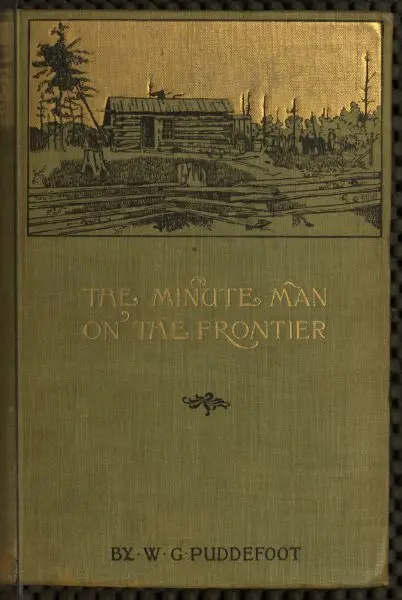
"The Minute Man on the Frontier" by William George Puddefoot is a historical account written in the late 19th century. This work captures the experiences and reflections of a frontier missionary, detailing the challenges and transformations happening in the American frontier as well as the impact of immigration and pioneering spirit on society and the economy during that time. The central character is the "minute man," a term for these frontier missionaries who play a critical role in shaping communities amidst hardship and rapid change. The opening of the book introduces readers to the profound changes occurring on the American frontier, particularly focusing on the relationships between these changes and broader global contexts. Puddefoot shares vivid anecdotes about the lives of early settlers, the development of towns, and the challenges faced by immigrants who seek new opportunities. He underscores the social dynamics of frontier life, including the varying conditions among settlers, and establishes the missionary's crucial role in navigating and responding to the needs of both the land and its people, while highlighting the importance of faith amidst adversity.
Introduction adapted from the source catalogue; source summaries may be automatically generated.
Free to read · English · 55,106 words · No account needed
MAKE TIME FOR A GOOD BOOK
On by default. Untick to stop anonymous reading totals. Each page counts after 10 seconds in view. How this works.
Anonymous counting is on unless you have switched it off.
The freedom of the frontier is contagious, and the poor European strives harder than ever to reach his kin across the sea. And when we consider that only 300,000 square miles out of 1,500,000 miles of arable land is under cultivation, and that already the farmers of England and most parts of Europe are being pushed to the wall, we begin to realize that the growth of the frontiers of the United States not only influences our own land, but changes materially the course of events in the whole world. The above figures are by Mr. Edward Atkinson, as quoted in substance from "Recent Economic Changes."
To show the growth of one State during the past fifty years, let us take Michigan. In 1840 Michigan had a population of 212,267; in 1890, 2,093,889. In 1840 there were three small railroads, with a total mileage of 59 miles. In 1890 there were over 7,000 miles. "In 1840 [I quote from Hon. B. W. Cutcheon, in "Fifty Years' Growth in Michigan"] mining had not begun. In 1890 over 7,000,000 tons of iron were shipped from her mines; while the output of copper had reached over a 100,000,000 lbs., and valued at $15,845,427.28. The salt industry, a late one, rose from 4,000 bbls. in 1860 to 3,838,937 bbls. in 1890; while the value of her lumber products for 1890 was over $55,000,000. In 1840 there were neither graded nor high schools, normal schools nor colleges. In 1890, 654,502 children were of school age, with an enrolment of 427,032, with 33,975 additional attending private schools. These children were taught by 15,990 teachers, who received in salaries $3,326,287."
In 1840 Michigan had 30,144 horses and mules, 185,190 neat cattle, 99,618 sheep. In 1890 there were 579,896 horses, 3,779 mules, of milch cows 459,475, oxen and other cattle 508,938, of sheep 2,353,779, of swine 893,037. The total value came to $74,892,618. Over 1,700 men are engaged in the fisheries, with nearly a million dollars invested, with a total yield of all fish of 34,490,184 lbs., valued at over a million and a half of dollars. The value of her apples and peaches in 1890 was $944,332; of cherries, pears, and plums, $65,217; of strawberries, $166,033; of other berries, $267,398; and of grapes, $122,394. The wheat crop for 1891 was valued at $27,486,910; the oats at $9,689,441; besides 811,977 bushels of buckwheat, and 2,522,376 bushels of barley. The capital invested in lumber alone was $111,302,797. "While her great University, which saw its first student in 1841, and which had but three teachers, one of them acting as president, has grown to be one of the largest in the nation, with eighty professors and instructors and 2,700 students registered on her rolls, conferring 623 degrees upon examination." And all this but the partial record of fifty years in one State.
Your reading position is saved on this browser. Take it to another device with a library code. Reading pages adapt to text, rather than matching a printed edition.
BEHIND THE BOOK
This eBook is for the use of anyone anywhere in the United States and most other parts of the world at no cost and with almost no restrictions whatsoever. You may copy it, give it away or re-use it under the terms of the Project Gutenberg License included with this eBook or online at www.gutenberg.org. If you are not located in the United States, you will have to check the laws of the country where you are located before using this eBook. Read the source licence.
The original source file, including credits and licence, is retained by this library. Request an original-format copy at no charge. Please include the book title and Project Gutenberg identifier #40783.
KEEP YOUR CURIOSITY GOING
Cécile Tormay

Moritz Busch
John L. Ransom
Frances Wright
Cécile Tormay

Mabel Potter Daggett