THE CLASSIC COLLECTION✦The queen of the isleCLASSIC FREE BOOKS
The queen of the isle
May Agnes Fleming
THE CLASSIC COLLECTION · 1876
"The Midnight Queen" by May Agnes Fleming is a historical novel set during the late 17th century. The story unfolds in the plague-stricken city of London, where Death reigns amidst chaos and debauchery. The narrative follows Sir Norman Kingsley, who becomes entangled in the mysteries surrounding a masked sorceress, La Masque, and a beautiful young woman named Leoline, whom he encounters in extraordinary circumstances of life and death. The opening of the novel plunges the reader into a grim London ravaged by plague, where streets are lined with the dead and fear pervades the air. It introduces Sir Norman Kingsley, a courtly figure amidst the turmoil, who seeks out Ormiston, his gloomy friend, with whom he discusses the fierce allure of La Masque, a woman enigmatic to both. As they make their way through the tumultuous city, they stumble upon intriguing events involving a dead bride, who later reveals ties to Leoline, and ignites a passionate quest filled with danger and destiny. As the chapters unfold, Sir Norman's fascination with Leoline deepens, leading him down a dark and mysterious path intertwined with love, intrigue, and the supernatural.
Introduction adapted from the source catalogue; source summaries may be automatically generated.
Free to read · English · 85,849 words · No account needed
MAKE TIME FOR A GOOD BOOK
On by default. Untick to stop anonymous reading totals. Each page counts after 10 seconds in view. How this works.
Anonymous counting is on unless you have switched it off.
“Perhaps she has gone herself,” insinuated Hubert.
“Bah! Gone herself!” said Sir Norman, scornfully. “The idea is beneath contempt: I tell you, Master Fine-feathers, the lady and I were to be married bright and early to-morrow morning, and leave this disgusting city for Devonshire. Do you suppose, then, she would run out in the small hours of the morning, and go prancing about the streets, or eloping with herself?”
“Why, of course, Sir Norman, I can't take it upon myself to answer positively; but, to use the mildest phrase, I must say the lady seems decidedly eccentric, and capable of doing very queer things. I hope, however, you believe me; for I earnestly assure you, I never laid eyes on her but that once.”
“I believe you,” said Sir Norman, with another profound and broken-hearted sigh, “and I'm only too sure she has been abducted by that consummate scoundrel and treacherous villain, Count L'Estrange.”
“Count who?” said Hubert, with a quick start, and a look of intense curiosity. “What was the name?”
“L'Estrange--a scoundrel of the deepest dye! Perhaps you know him?”
“No,” replied Hubert, with a queer, half musing smile, “no; but I have a notion I have heard the name. Was he a rival of yours?”
“I should think so! He was to have been married to the lady this very
night!”
“He was, eh! And what prevented the ceremony?”
“She took the plague!” said Sir Norman, strange to say, not at all offended at the boy's familiarity. “And would have been thrown into the plague-pit but for me. And when she recovered she accepted me and cast him off!”
“A quick exchange! The lady's heart must be most flexible, or unusually large, to be able to hold so many at once.”
“It never held him!” said Sir Norman, frowning; “she was forced into the marriage by her mercenary friends. Oh! if I had him here, wouldn't I make him wish the highwaymen had shot him through the head, and done for him, before I would let him go!”
“What is he like--this Count L'Estrange?” said Hubert, carelessly.
“Like the black-hearted traitor and villain he is!” replied Sir Norman, with more energy than truth; for he had caught but passing glimpses of the count's features, and those showed him they were decidedly prepossessing; “and he slinks along like a coward and an abductor as he is, in a slouched hat and shadowy cloak. Oh! if I had him here!” repeated Sir Norman, with vivacity; “wouldn't I--”
“Yes, of course you would,” interposed Hubert, “and serve him right, too! Have you made any inquiries about the matter--for instance, of our friend sleeping the sleep of the just, across there?”
Your reading position is saved on this browser. Take it to another device with a library code. Reading pages adapt to text, rather than matching a printed edition.
May Agnes Fleming
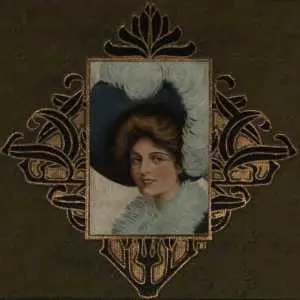
May Agnes Fleming
May Agnes Fleming
May Agnes Fleming
BEHIND THE BOOK
This eBook is for the use of anyone anywhere in the United States and most other parts of the world at no cost and with almost no restrictions whatsoever. You may copy it, give it away or re-use it under the terms of the Project Gutenberg License included with this eBook or online at www.gutenberg.org. If you are not located in the United States, you will have to check the laws of the country where you are located before using this eBook. Read the source licence.
The original source file, including credits and licence, is retained by this library. Request an original-format copy at no charge. Please include the book title and Project Gutenberg identifier #2950.
KEEP YOUR CURIOSITY GOING
Cécile Tormay

Moritz Busch
Coulson Kernahan
John L. Ransom

Maurice Baring
Frances Wright