THE CLASSIC COLLECTION✦An outlaw’s diary: the CommuneCLASSIC FREE BOOKS
An outlaw’s diary: the Commune
Cécile Tormay
THE CLASSIC COLLECTION · 1900
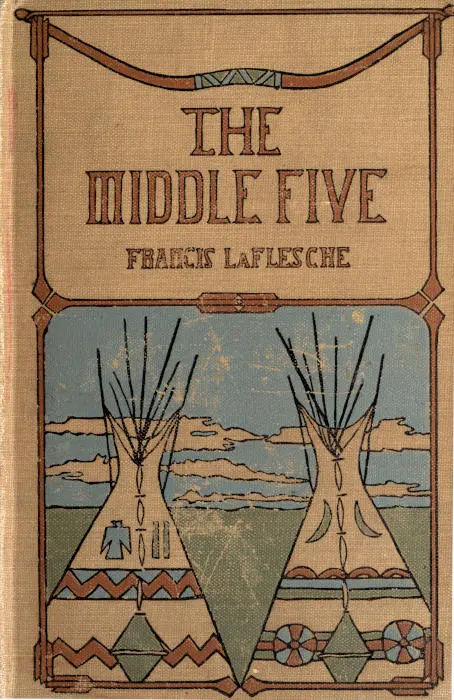
"The Middle Five: Indian Boys at School" by Francis La Flesche is a collection of autobiographical sketches written in the early 20th century. This work provides a vivid portrayal of the experiences of young boys from the Omaha tribe attending a mission school, exploring their daily lives, cultural backgrounds, and the challenges they face in a new education system. The narrative focuses on friendship, growth, and the contrasts between their traditional upbringing and the influences of schooling. The opening of the book introduces us to the emotions and experiences of a young Indian boy entering the mission school. The boy is overcome with homesickness, crying for his mother, while a kind older boy reassures him. As the chapters unfold, we learn about the structure of the school and the complex relationships among students from different backgrounds. The experiences of these boys, including their struggles to adapt to an English-speaking environment, their friendships, and their encounters with cultural differences, set the stage for a rich exploration of identity and belonging in an evolving world. Each sketch reflects the author’s intent to present the true nature of Indian boys and how they navigate their multifaceted lives.
Introduction adapted from the source catalogue; source summaries may be automatically generated.
Free to read · English · 42,638 words · No account needed
MAKE TIME FOR A GOOD BOOK
On by default. Untick to stop anonymous reading totals. Each page counts after 10 seconds in view. How this works.
Anonymous counting is on unless you have switched it off.
To the twelve boys who were engaged in the escapade of the night, it seemed as though the preliminary exercises of the morning school session would never end, so desirous were we to have the punishment, whatever it might be, come quickly and we be rid of suspense. The last name on the roll was called; Gray-beard slowly closed the Register, put it in his desk, and during an impressive silence turned his eyes upon us to scan our faces.
"Lester!" said he, at last, "you will step up to my desk, if you
please."
If there was a serious matter on hand, Gray-beard always said, "If you
please."
Notwithstanding the very polite invitation extended to him, Lester reluctantly walked to the desk. Every eye but two, those of Alexander, was fixed upon Gray-beard and Lester. Aleck had taken out his writing-book and was carefully copying the example given at the head of the page, "Honesty is the best policy." He took particular pains with the capital H, finishing the last part with concentric circles.
"What were you doing last night," asked Gray-beard of Lester, "when I caught you outside of my window?"
"I was going down to the ground."
"Were you running away?"
"No, sir."
"Where were you going?"
"I was going to the village."
"What were you going to the village for?"
No answer.
"Who was letting you down; some one must have held the rope in the
dormitory, who was it?"
No reply.
"If you don't answer my questions, I shall have to whip you; who else
was going with you?"
Lester looked appealingly to Brush, then to Alexander. Aleck was writing the sentence in his book; but, when he heard Gray-beard's threat to whip Lester, he arose without finishing the last word. All eyes turned upon him, and there was a stir among the pupils.
"What is it, Alexander," asked Gray-beard, "what do you know about this
strange performance?"
"Lester is not to blame, sir; I made him go out of the window, and I held the rope to let him down."
"And I helped him to do it," came from a voice in another part of the room; it was Brush, who had silently risen; "we compelled the two--we compelled Lester to go out of the window."
"You said there were two boys who were going out of the window, who was the other?" asked Gray-beard, determined to find out all the participants in the mischief.
Those of us who knew, looked toward Joel; an expression of fear stole over his face and he anxiously awaited Brush's answer.
"I did not say that, sir," he replied; "Lester was going down alone."
Your reading position is saved on this browser. Take it to another device with a library code. Reading pages adapt to text, rather than matching a printed edition.
BEHIND THE BOOK
This eBook is for the use of anyone anywhere in the United States and most other parts of the world at no cost and with almost no restrictions whatsoever. You may copy it, give it away or re-use it under the terms of the Project Gutenberg License included with this eBook or online at www.gutenberg.org. If you are not located in the United States, you will have to check the laws of the country where you are located before using this eBook. Read the source licence.
The original source file, including credits and licence, is retained by this library. Request an original-format copy at no charge. Please include the book title and Project Gutenberg identifier #62094.
KEEP YOUR CURIOSITY GOING
Cécile Tormay

Moritz Busch
John L. Ransom
Frances Wright
Cécile Tormay

Mabel Potter Daggett