THE CLASSIC COLLECTION✦An outlaw’s diary: the CommuneCLASSIC FREE BOOKS
An outlaw’s diary: the Commune
Cécile Tormay
THE CLASSIC COLLECTION · 1900
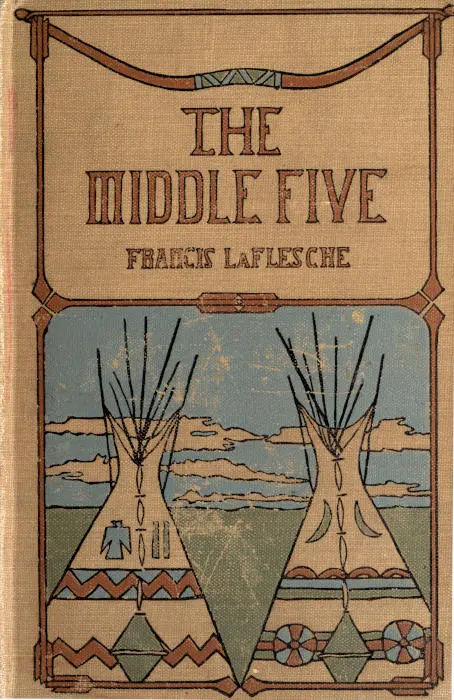
"The Middle Five: Indian Boys at School" by Francis La Flesche is a collection of autobiographical sketches written in the early 20th century. This work provides a vivid portrayal of the experiences of young boys from the Omaha tribe attending a mission school, exploring their daily lives, cultural backgrounds, and the challenges they face in a new education system. The narrative focuses on friendship, growth, and the contrasts between their traditional upbringing and the influences of schooling. The opening of the book introduces us to the emotions and experiences of a young Indian boy entering the mission school. The boy is overcome with homesickness, crying for his mother, while a kind older boy reassures him. As the chapters unfold, we learn about the structure of the school and the complex relationships among students from different backgrounds. The experiences of these boys, including their struggles to adapt to an English-speaking environment, their friendships, and their encounters with cultural differences, set the stage for a rich exploration of identity and belonging in an evolving world. Each sketch reflects the author’s intent to present the true nature of Indian boys and how they navigate their multifaceted lives.
Introduction adapted from the source catalogue; source summaries may be automatically generated.
Free to read · English · 42,638 words · No account needed
MAKE TIME FOR A GOOD BOOK
On by default. Untick to stop anonymous reading totals. Each page counts after 10 seconds in view. How this works.
Anonymous counting is on unless you have switched it off.
"Third Reader," called Gray-beard, and some ten or twelve boys and girls marched to the place of recitation, and put their toes on a straight crack in the floor. The reading lesson was some verses on "Summer," prettily illustrated with a picture of a boy and a dog, the lad racing over a meadow, and the dog frisking at his side.
"Now, Robert, begin!" said Gray-beard to little Bob, who in some unaccountable way had reached the head of the class.
The boy put his index finger on the first word, and slid it along as he read, in a low, sing-song tone, "Come, come, come, the Summer now is here."
"Read that over again," said Gray-beard. "Read it loud, as though you were out of doors at play."
Bob read again, but in the same manner, and had hardly gone through half the line when the sharp crack of Gray-beard's ruler on the desk made us all jump.
"That's not the way to read it!" he exclaimed with some impatience; and he repeated the lines to show how they should be given. "Now, begin again."
Bob began, but in the same lifeless tone, never taking his finger from
the words.
"Next!" interrupted Gray-beard. "The same verse; read as though you were wide awake and calling to your playmates, not as if you were going to sleep."
The boy addressed straightened himself up and shouted out:
"Come, come, come, the Summer now is here!" going through the verse without a break, then he glanced proudly toward the girls, only to see them giggling behind their books.
"Silence!" cried Gray-beard, striking his desk. "That was well done!"
The door slowly opened, and the farmer entered, hat in hand, and addressed Gray-beard, "I want to transfer a sow with a litter of pigs from one pen to another, and I've come to ask if you could let me have the help of some of the boys?"
When permission had been granted, a number of willing hands went up, and as many faces turned with eager expectancy to the farmer, who looked around, and then said, "Brush, Frank, Lester, and Warren will do."
We followed the farmer to the pen, and at once jumped in, each one seizing a little pig; but, before we could turn, the sow made such an onslaught upon us that we dropped the pigs and scrambled over the fence; but Lester, who was last, left a piece of his trousers in the jaws of the angry beast. After this exciting experience, at which the farmer could hardly stop laughing, we held a consultation with him, and agreed upon a plan which we immediately proceeded to carry out.
Your reading position is saved on this browser. Take it to another device with a library code. Reading pages adapt to text, rather than matching a printed edition.
BEHIND THE BOOK
This eBook is for the use of anyone anywhere in the United States and most other parts of the world at no cost and with almost no restrictions whatsoever. You may copy it, give it away or re-use it under the terms of the Project Gutenberg License included with this eBook or online at www.gutenberg.org. If you are not located in the United States, you will have to check the laws of the country where you are located before using this eBook. Read the source licence.
The original source file, including credits and licence, is retained by this library. Request an original-format copy at no charge. Please include the book title and Project Gutenberg identifier #62094.
KEEP YOUR CURIOSITY GOING
Cécile Tormay

Moritz Busch
John L. Ransom
Frances Wright
Cécile Tormay

Mabel Potter Daggett