
The Residuary Legatee; Or, The Posthumous Jest of the Late John Austin
Frederic Jesup Stimson
THE CLASSIC COLLECTION · 1896
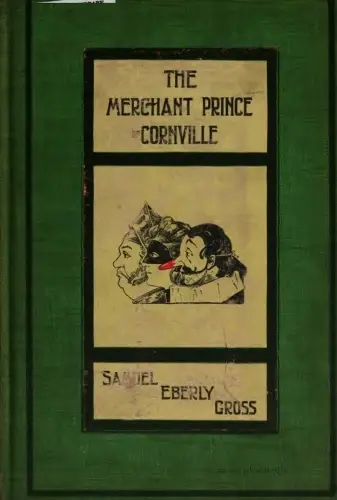
"The Merchant Prince of Cornville: A Comedy" by Samuel Eberly Gross is a theatrical comedy written in the late 19th century. This engaging play offers a mix of romance, idealism, and commentary on materialism, focusing on the character of Hercules Whetstone, a wealthy merchant and mayor who seeks to win the heart of the refined Violet. The narrative juxtaposes lofty ideals with the mundane realities of wealth and love in a whimsical manner that characterizes the comedic style of its time. At the start of the play, the audience is introduced to the idyllic setting of an orchard by the sea, where the poet Ideal and the charming Violet engage in playful and flirtatious banter, hinting at deeper themes of romantic aspiration and poetic fancy. As the scene unfolds, it becomes clear that Violet is not only charming but also weary of proposals related solely to wealth, as she is introduced to her suitor, Whetstone. The characters provide a lively commentary on the values of their society, including discussions of love entwined with commerce and the pursuit of happiness amidst material concerns, setting the stage for a tale rich in humor and romantic entanglements.
Introduction adapted from the source catalogue; source summaries may be automatically generated.
Free to read · English · 26,217 words · No account needed
MAKE TIME FOR A GOOD BOOK
On by default. Untick to stop anonymous reading totals. Each page counts after 10 seconds in view. How this works.
Anonymous counting is on unless you have switched it off.
Enter WHETSTONE and BLUEGRASS, with guitars, stealthily advancing through the shrubbery, and appearing upon the lawn.
Now do we stand upon the green lawn of fresh enterprise. Stand yourself ’neath yonder tree, and fix your eyes on the balcony [WHETSTONE takes position accordingly], while I, from behind this green projecting wing of shrubbery, project our ripening song [moving behind the shrubbery]. First, our song of salutation, with fresh words.
BLUEGRASS, under cover of the shrubbery, sings and plays, while WHETSTONE accompanies with pantomime.
The moon is on the hills,
The glow-worm’s in the grass;
The nightingales have bills,
The owls have singing-class.
BLUEGRASS ceases singing while WHETSTONE continues
pantomime.
Give me more words!
I’ve forgotten the rest, and therefore take a rest.
Look! the door is opening. [Door partly opens, and POMPEY shows his head.] Great thunder--a black walnut!
Vanish, thou black January! [POMPEY vanishes.] We’ll strike a mellower melody, and yonder balcony shall bear fruitage brighter than October. The prize of the troubadours in the courts of love was the golden violet.
Give me no more sentimental nonsense. Sing a song of business.
That’s clever. I feel the inspiration. I’ll improvise a matter-of-fact descriptive ballad illustrating the moral maxim, Business before love.
BLUEGRASS sings and plays; WHETSTONE accompanies with pantomime, and joins in singing last line of each stanza.
Katie and Jack got up at morn,
And she came with two ears of corn,
And he came with his brassy horn,
To drive the ducks to market, O!
Now Katie’s ducks were white as snow,
But Jackie’s ducks were black as crow;
So o’er the hills away they go,
Driving the ducks to market, O!
Then Jackie blew his brassy horn,
And Katie shelled her ears of corn,
While the rooster crowed upon the thorn,
Driving the ducks to market, O!
Now Katie loved, and so did he,
And he his horn hung on a tree;
Oh, they were glad as the busy bee,
Keeping the ducks from market, O!
The moon fell down behind a hill;
The sun winked at the miller’s mill;
The lark got up upon his quill,
Keeping the ducks from market, O!
Alas! alas! green grew the grass,
The duckies, hunting garden sass,
Fell in a trap. Alas! alas!
Keeping the ducks from market, O!
Then he cried chuckie, duckie, O!
Then she cried duckie, chuckie, O!
But oh, alas! it was no go,
Driving the ducks to market, O!
Your reading position is saved on this browser. Take it to another device with a library code. Reading pages adapt to text, rather than matching a printed edition.
BEHIND THE BOOK
This eBook is for the use of anyone anywhere in the United States and most other parts of the world at no cost and with almost no restrictions whatsoever. You may copy it, give it away or re-use it under the terms of the Project Gutenberg License included with this eBook or online at www.gutenberg.org. If you are not located in the United States, you will have to check the laws of the country where you are located before using this eBook. Read the source licence.
The original source file, including credits and licence, is retained by this library. Request an original-format copy at no charge. Please include the book title and Project Gutenberg identifier #54014.
KEEP YOUR CURIOSITY GOING
Frederic Jesup Stimson

Laurence Sterne
Maurice Baring

Isabel Anderson

Eric Mackay
King of England Henry VIII