THE CLASSIC COLLECTION✦Froth: A NovelCLASSIC FREE BOOKS
Froth: A Novel
Armando Palacio Valdés
THE CLASSIC COLLECTION · 1886
"The Marquis of Peñalta (Marta y María): A Realistic Social Novel" by Don Armando Palacio Valdés is a novel believed to have been written in the late 19th century. This work explores the complexities of social and moral issues through its protagonist, María, as she navigates her life in a provincial town in Spain. The narrative promises to unfold the interplay of love, duty, and personal sacrifice against the backdrop of a society steeped in tradition and religious fervor. The opening of the novel introduces us to the setting and context in which María lives, establishing a vivid picture of the town of Nieva with its streets and social dynamics. The author presents a detailed look at the diverse elements of the community, from the bustling streets crowded with people to the elegance of the Elorza mansion, where social gatherings take place. We are introduced to María's character, who, despite her youth and beauty, battles the internal conflict between societal expectations and her individual desires. This tension is palpable from the start, setting the stage for an exploration of her personal journey, particularly in relation to her faith and the choices she must face as she matures. The scene is rich with detail, hinting at the novel's themes of identity and the nature of true calling amidst societal pressures.
Introduction adapted from the source catalogue; source summaries may be automatically generated.
Free to read · English · 100,631 words · No account needed
MAKE TIME FOR A GOOD BOOK
On by default. Untick to stop anonymous reading totals. Each page counts after 10 seconds in view. How this works.
Anonymous counting is on unless you have switched it off.
"I never did; don't be foolish." She said these words with asperity, and another unpleasant stage in Ricardo's love was signalized. Almost absolutely ceased those happy moments of fond raptures, sweet and delicious as the pleasures of the angels in which the poesy of spirit and matter is indistinguishable, the prospect of which kindles and stirs the deepest roots of our being, and their remembrance throws over all our lives, even for the most prosaic of men, a vague and poetical melancholy helping us to endure the rebuffs of existence and to contemplate without envy the felicity of others. The most that the young marquis obtained grudgingly from his sweetheart was the permission to give her a brotherly kiss on the forehead from time to time. And there is no need of telling my experienced readers, for they must be able to imagine it, that with this enforced fast the young man's love far from growing less, increased and became violent beyond all power of words.
Maria was able fully to devote herself to the life of perfection toward which she had felt such vehement aspiration. The hours of the day seemed to her too few for her prayers, both at church and at home, and for the repentance of her sins. She attended the sacraments more and more, and she was present and assisted with her sympathy and money in all the religious solemnities which were celebrated in the town. The time left free from her prayers she spent in reading books of devotion, which, in a short time, formed a library almost as numerous as her novels. The lives of the saints pleased her above all, and she soon devoured a multitude of them, paying most attention, as was logical, to the lives of those who reached the greatest glory and brought the greatest splendor to the Church,--the life of Saint Teresa, that of Saint Catalina of Sienna, of Saint Gertrudis, of Saint Isabel, Saint Eulalia, Saint Monica, and many others who, without having been canonized, were celebrated for their piety and for the spiritual graces which God bestowed upon them, like the holy Margarita of Alacoque, Mademoiselle de Melun, and others. These works made a very profound impression on our young lady's ardent and enthusiastic mind, driving her farther and farther along the road to perfection. The incredible and marvellous powers of those heroic souls, who, through love and charity, succeeded in lifting themselves to heaven, and in enjoying through anticipation, while still on earth, the delights reserved for the blessed, filled her with deep, fervent admiration. She felt an ecstasy over the most insignificant incidents in the lives of the saints, where God often showed them that He held them as His chosen ones, and would not let the world entice them away, as, for example, the scene of the miraculous toad which Saint Teresa saw talking in the garden with a caballero toward whom she felt a drawing; the sudden death of Buenaventura, Saint Catalina's sister, who was leading that holy woman along the worldly path of bodily adornments and pleasures; and many others which filled the books aforesaid. Maria regarded these notable heroines of religion with the same emotion and astonishment as one regards the phenomena and marvels of nature. A long time passed before she dared to lift her eyes toward them in the way of imitation; she contented herself with beseeching them, through interminable prayers, to intercede with God to pardon her sins. She bought the finest effigies that she found and, when she had caused them to be richly framed, she hung them up on the walls of her room. To do this she had to take down Malec-Kadel and many other warriors of the Middle Ages which had invaded them. She was especially carried away by the scenes of their infancy, and by the first steps which these blessed women had taken along the road to perfection; but when she reached that part of their lives which marked the apogee of their glory on earth, when God, overcome by their steadfast love, their fidelity, and the wonderful penances imposed upon themselves, began to grant them favors and spiritual gifts by means of ecstasies and visions, she remained somewhat disturbed and even cast down. She did not as yet comprehend the mystic delight of direct communication through the senses between the soul and God, and she confessed with great compunction that if one of these miraculous visions were to be vouchsafed her, she should feel much greater fear than pleasure.
Your reading position is saved on this browser. Take it to another device with a library code. Reading pages adapt to text, rather than matching a printed edition.
Armando Palacio Valdés

Armando Palacio Valdés

Armando Palacio Valdés
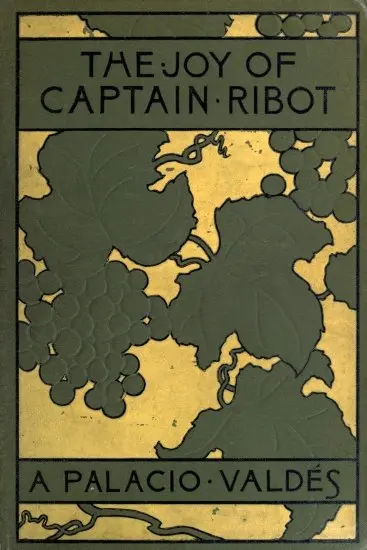
Armando Palacio Valdés
BEHIND THE BOOK
This eBook is for the use of anyone anywhere in the United States and most other parts of the world at no cost and with almost no restrictions whatsoever. You may copy it, give it away or re-use it under the terms of the Project Gutenberg License included with this eBook or online at www.gutenberg.org. If you are not located in the United States, you will have to check the laws of the country where you are located before using this eBook. Read the source licence.
The original source file, including credits and licence, is retained by this library. Request an original-format copy at no charge. Please include the book title and Project Gutenberg identifier #37969.
KEEP YOUR CURIOSITY GOING
Coulson Kernahan

Maurice Baring
Frances Wright
Cécile Tormay

Frederic Jesup Stimson

W. H. P. (William Henry Pope) Jarvis