THE CLASSIC COLLECTION✦Froth: A NovelCLASSIC FREE BOOKS
Froth: A Novel
Armando Palacio Valdés
THE CLASSIC COLLECTION · 1886
"The Marquis of Peñalta (Marta y María): A Realistic Social Novel" by Don Armando Palacio Valdés is a novel believed to have been written in the late 19th century. This work explores the complexities of social and moral issues through its protagonist, María, as she navigates her life in a provincial town in Spain. The narrative promises to unfold the interplay of love, duty, and personal sacrifice against the backdrop of a society steeped in tradition and religious fervor. The opening of the novel introduces us to the setting and context in which María lives, establishing a vivid picture of the town of Nieva with its streets and social dynamics. The author presents a detailed look at the diverse elements of the community, from the bustling streets crowded with people to the elegance of the Elorza mansion, where social gatherings take place. We are introduced to María's character, who, despite her youth and beauty, battles the internal conflict between societal expectations and her individual desires. This tension is palpable from the start, setting the stage for an exploration of her personal journey, particularly in relation to her faith and the choices she must face as she matures. The scene is rich with detail, hinting at the novel's themes of identity and the nature of true calling amidst societal pressures.
Introduction adapted from the source catalogue; source summaries may be automatically generated.
Free to read · English · 100,631 words · No account needed
MAKE TIME FOR A GOOD BOOK
On by default. Untick to stop anonymous reading totals. Each page counts after 10 seconds in view. How this works.
Anonymous counting is on unless you have switched it off.
The spring came. The northeast winds, like a gigantic besom swung by the hand of some god with a passion for cleanliness, constantly swept away the dust and ashes of the firmament. The sailors who put out at daybreak after fish, as they set foot on the quay often saw above the distant houses of El Moral a wide strip of azure sky, which went on slowly spreading to the four points of the compass, leaving a few tenuous shreds of violet cloud like great eyebrows overhanging the horizon. The vast sheet of the river now gave forth lovely blue sparkles in place of the melancholy, metallic reflections of the winter; and the wooden hulks called barcos by a misnomer, pitched in the dock like colts impatient to be off. But in the afternoon winter still clung to its rights; now spreading over town and river a thick mantle of fog which quickly changed into storm; now furiously driving across the sky colossal black clouds which discharged their freight as they flew inland. Some days, however, at sunset a breath of genial air came from the land, and brought the delightful tidings to the peaceful inhabitants of Nieva that the most lovely and coquettish of the seasons was present in that jurisdiction; and this breath of air laden with perfumes, reaching by the medium of the nostrils to the brains of those inhabitants who were most inclined to poesy and sweet expansions of the heart, manifested itself as the avowed enemy of tranquillity in feminine minds, and as the infamous disturber of peace in families. The town slept placidly like a sultana, receiving the adulatory caresses of this breeze. Nevertheless, the calm underneath the roofs was more apparent than real; a large part of the inhabitants slept the sleep of the righteous as before, but another no less numerous and estimable, without knowing any reason for it, awoke more than once in the course of the night, and occasionally spent an hour unsuccessfully wooing sleep by lighting the lamp, and reading the articles in The Times.[39] They drank great goblets of water; they dreamed fifty thousand absurd dreams, which, when they remembered them in the morning, made the worthy natives smile, and more than one, and more than two, caught colds on their lungs by getting uncovered at night. In the two apothecary shops of the town a prodigious quantity of pearl barley was disposed of; some banished wine from the table to the astonishment of their wives; and the behavior of young men toward the girls became extremely dulcified. The Market Street[40] bookseller sent to Madrid for a quantity of novels by Paul de Kock and Adolphe Belot on commission for his customers, and the professor of the piano made a similar demand on the music publishers, for various sentimental romanzas with erotic titles, such as Vorrei morir, Tutto per te, Non posso vivere, and others of like quality, at the request of his pupils. The swallows began to take possession of the corridors, and after making love for a few days, chasing each other through the air with obstreperous chirpings and then retiring couple by couple to the most remote corners of the gardens, without any thought of Mrs. Grundy or of due formality; they celebrated their nuptials with the same freedom, without consulting the desires of papas or asking for a special dispensation, or by publishing the banns through the office of the parochial priest, or by ordering a trousseau from Paris, or by receiving a miserable coffee service from relatives, or sending cards to friends and acquaintances, announcing their indissoluble union; or even by having a notice inserted in the Correspondencía de España, saying: "Yesterday, before a numerous and select assemblage, in which were included the most illustrious members of the nobility and the world of politics and literature, were celebrated in the house of the bride the long announced nuptials of the most beautiful and distinguished dame swallow, Lady Such an One, to the wealthy sir swallow, Lord Somebody or Other.[41] After enjoying a splendid collation, the newly married couple departed to their noble domain of Robledales in Aragon." And whoever speaks of the swallows may clearly say the same thing of the whole throng of birds which had encamped both in the gardens of Nieva and in the immense pine groves which lined the banks of its river.
Your reading position is saved on this browser. Take it to another device with a library code. Reading pages adapt to text, rather than matching a printed edition.
Armando Palacio Valdés

Armando Palacio Valdés

Armando Palacio Valdés
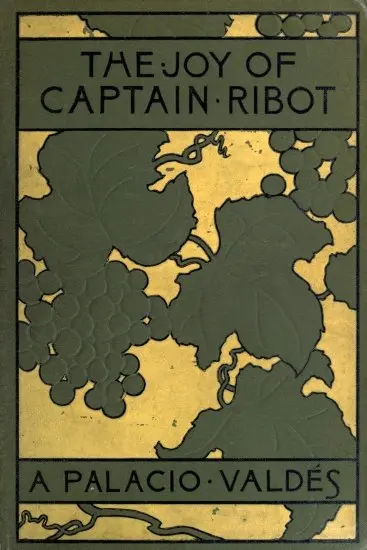
Armando Palacio Valdés
BEHIND THE BOOK
This eBook is for the use of anyone anywhere in the United States and most other parts of the world at no cost and with almost no restrictions whatsoever. You may copy it, give it away or re-use it under the terms of the Project Gutenberg License included with this eBook or online at www.gutenberg.org. If you are not located in the United States, you will have to check the laws of the country where you are located before using this eBook. Read the source licence.
The original source file, including credits and licence, is retained by this library. Request an original-format copy at no charge. Please include the book title and Project Gutenberg identifier #37969.
KEEP YOUR CURIOSITY GOING
Coulson Kernahan

Maurice Baring
Frances Wright
Cécile Tormay

Frederic Jesup Stimson

W. H. P. (William Henry Pope) Jarvis