THE CLASSIC COLLECTION✦Froth: A NovelCLASSIC FREE BOOKS
Froth: A Novel
Armando Palacio Valdés
THE CLASSIC COLLECTION · 1886
"The Marquis of Peñalta (Marta y María): A Realistic Social Novel" by Don Armando Palacio Valdés is a novel believed to have been written in the late 19th century. This work explores the complexities of social and moral issues through its protagonist, María, as she navigates her life in a provincial town in Spain. The narrative promises to unfold the interplay of love, duty, and personal sacrifice against the backdrop of a society steeped in tradition and religious fervor. The opening of the novel introduces us to the setting and context in which María lives, establishing a vivid picture of the town of Nieva with its streets and social dynamics. The author presents a detailed look at the diverse elements of the community, from the bustling streets crowded with people to the elegance of the Elorza mansion, where social gatherings take place. We are introduced to María's character, who, despite her youth and beauty, battles the internal conflict between societal expectations and her individual desires. This tension is palpable from the start, setting the stage for an exploration of her personal journey, particularly in relation to her faith and the choices she must face as she matures. The scene is rich with detail, hinting at the novel's themes of identity and the nature of true calling amidst societal pressures.
Introduction adapted from the source catalogue; source summaries may be automatically generated.
Free to read · English · 100,631 words · No account needed
MAKE TIME FOR A GOOD BOOK
On by default. Untick to stop anonymous reading totals. Each page counts after 10 seconds in view. How this works.
Anonymous counting is on unless you have switched it off.
Thanks to his genial, happy, and sympathetic nature, rather than by his application, the young Marqués de Peñalta finished his course. At college everybody loved him, students as well as professors. He was one of those frank and friendly young fellows with whom it is difficult to quarrel, and whom we all go to as a confidant worthy of sharing the secrets of our hearts in the bitter misfortunes of life. He was always found smiling and unreserved, bringing joy and confidence wherever he went, and rarely did a dispute arise between two cadets which he did not succeed in bringing to a friendly issue. In spite of his conciliatory temperament no one in college or out of it questioned his courage, much less the remarkable prowess of his fists. More than once, in the frequent quarrels between the cadets and the peasants, which generally broke out in candle-light balls, he had floored three or four stout carls with as many blows, which attracted all the more attention from the crowd because there was nothing stout or athletic in his figure.
One day, while encamped in the park at Sevilla, the colonel called him into his tent and asked him,--
"Isn't it a number of days since you have had a letter from your mother,
Peñalta?"
Ricardo grew as pale as death.
"What is it, colonel? what is it?"
"Don't be alarmed, child;[12] I happened to learn that she wasn't very
well."
Ricardo understood perfectly, and fell into the colonel's arms, shedding a flood of tears. That night he took the train for the north.
The dismal night spent in that journey remained deeply impressed upon his mind. When the engine whistled, and his comrades, who had come to see him off, standing on the platform, waved their adios, he went and sat in a corner of the carriage, wrapped up in his cloak, feigning to sleep, in order better to abandon himself to his painful, gloomy thoughts. Oh, how painful and gloomy his thoughts! He imagined the guardian angel of his infancy, the mother of his heart, dying alone, without receiving her son's last kiss, perhaps calling for him with yearning in the supreme moment of her agony. He remembered that when he had last left her, her health was rather feeble, and the embrace which she gave him was much longer than usual, and her kisses more numerous, as though the poor woman had felt a presentiment that she should never see him again. In her wide, moist eyes he read a fervent silent prayer that he would abandon his profession and not leave her. But he, pleased with the vanities of society, and seduced by the voice of selfishness, had paid no heed to this prayer which the unhappy woman had not dared to formulate with her lips. He felt deeply angry with himself, and called himself the most insulting and humiliating names. From time to time he put his head out of the window and breathed the cool night air, to prevent the sobs from choking him. The vague, mysterious outline of the undulating landscape, wrapt in shadows, transformed his despair into grief, which gradually changed into a solemn melancholy like the gloomy clouds hovering above the still more gloomy earth. The silent majesty of inanimate nature calmed his agitation, but it made him think with cold chills of the perfect loneliness awaiting him. The tie that bound him to earth, and through which he felt that all human beings were his kin, was cut; now he had no one in the world whom he could call his own. The wind, stirred by the swift rush of the train, hummed in his ears and seemed to say to him, Alone! alone! The harsh racket of the wheels and engine violently excited his morbid state of mind, giving him a sensation almost of pain like that caused by the thoughts rushing through his brain. The noisy, metallic rhythm of the wheels likewise seemed to say, with still more relentless accent, Alone! alone! His sad face followed the far-off line of the horizon, and this came back to him in quivering, prophetic reflections, which barely sufficed to cleave asunder the network of shadows, gloom upon gloom. The light from the engine cast a reddish gleam, tingeing as with blood the ground and the trees lining the track. Where there were no trees, the telegraph poles flew past him with bewildering rapidity like the happy hours of his youth. Above his head floated the huge black plume of the smoke, emitted by the smoke-stack of the engine, and this, as it disappeared in the atmosphere, in dying made a thousand strange and monstrous phantasms. These phantasms, as they fled away, rolling along just above the ground, seemed also to say mournfully, Alone! alone! Thereupon, being no longer able to endure the icy breath of the deserted landscape which penetrated his breast and parched his eyes, he shut the window and again returned to his corner and his tears.
Your reading position is saved on this browser. Take it to another device with a library code. Reading pages adapt to text, rather than matching a printed edition.
Armando Palacio Valdés

Armando Palacio Valdés

Armando Palacio Valdés
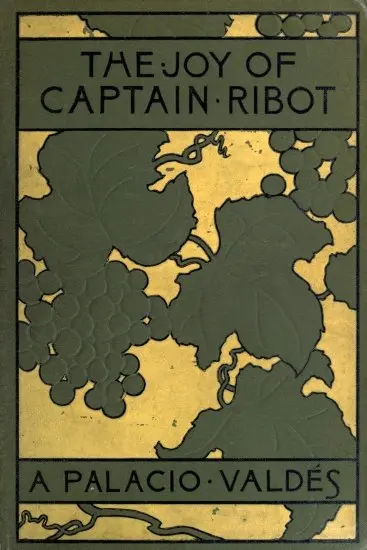
Armando Palacio Valdés
BEHIND THE BOOK
This eBook is for the use of anyone anywhere in the United States and most other parts of the world at no cost and with almost no restrictions whatsoever. You may copy it, give it away or re-use it under the terms of the Project Gutenberg License included with this eBook or online at www.gutenberg.org. If you are not located in the United States, you will have to check the laws of the country where you are located before using this eBook. Read the source licence.
The original source file, including credits and licence, is retained by this library. Request an original-format copy at no charge. Please include the book title and Project Gutenberg identifier #37969.
KEEP YOUR CURIOSITY GOING
Coulson Kernahan

Maurice Baring
Frances Wright
Cécile Tormay

Frederic Jesup Stimson

W. H. P. (William Henry Pope) Jarvis