THE CLASSIC COLLECTION✦Froth: A NovelCLASSIC FREE BOOKS
Froth: A Novel
Armando Palacio Valdés
THE CLASSIC COLLECTION · 1886
"The Marquis of Peñalta (Marta y María): A Realistic Social Novel" by Don Armando Palacio Valdés is a novel believed to have been written in the late 19th century. This work explores the complexities of social and moral issues through its protagonist, María, as she navigates her life in a provincial town in Spain. The narrative promises to unfold the interplay of love, duty, and personal sacrifice against the backdrop of a society steeped in tradition and religious fervor. The opening of the novel introduces us to the setting and context in which María lives, establishing a vivid picture of the town of Nieva with its streets and social dynamics. The author presents a detailed look at the diverse elements of the community, from the bustling streets crowded with people to the elegance of the Elorza mansion, where social gatherings take place. We are introduced to María's character, who, despite her youth and beauty, battles the internal conflict between societal expectations and her individual desires. This tension is palpable from the start, setting the stage for an exploration of her personal journey, particularly in relation to her faith and the choices she must face as she matures. The scene is rich with detail, hinting at the novel's themes of identity and the nature of true calling amidst societal pressures.
Introduction adapted from the source catalogue; source summaries may be automatically generated.
Free to read · English · 100,631 words · No account needed
MAKE TIME FOR A GOOD BOOK
On by default. Untick to stop anonymous reading totals. Each page counts after 10 seconds in view. How this works.
Anonymous counting is on unless you have switched it off.
Let us say also that at the period when these events occurred, the clergy and the religious tendencies of our people were suffering a mild sort of persecution on the part of the government, which was then under the control of liberals most extreme in their views and notorious for their heretical ideas, and this, as was to be expected, had greatly excited the consciences of the God-fearing, and had kindled in the Northern provinces, naturally more religious and more tenacious of tradition, an obstinate and bloody civil war which threatened to overthrow the body politic, and, at the same time, our wealth and prestige. All people of greater or less piety who loved our Catholic traditions, every one who detested the persecution suffered by the Church, and yearned for the kingdom of Jesus on earth under the mediation of his ministers, waited eagerly the result of this formidable war, in which were at stake not only the more or less genuine rights of a claimant to the throne, but likewise the dearest and most august interests of religion. Those who frequented the churches and were on terms of intimacy with the clergy, took a tacit stand together against the heretics in power, receiving joyfully and quickly spreading all intelligence favorable to the royal-Catholic cause, and falling into anxiety and melancholy when bad news came. In the houses of the richest landed proprietors, in the sacristies, and in the back shops of many an absolutist merchant was read on the sly the Cuartel Real, the official journal of the Pretender, which came from time to time between pieces of cretonne or packages of macaroni. Festivals in honor of the Virgin were celebrated with great pomp as an atonement for the manifold impieties of the Congress of Deputies, and these festivals on more than one occasion ended violently by the interference of drunken Republicans. There was a great increase in attention to religious worship, especially to that of the Sacred Hearts of Jesus and Mary, and many pious people went on pilgrimages to the sanctuary of Lourdes, on their return telling their friends about the fine arrangement and the solid organization of the Catholic hosts in the Basque provinces. A number of young men of the best known families of Nieva had not been seen over night, concealing the real purpose of their absence. From this to open, resolute conspiracy is but a step, and in Nieva this preparatory step had already been taken. There was formed in the town a Carlist committee,[56] which held its meetings with a certain mystery and kept up close relations with the Central Committee, whose orders it obeyed, and a lively correspondence with the army of the Pretender. As in the country, though not to such a degree as in the Basque provinces, there existed sufficient elements for the service of the Catholic-monarchical cause, to bring about, provided they were well managed, if not a formal war, at least a serious agitation. The committee of Nieva, instigated by that of the capital, decided, after much vacillation and no few discussions, to raise a company within the territory. The preparations were very extensive; they began early in the winter, and did not terminate until the beginning of the spring. There were reports emanating from Bayonne, there came orders and plans of action, there were numberless secret meetings, a few women were enlisted, muskets were surreptitiously abstracted from the factory by a few Carlist workmen, a quantity of white caps and spatterdashes[57] were made; finally, one night there went out to camp some thirty young men, for the most part students and seminarists, at whose head marched the president of the committee, Don César Pardo, whom we had the honor of meeting at the end of the third chapter of this narration. Those who had sworn to go forth that night were more than three hundred, but only that handful of braves were on hand, and Don César, giving proofs of what he was, that is, a bold, heroic caballero, did not hesitate to take command of them, hoping by his example to carry along the timid. They made their way to the mountain by the valley of Cañedo; but on the next day a dozen policemen,[58] who immediately started in pursuit of them, took them by surprise just as they were dining in camp, and brought them back to the city, bound, without being able to make the least resistance. The people, hearing of the incident, hastened in great numbers to await them on the highway, and saw them filing toward the jail, melancholy but dignified and stern, showing in their haughty eyes that if they had not been victims of a surprise, much blood would have been shed.
Your reading position is saved on this browser. Take it to another device with a library code. Reading pages adapt to text, rather than matching a printed edition.
Armando Palacio Valdés

Armando Palacio Valdés

Armando Palacio Valdés
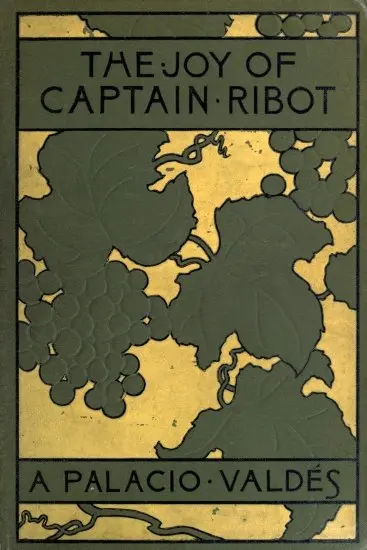
Armando Palacio Valdés
BEHIND THE BOOK
This eBook is for the use of anyone anywhere in the United States and most other parts of the world at no cost and with almost no restrictions whatsoever. You may copy it, give it away or re-use it under the terms of the Project Gutenberg License included with this eBook or online at www.gutenberg.org. If you are not located in the United States, you will have to check the laws of the country where you are located before using this eBook. Read the source licence.
The original source file, including credits and licence, is retained by this library. Request an original-format copy at no charge. Please include the book title and Project Gutenberg identifier #37969.
KEEP YOUR CURIOSITY GOING
Coulson Kernahan

Maurice Baring
Frances Wright
Cécile Tormay

Frederic Jesup Stimson

W. H. P. (William Henry Pope) Jarvis