THE CLASSIC COLLECTION✦Froth: A NovelCLASSIC FREE BOOKS
Froth: A Novel
Armando Palacio Valdés
THE CLASSIC COLLECTION · 1886
"The Marquis of Peñalta (Marta y María): A Realistic Social Novel" by Don Armando Palacio Valdés is a novel believed to have been written in the late 19th century. This work explores the complexities of social and moral issues through its protagonist, María, as she navigates her life in a provincial town in Spain. The narrative promises to unfold the interplay of love, duty, and personal sacrifice against the backdrop of a society steeped in tradition and religious fervor. The opening of the novel introduces us to the setting and context in which María lives, establishing a vivid picture of the town of Nieva with its streets and social dynamics. The author presents a detailed look at the diverse elements of the community, from the bustling streets crowded with people to the elegance of the Elorza mansion, where social gatherings take place. We are introduced to María's character, who, despite her youth and beauty, battles the internal conflict between societal expectations and her individual desires. This tension is palpable from the start, setting the stage for an exploration of her personal journey, particularly in relation to her faith and the choices she must face as she matures. The scene is rich with detail, hinting at the novel's themes of identity and the nature of true calling amidst societal pressures.
Introduction adapted from the source catalogue; source summaries may be automatically generated.
Free to read · English · 100,631 words · No account needed
MAKE TIME FOR A GOOD BOOK
On by default. Untick to stop anonymous reading totals. Each page counts after 10 seconds in view. How this works.
Anonymous counting is on unless you have switched it off.
"Well, then, adios, ... it won't be long[55] ... wait for me at the
entrance...."
After she had gone several steps away, she turned around to say in a
very subdued tone,--
"Be sure to do as I said, ... and be reverent, will you?"
Ricardo gave a sign of assent, while a happy smile brightened his face.
From that time forth the Marqués de Peñalta every morning escorted the eldest daughter of the Elorzas to mass, leaving her at the church door and joining her again when service was over. Maria evidently felt great pleasure in having his company, and as for Ricardo, it is not easy to exaggerate the joy which suddenly fell upon him through the change brought about in the behavior of his betrothed. Gradually her influence began to have such weight upon his spirit, that before long, as he himself had already suspected would be the case, his ideas began notably to modify, and not only his ideas but likewise his habits and manner of life, causing him to be more circumspect in nature, more careful in his speech, more gentle and more religious ... Anxious to please his betrothed, who did not cease to urge him with entreaties and advice, he began to give up the noisy amusements and even the company of the other officers of the gun factory, going home early, frequenting churches, and spending many afternoons with some of the clergymen; he became a member of several pious confraternities, among them that of Saint Vincent de Paul, visiting the poor in company with the beatos of the town, and spending no little money in contributions for worship; finally, after many heartfelt prayers he made general confession to Fray Ignacio, Maria's confessor.
However strange it may seem, we must declare that Ricardo, far from feeling repugnance or discomfort in this new life, found deep, mysterious pleasures, which till then he had never enjoyed. The pomp and circumstance of the Catholic religion, to which he had hitherto paid little attention, began to fascinate him; the sweet seclusion of the church at eventide, when it is peopled with shadows and murmurs, filled him with a gentle perturbation, with a certain peculiar longing for a lofty secret something; the odors of the incense and wax were for him like a pleasant poison, which put him to sleep, carrying him away to glorious regions of immortal bliss; his frequent deeds of charity produced in him an agreeable aftertaste and a great sense of comfort, increasing his faith; the humiliation of the sacrament of penance, which at first had been so distasteful to him, came to be a fountain of delights; he himself did not know whence they proceeded or how they took possession of his soul. Perhaps some of the psychological novelists who know so much and take such delight in investigating the deepest recesses of the consciousness of other people might discover the origin of those joys in the close union which our young friend created in the depths of his soul between religion and his love for Maria, and might see in the pleasure which Ricardo felt in running counter to his ideas, and mortifying his self-love, a certain analogy to what mystics and ascetics feel in the midst of their cruel torments,--the pleasure of sacrificing self for the beloved object. Perhaps they would set themselves minutely to investigate what part of that pleasure corresponded to pure devotion, and what part to the development of amorous sentiments and the movement of the feelings. Possibly, carried away by their love of analysis, and dragged from their moorings by the hurricane of impiety, which is nowadays apt to carry away with it this class of novelists, they might go so far as to declare that there exists at the bottom of religious practices and the ceremonial of the Church something which instead of calming the voice of the feelings adds to it, and that the inclination of the sexes, in the very heart of the religious life, within the temple itself, enjoying the soporific light reflected gently from the gilding of the altars, breathing the keen odors of the dust and the wax, and the narcotic perfume of the incense, listening to the moaning of the organ, and the vague murmur of the prayers of the faithful, acquires the flattering savor of forbidden fruit, and is more delicious and voluptuous than amid the splendor and elegance of the ball-room. Possibly they would say this and add many other considerations to prove it, but I will not follow them on this path, which, without good reason, leads to the offending of timid consciences and the grievous confusing of the novelist with the philosopher. I limit myself gladly to setting forth facts without launching out into the philosophy of them, and I faithfully describe what I have seen and experienced, or have been told by trustworthy people.
Your reading position is saved on this browser. Take it to another device with a library code. Reading pages adapt to text, rather than matching a printed edition.
Armando Palacio Valdés

Armando Palacio Valdés

Armando Palacio Valdés
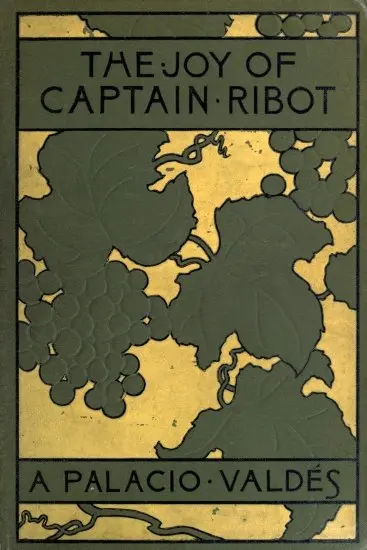
Armando Palacio Valdés
BEHIND THE BOOK
This eBook is for the use of anyone anywhere in the United States and most other parts of the world at no cost and with almost no restrictions whatsoever. You may copy it, give it away or re-use it under the terms of the Project Gutenberg License included with this eBook or online at www.gutenberg.org. If you are not located in the United States, you will have to check the laws of the country where you are located before using this eBook. Read the source licence.
The original source file, including credits and licence, is retained by this library. Request an original-format copy at no charge. Please include the book title and Project Gutenberg identifier #37969.
KEEP YOUR CURIOSITY GOING
Coulson Kernahan

Maurice Baring
Frances Wright
Cécile Tormay

Frederic Jesup Stimson

W. H. P. (William Henry Pope) Jarvis