THE CLASSIC COLLECTION✦Primitive Psycho-Therapy and QuackeryCLASSIC FREE BOOKS
Primitive Psycho-Therapy and Quackery
Robert Means Lawrence
THE CLASSIC COLLECTION · 1898
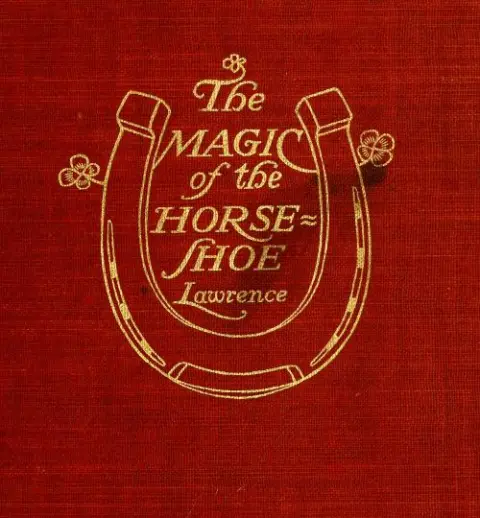
"The Magic of the Horse-Shoe, with Other Folk-Lore Notes" by Robert Means Lawrence is a collection of folk-lore explorations written in the late 19th century. The work delves into the origins and significances of various superstitions and popular beliefs, with a particular focus on the cultural history and magical connotations surrounding the horse-shoe as a talisman. It examines how such symbols have influenced human behavior and cultural practices over time, making it a rich resource for those interested in folklore and superstitious traditions. At the start of the text, the author introduces the study of popular customs and beliefs as a window into early human thought. The preface sets the tone for the exploration by discussing the evolution of the horse-shoe from a practical item to a symbol imbued with luck and supernatural properties, detailing historical practices and anecdotes, including a tale of Queen Elizabeth I and the tradition of giving horse-shoes as tokens of reverence. The author emphasizes the horse-shoe's dual significance: as a pragmatic tool for horses’ welfare and as a guardian against malevolent forces, showcasing the depth of cultural traditions attached to this seemingly simple object.
Introduction adapted from the source catalogue; source summaries may be automatically generated.
Free to read · English · 78,485 words · No account needed
MAKE TIME FOR A GOOD BOOK
On by default. Untick to stop anonymous reading totals. Each page counts after 10 seconds in view. How this works.
Anonymous counting is on unless you have switched it off.
[54] Ph. Charles Berjean, The Horses of Antiquity, Middle Ages, and
Renaissance. London, 1864.
[55] Theodore Andrea Cook, B. A., Old Touraine.
[56] Professor C. H. Rochholz, Alt-deutsches Bürgerleben.
[57] Richard Folkard, Jr., Plant-Lore.
[58] Laisnel de la Salle, Croyances et legendes du centre de la France.
Paris, 1875.
[59] Merlin, Book of Charms.
[60] William A. Craigie, M. A., Scandinavian Folk-Lore, p. 396.
[61] Rudolph Keyser, The Religion of the Northmen, p. 299.
[62] Popular Science Monthly, vol. 44. 1894.
[63] Dr. Karl Sittl, Archäologie der Kunst, p. 210. 1895.
[64] Edward B. Tylor, LL. D., Primitive Culture.
[65] William S. Walsh, Handy Book of Literary Curiosities.
[66] Rev. Justus Doolittle, Social Life of the Chinese.
[67] Rennell Rodd, p. 165.
[68] William George Black, Folk-Medicine. London, 1883.
[69] J. B. Friedrich, Die Symbolik und Mythologie der Natur.
[70] F. Nork, Mythologie der Volkssagen und Volksmärchen. Stuttgart,
1848.
[71] Paul Sébillot, Légendes et curiosités des métiers.
[72] The Folk-Lore Journal, vol. vii. 1889.
[73] Jacob Larwood and John C. Hotten, The History of Signboards.
[74] William Mackay, Urquhart and Glenmoriston, p. 434.
[75] Daniel Wilson, The Archæology and Prehistoric Annals of Scotland.
[76] Thomas Keightley, The Fairy Mythology, p. 352.
[77] F. S. Bassett, Sea Phantoms.
[78] James W. Mackinlay, Folk-Lore of Scottish Lochs and Springs, p. 6.
[79] William Jones, Credulities Past and Present.
[80] Giuseppe Pitré, Usi e costumi, credenze, e pregiudizi del popolo Siciliano. Palermo, 1889.
[81] A. Wuttke, Der deutsche Volksaberglaube, p. 92.
[82] Cornhill, N. S. vol. xix. 1892.
[83] Dr. H. Ploss, Das Kind in Brauch und Sitte der Völker, p. 122.
[84] A. Wuttke, Der deutsche Volksaberglaube, p. 336.
[85] Natural History, book xxviii. ch. 81.
[86] Dr. G. Lammert, Volksmedizin in Bayern, p. 120.
[87] Campbell.
[88] W. Crooke, B. A., Popular Religion and Folk-Lore of Northern India.
[89] Letter to the writer from H. Clay Trumbull.
[90] The Folk-Lore Journal, vol. vi. p. 77.
[91] Jones and Kropf, Folk-Tales of the Magyars, p. 410, note.
[92] Thomas Keightley, The Fairy Mythology, p. 148.
[93] Moise Schuhl, Superstitions et coutumes populaires du Judaisme.
[94] John Gregorson Campbell, The Fians, p. 52.
[95] Fräulein Helene Raff.
[96] L’Initiation, 19ᵉ volume, April, 1893.
[97] J. C. Brown, LL. D., People of Finland in Archaic Times, p. 112.
[98] W. A. Craigie, Scandinavian Folk-Lore.
[99] T. F. Thiselton Dyer, M. A., British Popular Customs, p. 424.
[100] Mélusine, tome iv. p. 367.
[101] R. G. Haliburton, The Dwarfs of Mount Atlas.
[102] Dr. Ludwig Beck, Die Geschichte des Eisens, p. 879.
[103] A. Wuttke, Der deutsche Volksaberglaube, p. 263.
[104] For this legend, and for other information regarding the traditions and customs of the Bavarian and Tyrolese peasantry, the writer is indebted to Fräulein Helene Raff, of Munich.
[105] Crooke, p. 199.
[106] Gregor, Scotch Folk-Lore, p. 45.
[107] E. Daumas, The Horses of the Sahara, pp. 150 et seq.
[108] Rev. James Macdonald, Religion and Myth, p. 92.
[109] Dr. O. Schrader, Prehistoric Antiquities.
[110] Richard Andree, Ethnographische Parallelen und Vergleiche, p. 155.
[111] Chambers’ Encyclopædia.
[112] Banier, Mythology, vol. ii. p. 570.
[113] Brinton, Religions of Primitive Peoples, p. 142.
[114] Henry Yule, Cathay and the Way Thither.
Your reading position is saved on this browser. Take it to another device with a library code. Reading pages adapt to text, rather than matching a printed edition.
BEHIND THE BOOK
This eBook is for the use of anyone anywhere in the United States and most other parts of the world at no cost and with almost no restrictions whatsoever. You may copy it, give it away or re-use it under the terms of the Project Gutenberg License included with this eBook or online at www.gutenberg.org. If you are not located in the United States, you will have to check the laws of the country where you are located before using this eBook. Read the source licence.
The original source file, including credits and licence, is retained by this library. Request an original-format copy at no charge. Please include the book title and Project Gutenberg identifier #57411.
KEEP YOUR CURIOSITY GOING
Cécile Tormay

Moritz Busch
John L. Ransom

Maurice Baring
Frances Wright
Cécile Tormay