THE CLASSIC COLLECTION✦Primitive Psycho-Therapy and QuackeryCLASSIC FREE BOOKS
Primitive Psycho-Therapy and Quackery
Robert Means Lawrence
THE CLASSIC COLLECTION · 1898
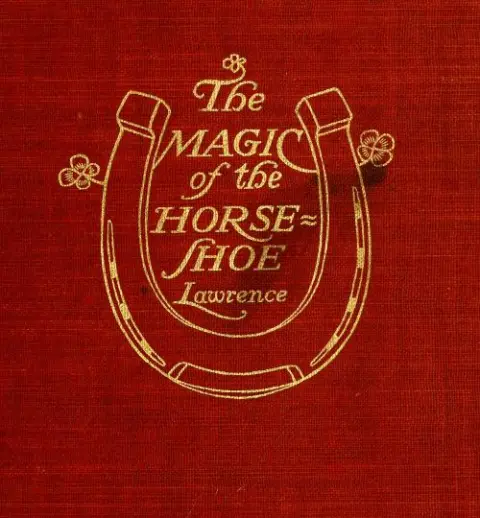
"The Magic of the Horse-Shoe, with Other Folk-Lore Notes" by Robert Means Lawrence is a collection of folk-lore explorations written in the late 19th century. The work delves into the origins and significances of various superstitions and popular beliefs, with a particular focus on the cultural history and magical connotations surrounding the horse-shoe as a talisman. It examines how such symbols have influenced human behavior and cultural practices over time, making it a rich resource for those interested in folklore and superstitious traditions. At the start of the text, the author introduces the study of popular customs and beliefs as a window into early human thought. The preface sets the tone for the exploration by discussing the evolution of the horse-shoe from a practical item to a symbol imbued with luck and supernatural properties, detailing historical practices and anecdotes, including a tale of Queen Elizabeth I and the tradition of giving horse-shoes as tokens of reverence. The author emphasizes the horse-shoe's dual significance: as a pragmatic tool for horses’ welfare and as a guardian against malevolent forces, showcasing the depth of cultural traditions attached to this seemingly simple object.
Introduction adapted from the source catalogue; source summaries may be automatically generated.
Free to read · English · 78,485 words · No account needed
MAKE TIME FOR A GOOD BOOK
On by default. Untick to stop anonymous reading totals. Each page counts after 10 seconds in view. How this works.
Anonymous counting is on unless you have switched it off.
In England the day of twenty-four hours was formerly divided into
thirteen parts, as follows:—
1. After midnight.
2. Cock-crow.
3. Between the first cock-crow and daybreak.
4. The dawn.
5. Morning.
6. Noon.
7. Afternoon.
8. Sunset.
9. Twilight.
10. Evening.
11. Candle-time.
12. Bed-time.
13. Dead of night.
Recurring now to the prevalent notions regarding the sinister and portentous character of this number, one may well inquire in all seriousness whether the harboring of this and other firmly rooted superstitious fancies is compatible with a deep and abiding Christian faith. The answer is plainly in the negative. Therefore it is doubtless true—and the truth should make us free—that the greater our indifference to the various alleged omens and auguries which so easily beset us, the more readily shall we acquire and retain a firm and enduring dependence on Divine Providence.
[1] New Cabinet Cyclopædia.
[2] Archæologia, vol. iii. 1775.
[3] John Kitto, D. D., Cyclopædia of Biblical Art.
[4] John Beckman, A History of Inventions.
[5] Carmen XVIII. 26.
[6] Suetonius: “Soleis mularum argenteis.”
[7] Pliny: “Jumentis suis soleas ex auro induere.”
[8] Fosbroke, Dictionary of Antiquities.
[9] Knight’s Mechanical Dictionary.
[10] Alexander Adam, LL. D., Roman Antiquities.
[11] Archæologia, vol. xlvii.
[12] Scribner’s Magazine, November, 1894.
[13] John Beckman, A History of Inventions.
[14] Fosbroke, Archæologia, vol. iii.
[15] Notes and Queries, series 3, vol. v. 1864.
[16] Leicestershire and Rutland Notes and Queries, vol. i. 1889-91.
[17] Margaret G. Finch, The History of Oakham Castle. Oakham, 1897.
[18] Chambers’ Journal, March 10, 1866.
[19] Cameron’s Across Africa.
[20] W. Crooke, B. A., North Indian Folk-Lore.
[21] Clara Erskine Clement, Naples.
[22] George Borrow, The Zincali.
[23] A. Certeux and E. Henry Carnoy, L’Algérie traditionnelle, tome i.
p. 159.
[24] Folk-Lore, June, 1896, p. 148.
[25] Lieutenant-Colonel N. Prejevalsky, Mongolia, vol. ii. p. 207.
[26] William M. Thomson, D. D., The Land and the Book.
[27] S. S. Thorburn, Bannú.
[28] Sir John Bowring, F. R. S., The Kingdom and People of Siam, vol.
i. p. 145.
[29] Clara Erskine Clement, Naples.
[30] Elworthy, Evil Eye, p. 261.
[31] Popular Science Monthly, November, 1896.
[32] Goblet D’Alviella, La migration des symboles, p. 25.
[33] Rennell Rodd, The Customs and Lore of Modern Greece. 1892.
[34] Revue des traditions populaires, tome viii. 1892.
[35] Mélusine, tome viii. No. 4. 1896.
[36] M’Clintock and Strong’s Cyclopædia, art. “Head-Dress.”
[37] Lucy M. J. Garnett, The Christian Women of Turkey.
[38] L’Algérie traditionnelle, tome i. p. 159. 1884.
[39] H. Clay Trumbull, The Threshold Covenant, p. 74.
[40] Folk-Lore, March, 1898, p. 10.
[41] Mélusine, tome viii. No. 3. 1896.
[42] L’Algérie traditionelle, tome i. p. 159. 1884.
[43] Richard Folkard, Jr., Plant-Lore.
[44] Rev. Timothy Harley, Moon-Lore, p. 192.
[45] Isaiah iii. 18.
[46] Cornhill, March, 1877.
[47] Thomas Inman, M. D., Ancient Faiths embodied in Ancient Names.
[48] Barclay V. Head, Historia Numorum. Oxford, 1887.
[49] A Dictionary of Roman Coins. London, 1889.
[50] Gentleman’s Magazine, vol. 84. 1814.
[51] Popular Science Monthly, November, 1895.
[52] Journal of the Anthropological Institute of Great Britain and
Ireland, vol. 19. 1890.
[53] Bernard de Montfaucon, L’antiquité expliquée.
Your reading position is saved on this browser. Take it to another device with a library code. Reading pages adapt to text, rather than matching a printed edition.
BEHIND THE BOOK
This eBook is for the use of anyone anywhere in the United States and most other parts of the world at no cost and with almost no restrictions whatsoever. You may copy it, give it away or re-use it under the terms of the Project Gutenberg License included with this eBook or online at www.gutenberg.org. If you are not located in the United States, you will have to check the laws of the country where you are located before using this eBook. Read the source licence.
The original source file, including credits and licence, is retained by this library. Request an original-format copy at no charge. Please include the book title and Project Gutenberg identifier #57411.
KEEP YOUR CURIOSITY GOING
Cécile Tormay

Moritz Busch
John L. Ransom

Maurice Baring
Frances Wright
Cécile Tormay