
The story of Betty
Carolyn Wells
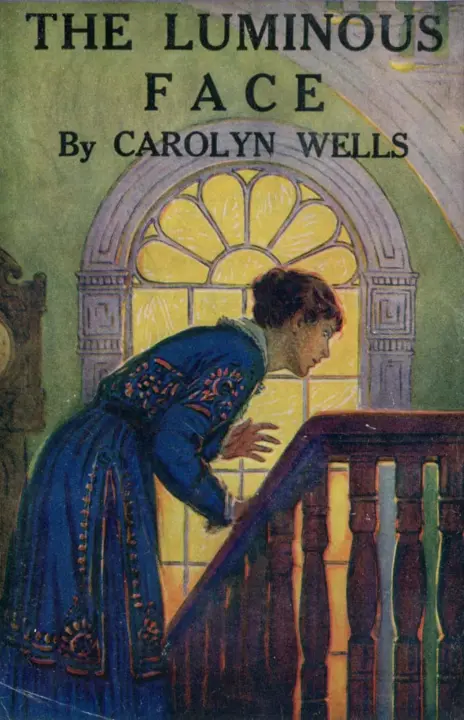
THE CLASSIC COLLECTION · 1921
"The Luminous Face" by Carolyn Wells is a mystery novel written in the early 20th century. The story unfolds around the suspicious death of Robert Gleason, which is initially treated as a suicide but quickly reveals layers of intrigue and potential foul play. Key characters include Doctor Ely Davenport, a physician with a strong sense of self-importance; Pollard, a man with a mysterious connection to Gleason; and Phyllis Lindsay, who is revealed to have had a complicated relationship with the deceased. At the start of the narrative, a group of acquaintances discusses the unsolved murder of Gleason, establishing a tense atmosphere as they contemplate the nature of crime and motives. The dialogue hints at the complexity of human emotions surrounding the concept of murder. Soon after, a frantic call from Gleason claiming he has been shot propels Doctor Davenport into action, ultimately leading to the discovery of Gleason's body and raising questions about the circumstances of his death. The opening effectively sets the stage for a tangled web of relationships and motives that will likely unfold as the investigation progresses.
Introduction adapted from the source catalogue; source summaries may be automatically generated.
Free to read · English · 63,786 words · No account needed
MAKE TIME FOR A GOOD BOOK
On by default. Untick to stop anonymous reading totals. Each page counts after 10 seconds in view. How this works.
Anonymous counting is on unless you have switched it off.
“There are only three motives,” Monroe informed. “Love, hate and
money.”
“You’ve got all the jargon by heart, little one,” and Pollard grinned at him. “Been reading some new Detective Fiction?”
“I’m always doing that,” Monroe stated, “but I hold that a detective who can’t tell which of those three is the motive, isn’t worth his salt.”
“Salt is one commodity that has remained fairly inexpensive,” said Barry, speaking slowly, and with his eyes on his cigarette, from which he was carefully amputating the ash, “and a detective who could truly diagnose motive is not to be sneezed at. Besides, revenge is often a reason.”
“That comes under the head of hate,” promptly responded Monroe. “The three motives include all the gamut of human emotion, and some of their ramifications will include every murder motive that ever existed.”
“Fear?” quietly suggested Doctor Davenport.
“Part of hate,” said Monroe, but he was challenged by Pollard.
“Not necessarily. A man may fear a person whom he does not hate at all. But there’s another motive, that doesn’t quite fit your classification, Monroe.”
Before the inevitable question could be put another man joined the
group.
“Hello, folks,” said Robert Gleason, as he sat down; “hope I don’t intrude—and all that. What you talking about?”
“Murder,” said Barry. “Murder as a Fine Art, you know.”
“Don’t like the subject. Let’s change it. Talk about the ladies, or something pleasant, you know. Eh?”
“Or Shakespeare and the musical glasses,” said Pollard.
“No musical glasses, nowadays,” bewailed Gleason. “No more clink the canakin, clink. It’s drink to me only with thine eyes. Hence, the preponderance of women and song in our lives, since the third of the trio is gone.”
Gleason was the sort of Westerner usually described as breezy. He was on intimate terms with everybody, whether everybody reciprocated or not. Not a large man, not a young man, he possessed a restless vitality, a wiry energy that gave him an effect of youth. About forty, he was nearer the age of Doctor Davenport than the others, who were all in their earliest thirties.
Nobody liked Gleason much, yet no one really disliked him. He was a bit forward, a little intrusive, but it was clear to be seen that those mannerisms were due to ignorance and not to any intent to be objectionable. He was put up at the Club by a friend, and had never really overstepped his privileges, though it was observable that his ways were not club ways.
Your reading position is saved on this browser. Take it to another device with a library code. Reading pages adapt to text, rather than matching a printed edition.
Carolyn Wells

Carolyn Wells & Harry Persons Taber

Carolyn Wells

Carolyn Wells
BEHIND THE BOOK
This eBook is for the use of anyone anywhere in the United States and most other parts of the world at no cost and with almost no restrictions whatsoever. You may copy it, give it away or re-use it under the terms of the Project Gutenberg License included with this eBook or online at www.gutenberg.org. If you are not located in the United States, you will have to check the laws of the country where you are located before using this eBook. Read the source licence.
The original source file, including credits and licence, is retained by this library. Request an original-format copy at no charge. Please include the book title and Project Gutenberg identifier #42714.
KEEP YOUR CURIOSITY GOING
Coulson Kernahan

Maurice Baring
Frances Wright
Cécile Tormay

Frederic Jesup Stimson

W. H. P. (William Henry Pope) Jarvis