
The story of Betty
Carolyn Wells
THE CLASSIC COLLECTION · 1921
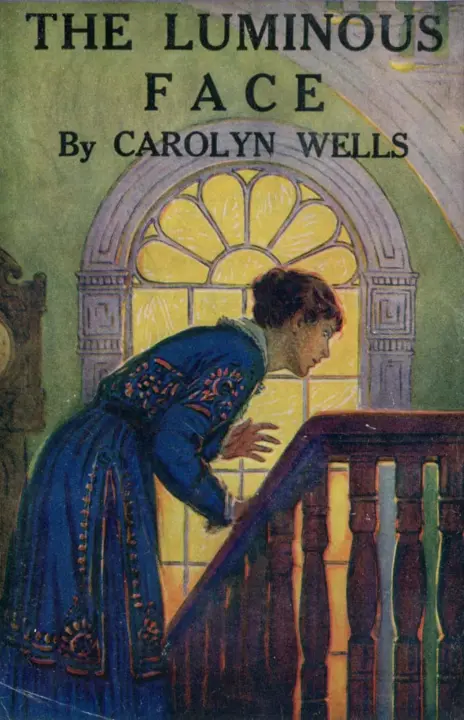
"The Luminous Face" by Carolyn Wells is a mystery novel written in the early 20th century. The story unfolds around the suspicious death of Robert Gleason, which is initially treated as a suicide but quickly reveals layers of intrigue and potential foul play. Key characters include Doctor Ely Davenport, a physician with a strong sense of self-importance; Pollard, a man with a mysterious connection to Gleason; and Phyllis Lindsay, who is revealed to have had a complicated relationship with the deceased. At the start of the narrative, a group of acquaintances discusses the unsolved murder of Gleason, establishing a tense atmosphere as they contemplate the nature of crime and motives. The dialogue hints at the complexity of human emotions surrounding the concept of murder. Soon after, a frantic call from Gleason claiming he has been shot propels Doctor Davenport into action, ultimately leading to the discovery of Gleason's body and raising questions about the circumstances of his death. The opening effectively sets the stage for a tangled web of relationships and motives that will likely unfold as the investigation progresses.
Introduction adapted from the source catalogue; source summaries may be automatically generated.
Free to read · English · 63,786 words · No account needed
MAKE TIME FOR A GOOD BOOK
On by default. Untick to stop anonymous reading totals. Each page counts after 10 seconds in view. How this works.
Anonymous counting is on unless you have switched it off.
Doctor Ely Davenport was, without being pompous, a man who was at all times conscious of his own personality and sure of his own importance. He was important, too, being one of the most highly thought of doctors in New York City, and his self-esteem, if a trifle annoying, was founded on his real worth.
He often said that his profession brought him in contact with the souls of men and women quite as much as with their bodies, and he was fond of theorizing what human nature might do or not do in crucial moments.
The detection of crime he held to be a matter requiring the highest intelligence and rarest skill.
“Detection!” he exclaimed, in the course of the present conversation, “why detection is as hard to work out as the Fourth Dimension! As difficult to understand as the Einstein theory.”
“Oh, come now, Doctor,” Pollard said, smiling, “that’s going a bit too far. I admit, though, it requires a superior brain. But any real work does. However, I say, first catch your motive.”
“That’s it,” broke in Monroe, eagerly. “It all depends on the motive!”
“The crime does,” Davenport assented, drily, “but not the detection. You youngsters don’t know what you’re talking about—you’d better shut up.”
“We know a lot,” returned Monroe, unabashed. “Youth is no barrier to knowledge these days. And I hold that the clever detective seeks first the motive. You can’t have a murder without a motive, any more than an omelette without eggs.”
“True, oh, Solomon,” granted the doctor. “But the motive may be known only to the murderer, and not to be discovered by any effort of the investigator.”
“Then the murder mystery remains unsolved,” returned Monroe, promptly.
“Your saying so doesn’t make it so, you know,” drawled Phil Barry, in his impertinent way. “Now, to me it would seem that a nice lot of circumstantial evidence, and a few good clews would expedite matters just as well as a knowledge of the villain’s motive.”
“Circumstantial evidence!” scoffed Monroe.
“Sure,” rejoined Barry; “Give me a smoking revolver with initials on it, a dropped handkerchief, monogrammed, of course, half a broken cuff-link, and a few fingerprints, and I care not who knows the motive. And if you can add a piece—no, a fragment of tweed, clutched in the victim’s rigid hand—why—I’ll not ask for wine!”
“What rubbish you all talk,” said Pollard, smiling superciliously; “don’t you see these things all count? If you have motive you don’t need evidence, and vice versa. That is, if both motive and evidence are the real thing.”
Your reading position is saved on this browser. Take it to another device with a library code. Reading pages adapt to text, rather than matching a printed edition.
Carolyn Wells

Carolyn Wells & Harry Persons Taber

Carolyn Wells

Carolyn Wells
BEHIND THE BOOK
This eBook is for the use of anyone anywhere in the United States and most other parts of the world at no cost and with almost no restrictions whatsoever. You may copy it, give it away or re-use it under the terms of the Project Gutenberg License included with this eBook or online at www.gutenberg.org. If you are not located in the United States, you will have to check the laws of the country where you are located before using this eBook. Read the source licence.
The original source file, including credits and licence, is retained by this library. Request an original-format copy at no charge. Please include the book title and Project Gutenberg identifier #42714.
KEEP YOUR CURIOSITY GOING
Coulson Kernahan

Maurice Baring
Frances Wright
Cécile Tormay

Frederic Jesup Stimson

W. H. P. (William Henry Pope) Jarvis