
The diary of Delia : Being a veracious chronicle of the kitchen, with some side-lights on the parlour
Onoto Watanna
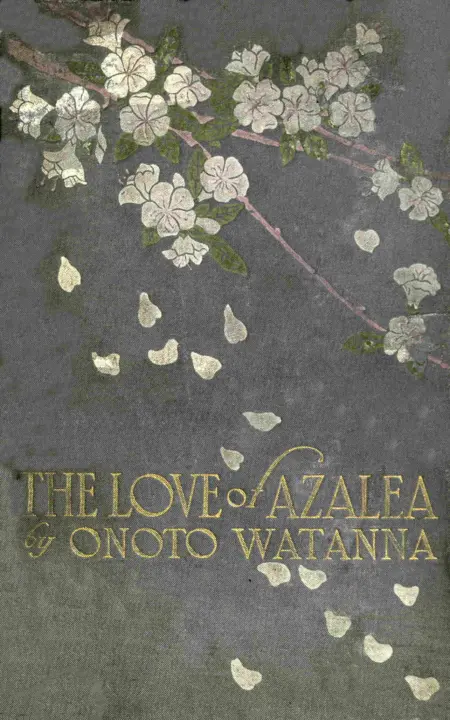
THE CLASSIC COLLECTION · 1904
"The Love of Azalea" by Onoto Watanna is a novel written in the early 20th century." The story revolves around Azalea, a young Japanese girl caught in the throes of cultural conflict, personal tragedy, and romantic turmoil as she navigates life under the strictures of her stepmother and the demands of societal expectations. Her journey leads her to encounter Richard Verley, a missionary who changes the course of her life. "At the start of the narrative, readers are introduced to a mission church in a small Japanese village, where the congregation is disinterested in the sermons of the foreign priest, Richard Verley." Amidst this backdrop, Azalea is depicted as a young girl longing for escape from her unkind home life with a stepmother who treats her cruelly. Dressed in rags, Azalea finds herself smitten with the notion of earning money through singing, just like the choir boys who are treated kindly by Verley. This initial longing evolves when she decides to approach the minister, pretending to seek conversion in the hopes of receiving assistance. The opening chapters set the stage for her transformative journey, revealing her desires for freedom and love against the struggles of her impoverished circumstances and the rigid expectations of her society.
Introduction adapted from the source catalogue; source summaries may be automatically generated.
Free to read · English · 23,842 words · No account needed
MAKE TIME FOR A GOOD BOOK
On by default. Untick to stop anonymous reading totals. Each page counts after 10 seconds in view. How this works.
Anonymous counting is on unless you have switched it off.
Even while the minister in the coolness of his study softly and gently questioned his faltering “convert,” a wily and smooth-speaking Nakoda was visiting her step-mother. Madame Yamada, as the latter was called, knew the marriage broker well, and being the mother of two daughters by a marriage previous to that with Azalea’s father, she welcomed him with more than usual cordiality.
Would not the estimable Mr. Okido remove his shoes and eat the noon meal within her humble house?
The estimable Mr. Okido would. Madame Yamada sent a scullery maid flying to his feet, where, kneeling in the humblest attitude, she removed his dusty sandals. Then she brought fresh water with which to bathe his feet.
Madame Yamada, who had not engaged the services of Okido, was curious to know the nature of his mission to her. She disguised her curiosity, however, under the blandest of manners. With swift acuteness she introduced her daughters into the room and had them serve the man, throughout the meal glancing under her eyelashes to watch the effect of her daughters’ sundry charms upon the Nakoda, who she knew would not fail to dwell upon all such points with his employer. But strangely enough, Okido scarcely seemed to notice the presence of her daughters, and ate his meal in somewhat stolid silence. After the repast he permitted the pipe to be lighted for him and proceeded to smoke at his leisure.
Madame Yamada could contain her curiosity no longer. At a sign from her, her daughters withdrew. Then she addressed the Nakoda.
“In what way,” she asked, “is the humblest one indebted to the esteemed Okido for his honorable visit?”
Okido put down the pipe on the hibachi and, turning toward Madame
Yamada, looked at her keenly.
“You have daughters, Madame Yamada.”
“Two,” she answered promptly.
“Three,” said Okido slowly.
The esteemed one was mistaken. The gods had only blessed her with two.
Nay, the gods had been kinder. Were there not three, including her
step-daughter?
“Ah, yes.” Madame Yamada smiled coldly.
“Let me repeat,” he said slowly. “You have daughters.”
“Yes;” she allowed the word to escape her lips impatiently. Would the stupid broker never come to his business?
“And I,” said Okido, “have a client who desires the hand of one of your
daughters.”
A red spot appeared in either of Madame Yamada’s cheeks.
“What is the name of his honorable parent?” she asked, no longer attempting to conceal her interest.
Okido leaned toward her impressively.
“His name is Matsuda Isami.”
Madame Yamada’s hands trembled. She scarcely could control her voice.
“What—the——”
“Yes, the rich Matsuda Isami.”
Your reading position is saved on this browser. Take it to another device with a library code. Reading pages adapt to text, rather than matching a printed edition.
Onoto Watanna

Onoto Watanna
Onoto Watanna
Onoto Watanna
BEHIND THE BOOK
This eBook is for the use of anyone anywhere in the United States and most other parts of the world at no cost and with almost no restrictions whatsoever. You may copy it, give it away or re-use it under the terms of the Project Gutenberg License included with this eBook or online at www.gutenberg.org. If you are not located in the United States, you will have to check the laws of the country where you are located before using this eBook. Read the source licence.
The original source file, including credits and licence, is retained by this library. Request an original-format copy at no charge. Please include the book title and Project Gutenberg identifier #64861.
KEEP YOUR CURIOSITY GOING
Coulson Kernahan

Maurice Baring
Frances Wright
Cécile Tormay

Frederic Jesup Stimson

W. H. P. (William Henry Pope) Jarvis