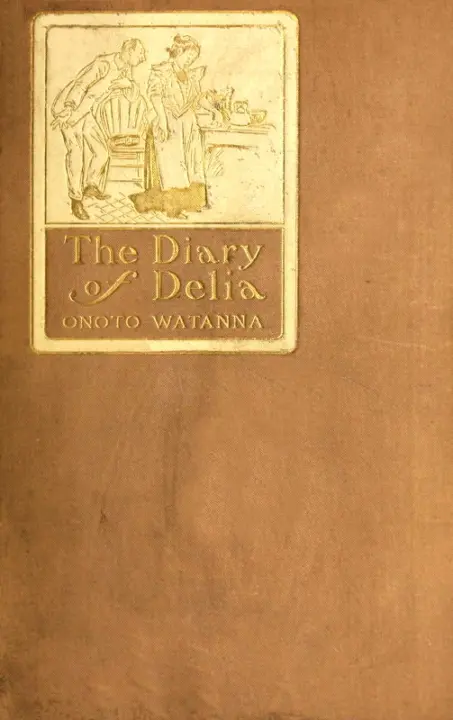
The diary of Delia : Being a veracious chronicle of the kitchen, with some side-lights on the parlour
Onoto Watanna
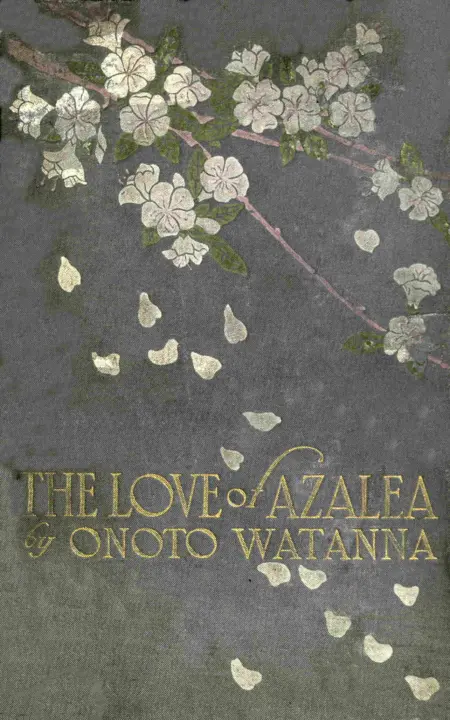
THE CLASSIC COLLECTION · 1904
"The Love of Azalea" by Onoto Watanna is a novel written in the early 20th century." The story revolves around Azalea, a young Japanese girl caught in the throes of cultural conflict, personal tragedy, and romantic turmoil as she navigates life under the strictures of her stepmother and the demands of societal expectations. Her journey leads her to encounter Richard Verley, a missionary who changes the course of her life. "At the start of the narrative, readers are introduced to a mission church in a small Japanese village, where the congregation is disinterested in the sermons of the foreign priest, Richard Verley." Amidst this backdrop, Azalea is depicted as a young girl longing for escape from her unkind home life with a stepmother who treats her cruelly. Dressed in rags, Azalea finds herself smitten with the notion of earning money through singing, just like the choir boys who are treated kindly by Verley. This initial longing evolves when she decides to approach the minister, pretending to seek conversion in the hopes of receiving assistance. The opening chapters set the stage for her transformative journey, revealing her desires for freedom and love against the struggles of her impoverished circumstances and the rigid expectations of her society.
Introduction adapted from the source catalogue; source summaries may be automatically generated.
Free to read · English · 23,842 words · No account needed
MAKE TIME FOR A GOOD BOOK
On by default. Untick to stop anonymous reading totals. Each page counts after 10 seconds in view. How this works.
Anonymous counting is on unless you have switched it off.
She bowed her head without speaking. It was the simplest way of lying. He had taught her it was an evil thing to prevaricate with the lips.
Matsuda appeared somewhat taken aback.
“And when do you expect his return?”
She looked away from her interlocutor. Her eyes were wide and wistful.
“I look for him to come at any time—any day—any hour,” she said. “Always by day I look to the West for his coming, and all night long I burn the light, with its flame to the West. He is always expected.”
“You are a most estimable wife,” said Matsuda sneeringly. “Yet has it never occurred to you that your faithfulness is old-fashioned and fit only for a Japanese woman? You, the wife of a foreigner, should not entertain such feeling.”
“Is not faithfulness esteemed by all nations?” she asked quickly.
“No. The Westerners make light of its qualities. Have you not heard how many of these foreigners who marry in Japan leave their wives never to return?”
“My husband is different,” she said.
“So they all say—while they wait,” said Matsuda.
Half unconsciously her hand went to her heart. She looked as if she were in some sudden pain as she spoke.
“You do not understand. He was a priest of the great God. He could not lie. Ah! he was different from all other men.”
“The eyes of a foolish wife are blind,” said Matsuda. “What a pity that yours could not sooner perceive the baseness of the barbarian.”
“Baseness,” she repeated. “I do not understand.”
“You think your husband will return to you?”
“I am sure of it.”
“And against his coming you embroider rich garments for his child.”
The blood rose slowly to her temples. Her fingers twitched and then she
closed them tightly.
“Yes,” she said; “it is true.”
Matsuda laughed harshly.
“Yet,” said he, “it is not your husband who pays for these garments of
your child.”
She stared at him incredulously.
“You are insane to speak so,” she finally said. “My husband gave me money with which to purchase the articles upon which I work.”
He bent his lean, evil face to hers.
“That money he accepted from me,” he said.
She shrunk back a step.
“From you! I do not believe you.”
He fumbled in the bosom of his gown.
“Behold this,” he said, shaking before her eyes a piece of paper. “This
is his receipt.”
She pushed the paper from her.
“I will not look at it,” she said.
“You are afraid.”
“No!”
Your reading position is saved on this browser. Take it to another device with a library code. Reading pages adapt to text, rather than matching a printed edition.
Onoto Watanna
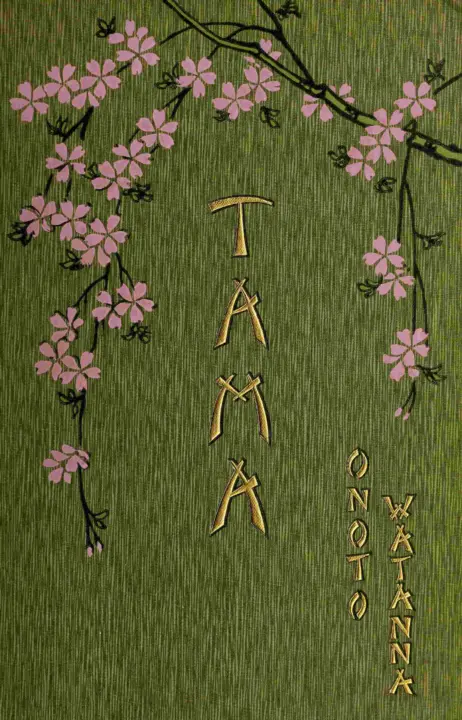
Onoto Watanna
Onoto Watanna
Onoto Watanna
BEHIND THE BOOK
This eBook is for the use of anyone anywhere in the United States and most other parts of the world at no cost and with almost no restrictions whatsoever. You may copy it, give it away or re-use it under the terms of the Project Gutenberg License included with this eBook or online at www.gutenberg.org. If you are not located in the United States, you will have to check the laws of the country where you are located before using this eBook. Read the source licence.
The original source file, including credits and licence, is retained by this library. Request an original-format copy at no charge. Please include the book title and Project Gutenberg identifier #64861.
KEEP YOUR CURIOSITY GOING
Coulson Kernahan

Maurice Baring
Frances Wright
Cécile Tormay

Frederic Jesup Stimson

W. H. P. (William Henry Pope) Jarvis