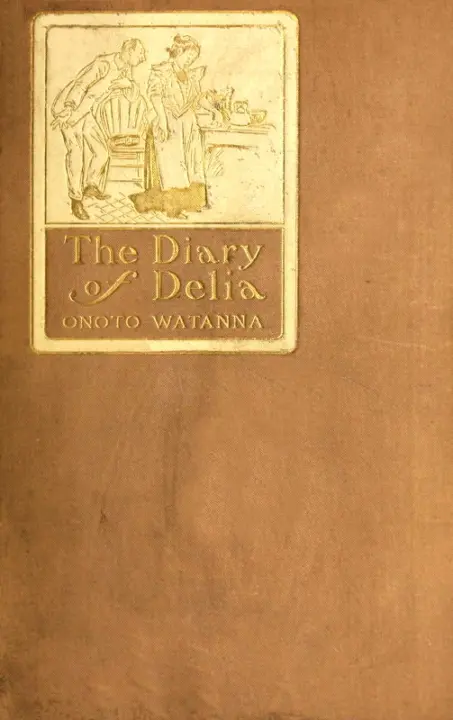
The diary of Delia : Being a veracious chronicle of the kitchen, with some side-lights on the parlour
Onoto Watanna
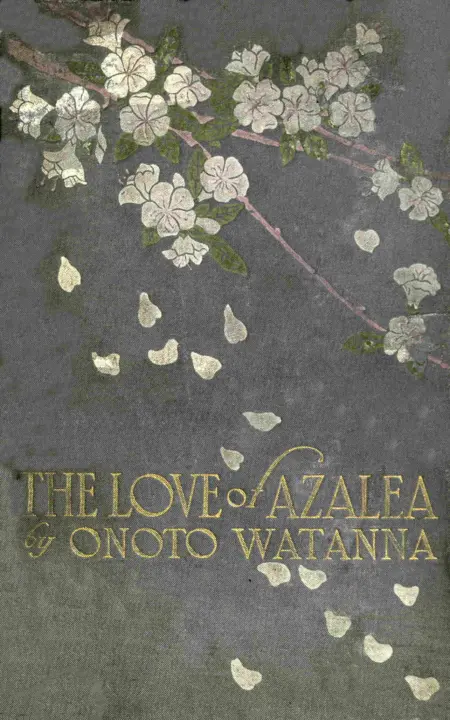
THE CLASSIC COLLECTION · 1904
"The Love of Azalea" by Onoto Watanna is a novel written in the early 20th century." The story revolves around Azalea, a young Japanese girl caught in the throes of cultural conflict, personal tragedy, and romantic turmoil as she navigates life under the strictures of her stepmother and the demands of societal expectations. Her journey leads her to encounter Richard Verley, a missionary who changes the course of her life. "At the start of the narrative, readers are introduced to a mission church in a small Japanese village, where the congregation is disinterested in the sermons of the foreign priest, Richard Verley." Amidst this backdrop, Azalea is depicted as a young girl longing for escape from her unkind home life with a stepmother who treats her cruelly. Dressed in rags, Azalea finds herself smitten with the notion of earning money through singing, just like the choir boys who are treated kindly by Verley. This initial longing evolves when she decides to approach the minister, pretending to seek conversion in the hopes of receiving assistance. The opening chapters set the stage for her transformative journey, revealing her desires for freedom and love against the struggles of her impoverished circumstances and the rigid expectations of her society.
Introduction adapted from the source catalogue; source summaries may be automatically generated.
Free to read · English · 23,842 words · No account needed
MAKE TIME FOR A GOOD BOOK
On by default. Untick to stop anonymous reading totals. Each page counts after 10 seconds in view. How this works.
Anonymous counting is on unless you have switched it off.
“Azalea!” He spoke her name so softly. “Lift your face, my little girl,” he said. “I want to see it, while I tell you something.”
She obeyed him like a child, but the eyes that met his were mutely
appealing.
“What do you think I am going to say to you to-day?” he asked, smiling a
trifle.
“About those honorable commandments?”
He shook his head.
“No—you already have learned them well, have you not?”
“Yes. You like hear me say them, mebbe?”
“Not to-day. I wish to speak to you about another matter.”
She looked at him apprehensively.
“Oh,” she said, “mebbe your august God tell you I also visit at the temple that other day?”
He looked a trifle startled.
“What temple—what do you mean?”
“You God sees all things?”
“All things,” he said solemnly.
Her eyes expressed momentary fright. She drew her hands forcibly from his and sat backward a little way from him, her head bent.
“Then,” she said, “you already know about—about my—my lie?”
“Lie?”
He leaned forward in his chair.
“Yaes—yaes—your God told you.”
“Tell me what you mean.”
The face she raised was pitiful.
“Excellency, that was velly wicked lie I tell you wen I say I am convert
unto you.”
He stared at her blankly. She could not bear the expression on his face and pushed herself nearer to him on her knees. Her hands fluttered above and then timidly touched his.
“Excellency, I sawry—sawry—” There was a sob in her voice now, and her eyes were misty. “Pray you be like unto the gods and forgive that lie.”
He stood up mechanically, then sat down again, turning in his seat toward the desk and resting his clasped hands there. She, from her kneeling posture, reached up to touch his arm.
“Pray—” she began and broke off, as though she could not finish. He turned his head and looked at her curiously. Still he did not speak.
“Listen,” she continued in her low, almost sighing, voice, which he no longer wished to hear. “I tell you only one lie—one liddle bit lie. Thas not velly much. Also I beseech the gods to pardon that lie—and I beseech also your mos’ kind God pardon me.” She broke off distressfully—“Excellency, will you not hear me?”
“I am listening,” he said heavily.
“Your voice so hard,” she said.
His eyes were still stern. He spoke mechanically.
Your reading position is saved on this browser. Take it to another device with a library code. Reading pages adapt to text, rather than matching a printed edition.
Onoto Watanna
Onoto Watanna
Onoto Watanna
Onoto Watanna
BEHIND THE BOOK
This eBook is for the use of anyone anywhere in the United States and most other parts of the world at no cost and with almost no restrictions whatsoever. You may copy it, give it away or re-use it under the terms of the Project Gutenberg License included with this eBook or online at www.gutenberg.org. If you are not located in the United States, you will have to check the laws of the country where you are located before using this eBook. Read the source licence.
The original source file, including credits and licence, is retained by this library. Request an original-format copy at no charge. Please include the book title and Project Gutenberg identifier #64861.
KEEP YOUR CURIOSITY GOING
Coulson Kernahan

Maurice Baring
Frances Wright
Cécile Tormay

Frederic Jesup Stimson

W. H. P. (William Henry Pope) Jarvis