
The diary of Delia : Being a veracious chronicle of the kitchen, with some side-lights on the parlour
Onoto Watanna
THE CLASSIC COLLECTION · 1904
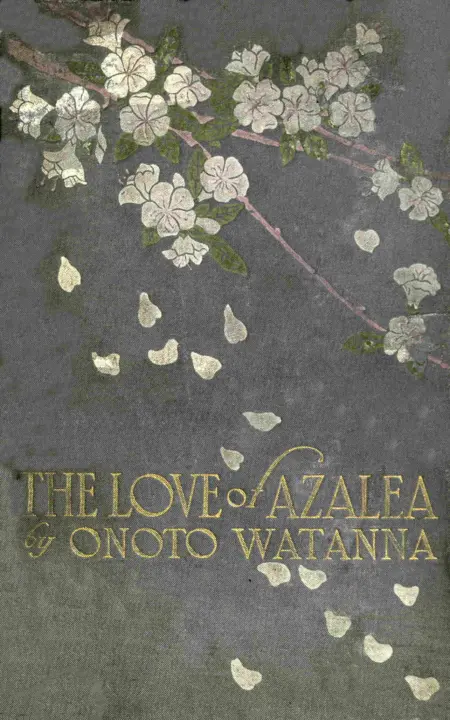
"The Love of Azalea" by Onoto Watanna is a novel written in the early 20th century." The story revolves around Azalea, a young Japanese girl caught in the throes of cultural conflict, personal tragedy, and romantic turmoil as she navigates life under the strictures of her stepmother and the demands of societal expectations. Her journey leads her to encounter Richard Verley, a missionary who changes the course of her life. "At the start of the narrative, readers are introduced to a mission church in a small Japanese village, where the congregation is disinterested in the sermons of the foreign priest, Richard Verley." Amidst this backdrop, Azalea is depicted as a young girl longing for escape from her unkind home life with a stepmother who treats her cruelly. Dressed in rags, Azalea finds herself smitten with the notion of earning money through singing, just like the choir boys who are treated kindly by Verley. This initial longing evolves when she decides to approach the minister, pretending to seek conversion in the hopes of receiving assistance. The opening chapters set the stage for her transformative journey, revealing her desires for freedom and love against the struggles of her impoverished circumstances and the rigid expectations of her society.
Introduction adapted from the source catalogue; source summaries may be automatically generated.
Free to read · English · 23,842 words · No account needed
MAKE TIME FOR A GOOD BOOK
On by default. Untick to stop anonymous reading totals. Each page counts after 10 seconds in view. How this works.
Anonymous counting is on unless you have switched it off.
“Time will be needed to make her marriage garments, to call together her august relatives, for maidenly meditation, and for preparation for the marriage feast.”
“We can dispense with all these things,” said Matsuda suavely.
“Too early a marriage would be unseemly,” said Madame Yamada.
“Madame Yamada exaggerates public opinion,” was Matsuda’s response.
The woman’s voice was barely controlled in its harshness.
“You, Azalea, what have you to say?”
Azalea opened her fan and looked at it thoughtfully, almost as though in the painted pictures upon it she found an answer. Suddenly she raised her head.
“I do not wish to marry,” she said, and added as an afterword: “—yet.”
At that moment her step-mother could have embraced her.
Matsuda cleared his throat.
“When, then, will it suit you?” he asked respectfully.
The girl’s eyes were still upon her fan, and without raising them she replied with a slight shrug of her small, bewitching shoulders:
“I do not know when. Maybe in one year; maybe in ten. I do not wish to
marry—yet.”
Matsuda arose.
“For one year,” he said, “or for ten years, or as long as your caprice may make it, I will wait for you.”
Azalea’s fan fluttered closed. She bowed her head upon it.
“Excellency is very faithful.”
“Once,” said Matsuda, looking at her with half closed eyes, “your august samurai father deigned to call me ‘Dog.’ You will learn, maiden, that I shall prove my title to ‘Dog’ by my watchfulness and faithfulness. I have sworn to possess you, and possess you I will.”
The moment he was gone Azalea turned toward her step-mother, upon whose countenance a look of sweetest benevolence toward her step-daughter was slowly appearing.
“Mother-in-law,” said the girl, “you need not fear that I will marry him. No, my father spoke true words. He is a dog. He has only the instincts of a tradesman, and as such he comes here to buy the daughter of a samurai.”
“Your words are wise, Azalea,” said the step-mother, “and you win my maternal affection. Matsuda is not the fit husband for a warrior’s daughter. Yet, Azalea, bear in mind that Yuri, your sister, had for father one less elevated than a samurai—one, indeed, who was a mere tradesman. She is well fitted to be the wife of Matsuda Isami. Therefore, you can help or hinder this our ambition.”
“I will neither help nor hinder,” said Azalea, crossing the room, and looking through the shoji. “Mother-in-law, I have no interest in the matter,” she added.
Madame Yamada was behind her and had touched her arm, the arm she had lately pinched so viciously.
Your reading position is saved on this browser. Take it to another device with a library code. Reading pages adapt to text, rather than matching a printed edition.
Onoto Watanna

Onoto Watanna
Onoto Watanna
Onoto Watanna
BEHIND THE BOOK
This eBook is for the use of anyone anywhere in the United States and most other parts of the world at no cost and with almost no restrictions whatsoever. You may copy it, give it away or re-use it under the terms of the Project Gutenberg License included with this eBook or online at www.gutenberg.org. If you are not located in the United States, you will have to check the laws of the country where you are located before using this eBook. Read the source licence.
The original source file, including credits and licence, is retained by this library. Request an original-format copy at no charge. Please include the book title and Project Gutenberg identifier #64861.
KEEP YOUR CURIOSITY GOING
Coulson Kernahan

Maurice Baring
Frances Wright
Cécile Tormay

Frederic Jesup Stimson

W. H. P. (William Henry Pope) Jarvis