
The slave ship
Mary Johnston
THE CLASSIC COLLECTION · 1911
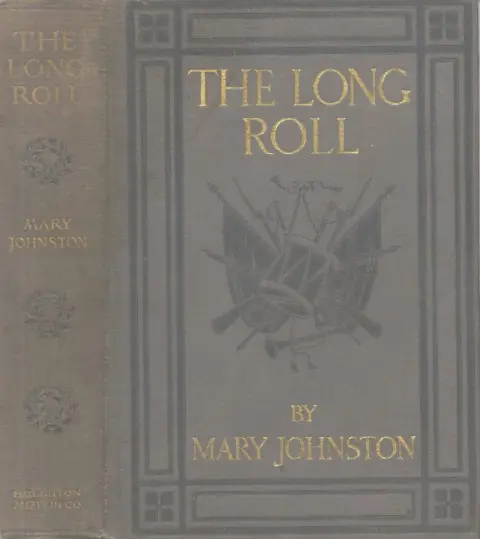
"The Long Roll" by Mary Johnston is a historical novel written in the early 20th century. Set against the backdrop of the American Civil War, the story captures the sentiments, struggles, and moral dilemmas faced by the people of Virginia as tensions escalate between the North and South. The narrative likely follows several key characters, including Richard Cleave and Judith Cary, who navigate personal and patriotic challenges as their nation heads toward conflict. At the start of the novel, the small town of Botetourt is filled with excitement as the Botetourt Resolutions are read aloud, expressing the community’s determination to protect their rights amidst the growing sectional strife. The speech highlights Virginia's historical role and sets the stage for a burgeoning sense of conflict, with characters reflecting on their allegiances and the implications of approaching war. The contrasting perspectives of the local citizens, including young men looking toward potential enlistment, further illustrate the emotional turmoil of the time, as they ponder the weighty consequences of their decisions in this deeply divided nation.
Introduction adapted from the source catalogue; source summaries may be automatically generated.
Free to read · English · 261,148 words · No account needed
MAKE TIME FOR A GOOD BOOK
On by default. Untick to stop anonymous reading totals. Each page counts after 10 seconds in view. How this works.
Anonymous counting is on unless you have switched it off.
The spoil of Manassas included twenty-eight fieldpieces with a hundred rounds of ammunition to each gun, thirty-seven caissons, six forges, four battery wagons, sixty-four artillery horses, five hundred thousand rounds of small arm ammunition, four thousand five hundred sets of accoutrements, four thousand muskets, nine regimental and garrison flags, pistols, swords, musical instruments, knapsacks, canteens, blankets, tents, officers' luggage, rope, handcuffs, axes, and intrenching tools, wagons, horses, camp and garrison equipage, hospital stores and subsistence, and one thousand four hundred and twenty-one prisoners.
History has not been backward with a question. Why did not the Confederate forces press the pursuit to the Potomac, twenty-five miles away? Why did they not cross that river? Why did they not take Washington? History depones that it was a terror-stricken city and that it might have been stormed, and so, perhaps, the great war ended ere it had well begun. Why did you not pursue from Manassas to Washington?
The tongue of the case answers thus: "We were a victorious army, but we had fought long and hard. We had not many fresh troops. Even those which were not engaged had been marching and countermarching. The enemy had many more than we--heavy reserves to whom panic might or might not have been communicated. These were between us and Centreville, and the night had fallen. Our cavalry was the best in the land, but cruelly small in force, and very weary by that midnight. We were scant of provisions, scant of transportation, scant of ammunition. What if the Federal reserves had not stood, but had fled with the rest, and we had in some fashion achieved the Potomac? There were strong works at Arlington and Alexandria, lined with troops, and in easy distance were Patterson and his unused men. There was a river a mile wide, patrolled by gunboats, and beyond it a city with how many troops we knew not, certainly with strong earthworks and mounted guns. Being only men and not clairvoyants we did not know that the city was so crazed with fear that perhaps, after all, had we ever gotten there we might have stormed it with a few weary regiments. We never saw the like in our own capital at any after date, and we did not know. We were under arms from dawn until the stars came out, we had fought through the heat of a July day in Virginia, we were hungry, we were thirsty, we were drunk with need of rest. Most of us were under twenty-four. We had met and vanquished heavy odds, but we ourselves, like those who fled, were soldiers all untried. Victory disorganized us, as defeat disorganized them. Not in the same measure, but to the extent that all commands were much broken, men astray in the darkness, seeking their companies, companies calling out the number of their regiments. Most of us went hungry that night. And all around were the dead and wounded, and above us, like a pall, the strangeness of this war at last. The July night passed like a fevered dream; men sleeping on the earth, men seeking their commands, men riding to and fro, men wandering with lanterns over the battlefield. At three came down the rain. It was as though the heavens were opened. No one had ever seen such a downpour. All day long it rained, and in the rain we buried our comrades. There were two brothers, Holmes and Tucker Conrad, boys from the University. Holmes was shot through the heart, just on the edge of a ravine on the Henry Hill. Tucker, across the ravine, saw him fall. He was down one side and up the other before a man could draw breath. He lifted Holmes, and as he did so, he, too, was killed. We found them lying in each other's arms, Holmes smiling, and we buried them so. We buried many friends and comrades and kindred--we were all more or less akin--and perhaps, being young to war, that solemn battlefield loomed to us so large that it obstructed the view of the routed invasion now across the Potomac, out of Virginia. We held then and we hold still, that our generals that day were sagacious and brave, and we think history may take their word for it that any effective pursuit, looking to the crossing of the Potomac, was a military impossibility. It is true that Stonewall Jackson, as history reminds us, was heard to exclaim while the surgeon was dressing his hand, 'Give me ten thousand fresh troops, and I will be in Washington to-morrow!' But there were not the ten thousand troops to give."
Your reading position is saved on this browser. Take it to another device with a library code. Reading pages adapt to text, rather than matching a printed edition.
Mary Johnston
Mary Johnston

Mary Johnston

Mary Johnston
BEHIND THE BOOK
This eBook is for the use of anyone anywhere in the United States and most other parts of the world at no cost and with almost no restrictions whatsoever. You may copy it, give it away or re-use it under the terms of the Project Gutenberg License included with this eBook or online at www.gutenberg.org. If you are not located in the United States, you will have to check the laws of the country where you are located before using this eBook. Read the source licence.
The original source file, including credits and licence, is retained by this library. Request an original-format copy at no charge. Please include the book title and Project Gutenberg identifier #22066.
KEEP YOUR CURIOSITY GOING
Cécile Tormay

Moritz Busch
Coulson Kernahan
John L. Ransom

Maurice Baring
Frances Wright