
The slave ship
Mary Johnston
THE CLASSIC COLLECTION · 1911
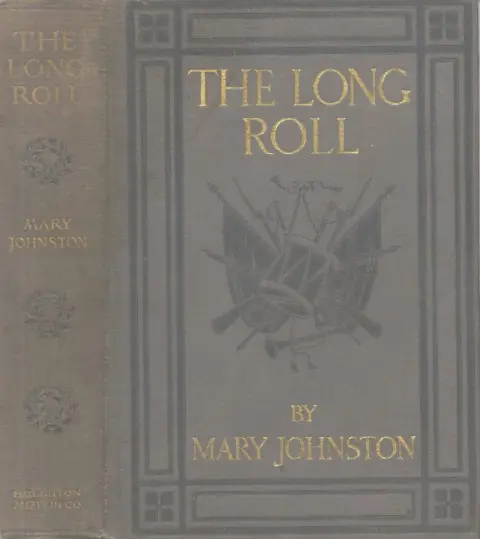
"The Long Roll" by Mary Johnston is a historical novel written in the early 20th century. Set against the backdrop of the American Civil War, the story captures the sentiments, struggles, and moral dilemmas faced by the people of Virginia as tensions escalate between the North and South. The narrative likely follows several key characters, including Richard Cleave and Judith Cary, who navigate personal and patriotic challenges as their nation heads toward conflict. At the start of the novel, the small town of Botetourt is filled with excitement as the Botetourt Resolutions are read aloud, expressing the community’s determination to protect their rights amidst the growing sectional strife. The speech highlights Virginia's historical role and sets the stage for a burgeoning sense of conflict, with characters reflecting on their allegiances and the implications of approaching war. The contrasting perspectives of the local citizens, including young men looking toward potential enlistment, further illustrate the emotional turmoil of the time, as they ponder the weighty consequences of their decisions in this deeply divided nation.
Introduction adapted from the source catalogue; source summaries may be automatically generated.
Free to read · English · 261,148 words · No account needed
MAKE TIME FOR A GOOD BOOK
On by default. Untick to stop anonymous reading totals. Each page counts after 10 seconds in view. How this works.
Anonymous counting is on unless you have switched it off.
The 65th Virginia Infantry, Colonel Valentine Brooke, was encamped to the north of Winchester in the Valley of Virginia, in a meadow through which ran a stream, and upon a hillside beneath a hundred chestnut trees, covered with white tassels of bloom. To its right lay the 2d, the 4th, the 5th, the 27th, and the 33d Virginia, forming with the 65th the First Brigade, General T. J. Jackson. The battery attached--the Rockbridge Artillery--occupied an adjacent apple orchard. To the left, in other July meadows and over other chestnut-shaded hills, were spread the brigades of Bee, Bartow, and Elzey. Somewhere in the distance, behind the screen of haze, were Stuart and his cavalry. Across the stream a brick farmhouse, ringed with mulberry trees, made the headquarters of Joseph E. Johnston, commanding the forces of the Confederacy--an experienced, able, and wary soldier, engaged just now, with eleven thousand men, in watching Patterson with fifteen thousand on the one hand, and McDowell with thirty-five thousand on the other, and in listening attentively for a voice from Beauregard with twenty thousand at Manassas. It was the middle of July, 1861.
First Brigade headquarters was a tree--an especially big tree--a little removed from the others. Beneath it stood a kitchen chair and a wooden table, requisitioned from the nearest cabin and scrupulously paid for. At one side was an extremely small tent, but Brigadier-General T. J. Jackson rarely occupied it. He sat beneath the tree, upon the kitchen chair, his feet, in enormous cavalry boots, planted precisely before him, his hands rigid at his sides. Here he transacted the business of each day, and here, when it was over, he sat facing the North. An awkward, inarticulate, and peculiar man, with strange notions about his health and other matters, there was about him no breath of grace, romance, or pomp of war. He was ungenial, ungainly, with large hands and feet, with poor eyesight and a stiff address. There did not lack spruce and handsome youths in his command who were vexed to the soul by the idea of being led to battle by such a figure. The facts that he had fought very bravely in Mexico, and that he had for the enemy a cold and formidable hatred were for him; most other things against him. He drilled his troops seven hours a day. His discipline was of the sternest, his censure a thing to make the boldest officer blench. A blunder, a slight negligence, any disobedience of orders--down came reprimand, suspension, arrest, with an iron certitude, a relentlessness quite like Nature's. Apparently he was without imagination. He had but little sense of humour, and no understanding of a joke. He drank water and sucked lemons for dyspepsia, and fancied that the use of pepper had caused a weakness in his left leg. He rode a raw-boned nag named Little Sorrel, he carried his sabre in the oddest fashion, and said "oblike" instead of "oblique." He found his greatest pleasure in going to the Presbyterian Church twice on Sundays and to prayer meetings through the week. Now and then there was a gleam in his eye that promised something, but the battles had not begun, and his soldiers hardly knew what it promised. One or two observers claimed that he was ambitious, but these were chiefly laughed at. To the brigade at large he seemed prosaic, tedious, and strict enough, performing all duties with the exactitude, monotony, and expression of a clock, keeping all plans with the secrecy of the sepulchre, rarely sleeping, rising at dawn, and requiring his staff to do likewise, praying at all seasons, and demanding an implicity of obedience which might have been in order with some great and glorious captain, some idolized Napoleon, but which seemed hardly the due of the late professor of natural philosophy and artillery tactics at the Virginia Military Institute. True it was that at Harper's Ferry, where, as Colonel T. J. Jackson, he had commanded until Johnston's arrival, he had begun to bring order out of chaos and to weave from a high-spirited rabble of Volunteers a web that the world was to acknowledge remarkable; true, too, that on the second of July, in the small affair with Patterson at Falling Waters, he had seemed to the critics in the ranks not altogether unimposing. He emerged from Falling Waters Brigadier-General T. J. Jackson, and his men, though with some mental reservations, began to call him "Old Jack." The epithet implied approval, but approval hugely qualified. They might have said--in fact, they did say--that every fool knew that a crazy man could fight!
Your reading position is saved on this browser. Take it to another device with a library code. Reading pages adapt to text, rather than matching a printed edition.
Mary Johnston
Mary Johnston

Mary Johnston

Mary Johnston
BEHIND THE BOOK
This eBook is for the use of anyone anywhere in the United States and most other parts of the world at no cost and with almost no restrictions whatsoever. You may copy it, give it away or re-use it under the terms of the Project Gutenberg License included with this eBook or online at www.gutenberg.org. If you are not located in the United States, you will have to check the laws of the country where you are located before using this eBook. Read the source licence.
The original source file, including credits and licence, is retained by this library. Request an original-format copy at no charge. Please include the book title and Project Gutenberg identifier #22066.
KEEP YOUR CURIOSITY GOING
Cécile Tormay

Moritz Busch
Coulson Kernahan
John L. Ransom

Maurice Baring
Frances Wright