
The slave ship
Mary Johnston
THE CLASSIC COLLECTION · 1911
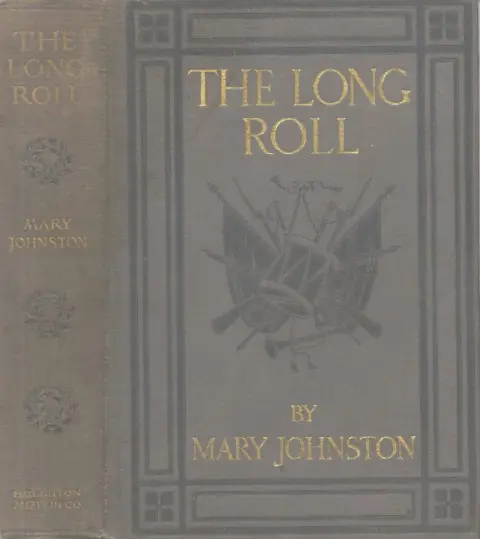
"The Long Roll" by Mary Johnston is a historical novel written in the early 20th century. Set against the backdrop of the American Civil War, the story captures the sentiments, struggles, and moral dilemmas faced by the people of Virginia as tensions escalate between the North and South. The narrative likely follows several key characters, including Richard Cleave and Judith Cary, who navigate personal and patriotic challenges as their nation heads toward conflict. At the start of the novel, the small town of Botetourt is filled with excitement as the Botetourt Resolutions are read aloud, expressing the community’s determination to protect their rights amidst the growing sectional strife. The speech highlights Virginia's historical role and sets the stage for a burgeoning sense of conflict, with characters reflecting on their allegiances and the implications of approaching war. The contrasting perspectives of the local citizens, including young men looking toward potential enlistment, further illustrate the emotional turmoil of the time, as they ponder the weighty consequences of their decisions in this deeply divided nation.
Introduction adapted from the source catalogue; source summaries may be automatically generated.
Free to read · English · 261,148 words · No account needed
MAKE TIME FOR A GOOD BOOK
On by default. Untick to stop anonymous reading totals. Each page counts after 10 seconds in view. How this works.
Anonymous counting is on unless you have switched it off.
The Federals turned. Almost to a man their officers did well. There were many privates of a like complexion. Sykes' Regulars, not now upon the Henry Hill, but massed across the branch, behaved throughout the day like trained and disciplined soldiers. No field could have witnessed more gallant conduct than that of Griffin and Ricketts. Heintzleman had been conspicuously energetic, Franklin and Willcox had done their best. McDowell himself had not lacked in dash and grit, nor, to say sooth, in strategy. It was the Federal tactics that were at fault. But all the troops, barring Sykes and Ricketts and the quite unused cavalry, were raw, untried, undisciplined. Few were good marksmen, and, to tell the truth, few were possessed of a patriotism that would stand strain. That virtue awoke later in the Army of the Potomac; it was not present in force on the field of Bull Run. Many were three-months men, their term of service about to expire, and in their minds no slightest intention of reenlistment. They were close kin to the troops whose term expiring on the eve of battle had this morning "marched to the rear to the sound of the enemy's cannon." Many were men and boys merely out for a lark and almost ludicrously astonished at the nature of the business. New Englanders had come to battle as to a town meeting; placid farmers and village youths of the Middle States had never placed in the meadows of their imaginations events like these, while the more alert and restless folk of the cities discovered that the newspapers had been hardly explicit. The men of the Northwest had a more adequate conception; there was promise in these of stark fighting. To all is to be added a rabble of camp followers, of sutlers, musicians, teamsters, servants, congressmen in carriages, even here and there a congressman's wife, all the hurrah and vain parade, the strut and folly and civilian ignorance, the unwarlike softness and the misdirected pride with which these Greeks had set out to take in a night that four-years-distant Troy. Now a confusion fell upon them, and a rout such as was never seen again in that war. They left the ten guns, mute enough now, they gave no heed to their frantic officers, they turned and fled. One moment they stood that charge, the next the slopes of the Henry Hill were dark blue with fugitives. There was no cohesion; mere inability to find each an unencumbered path crowded them thus. They looked a swarm of bees, but there was no Spirit of the Hive. The Confederate batteries strewed their path with shot and shell, the wild and singular cry, first heard upon that field, rang still within their ears. They reached the foot of the hill, the Warrenton turnpike, the Sudley and Newmarket road, and the marshy fields through which flowed Young's Branch. Up to this moment courtesy might have called the movement a not too disorderly retreat, but now, upon the crowded roads and through the bordering meadows, it became mere rout, a panic quite simple, naked, and unashamed. In vain the officers commanded and implored, in vain Sykes' Regulars took position on the Mathews Hill, a nucleus around which the broken troops might have reformed. The mob had neither instinct nor desire for order. The Regulars, retreating finally with the rest, could only guard the rear and hinder the Confederate pursuit. The panic grew. Ravens in the air brought news, true and false, of the victors. Beckham's battery, screaming upon the heels of the rout, was magnified a hundred-fold; there was no doubt that battalions of artillery were hurling unknown and deadly missiles, blocking the way to the Potomac! Jeb Stuart was following on the Sudley Road, and another cavalry fiend--Munford--on the turnpike. Four hundred troopers between them? No! Four thousand--and each riding like the Headless Horseman with terror in his hand! There was Confederate infantry upon the turnpike--a couple of regiments, a legion, a battery--they were making for a point they knew, this side Centreville, where they might intercept the fleeing army. It behoved the army to get there first, to cross Bull Run, to cross Cub Run, and to reach Centreville with the utmost possible expedition. The ravens croaked of the Confederate troops four miles down Bull Run, at the lower fords. They would cross, they would fall upon Miles and Tyler, they would devour alive the Federal reserves, they would get first to Centreville! That catastrophe, at least, the mob did its best to prevent. It threw away its muskets, it dropped its colours, it lightened itself of accoutrements, it fled as if each tired and inexperienced grey soldier behind it had been Death in the Apocalypse. Each man ran for himself, swore for himself, prayed for himself, found in Fate a personal foe, and strove to propitiate her with the rags of his courage. The men stumbled and fell, lifted themselves, and ran again. Ambulances, wagons, carriages, blocked the road; they streamed around and under these. Riderless horses tore the veil of blue. Artillery teams, unguided, maddened, infected by all this human fear, rent it further, and behind them the folds heard again the Confederate yell. Centreville--Centreville first, and a little food--all the haversacks had been thrown away--but no stopping at Centreville! No! Beyond Centreville the Potomac--Washington--home! Home and safety, Maine or Massachusetts, New York or Vermont, as the case might be! The sun went down and left the fleeing army streaming northward by every road or footpath which it conceived might lead to the Potomac.
Your reading position is saved on this browser. Take it to another device with a library code. Reading pages adapt to text, rather than matching a printed edition.
Mary Johnston
Mary Johnston

Mary Johnston

Mary Johnston
BEHIND THE BOOK
This eBook is for the use of anyone anywhere in the United States and most other parts of the world at no cost and with almost no restrictions whatsoever. You may copy it, give it away or re-use it under the terms of the Project Gutenberg License included with this eBook or online at www.gutenberg.org. If you are not located in the United States, you will have to check the laws of the country where you are located before using this eBook. Read the source licence.
The original source file, including credits and licence, is retained by this library. Request an original-format copy at no charge. Please include the book title and Project Gutenberg identifier #22066.
KEEP YOUR CURIOSITY GOING
Cécile Tormay

Moritz Busch
Coulson Kernahan
John L. Ransom

Maurice Baring
Frances Wright