
The slave ship
Mary Johnston
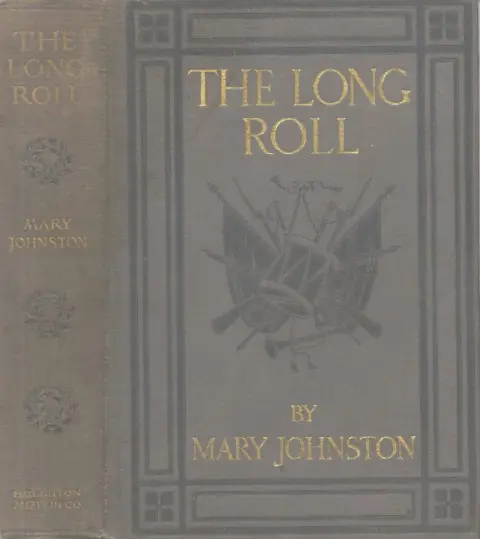
THE CLASSIC COLLECTION · 1911
"The Long Roll" by Mary Johnston is a historical novel written in the early 20th century. Set against the backdrop of the American Civil War, the story captures the sentiments, struggles, and moral dilemmas faced by the people of Virginia as tensions escalate between the North and South. The narrative likely follows several key characters, including Richard Cleave and Judith Cary, who navigate personal and patriotic challenges as their nation heads toward conflict. At the start of the novel, the small town of Botetourt is filled with excitement as the Botetourt Resolutions are read aloud, expressing the community’s determination to protect their rights amidst the growing sectional strife. The speech highlights Virginia's historical role and sets the stage for a burgeoning sense of conflict, with characters reflecting on their allegiances and the implications of approaching war. The contrasting perspectives of the local citizens, including young men looking toward potential enlistment, further illustrate the emotional turmoil of the time, as they ponder the weighty consequences of their decisions in this deeply divided nation.
Introduction adapted from the source catalogue; source summaries may be automatically generated.
Free to read · English · 261,148 words · No account needed
MAKE TIME FOR A GOOD BOOK
On by default. Untick to stop anonymous reading totals. Each page counts after 10 seconds in view. How this works.
Anonymous counting is on unless you have switched it off.
Up and out of the ravine, widening like an opening fan, pressed the disordered troops. The plateau was covered by chaos come again. Officers, raging, shouted orders, ran to and fro, gesticulated with their swords. A short line was formed, another; they dissolved before a third could be added. All voices were raised; there was a tumult of cries, commands, protestations, adjurations, and refusals. Over all screamed the shells, settled the smoke. Franklin, Willcox, Sherman, and Porter, pressing the Federal advantage, were now across the turnpike. Beneath their feet was the rising ground--a moment more, and they would leap victorious up the ragged slope. The moment was delayed. With a rending sound as of a giant web torn asunder, the legions of Hampton and Cary, posted near the house of the free negro Robinson, came into action and held in check the four brigades.
High upon the plateau, near Jackson's line, above the wild confusion of the retreating troops, appeared in the blaze of the midday sun, hatless, on steeds reeking from the four miles' gallop from that centre where the battle did not join to this left where it did, the generals Johnston and Beauregard. Out of the red lightning, the thunder, the dust and the smoke, above the frenzied shouting and the crying of the wounded, their presence was electrically known. A cheer rushed from the First Brigade; at the guns Rockbridge, Staunton, Loudoun, Alexandria, and New Orleans took up the cry, tossed it with grape and canister across to the opposite hill. Bee, Bartow, and Evans, exhausted, shattered, wavering upwards toward the forest, rest, cessation from long struggle, heard the names and took fresh heart. The two were not idle, but in the crucial moment turned the scale. Black danger hemmed their cause. The missing brigade of the Shenandoah was no man knew where. At Mitchell's and Blackburn's fords, Ewell, D. R. Jones, Bonham, and Longstreet were engaged in a demonstration in force, retaining upon that front the enemy's reserve. Holmes and Jubal Early were on their way to the imperilled left, but the dust cloud that they raised was yet distant. Below the two generals were broken troops, men raw to the field, repulsed, driven, bleeding, and haggard, full on the edge of headlong flight; lower, in the hollow land, McDowell's advance, filling the little valley, islanding the two fighting legions, and now, a mounting tide, attacking the Henry Hill. At Beauregard's order the regimental colours were advanced, and the men adjured to rally about them. Fiery, eloquent, of French descent and impassioned, Pierre Gustave Toutant Beauregard rose in his stirrups and talked of la gloire, of home, and of country. Georgia, Alabama, Mississippi, and Louisiana listened, cheered, and began to reform. Johnston, Scotch, correct, military, the Regular in person, trusted to the hilt by the men he led, seized the colours of the 4th Alabama, raised them above his grey head, spurred his war horse, and in the hail of shot and shell established the line of battle. Decimated as they were, raw volunteers as they were, drawn from peaceful ways to meet the purple dragon, fold on fold of war, the troops of Bee, Bartow, and Evans rallied, fell into line, and stood. The 49th Virginia came upon the plateau from Lewis Ford--at its head Ex-Governor William Smith. "Extra Billy," old political hero, sat twisted in his saddle, and addressed his regiment. "Now, boys, you've just got to kill the ox for this barbecue! Now, mind you, I ain't going to have any backing out! We ain't West P'inters, but, thank the Lord, we're men! When it's all over we'll have a torchlight procession and write to the girls! Now, boys, you be good to me, and I'll be good to you. Lord, children, I want to be proud of you! And I ain't Regular, but I know Old Virginny. Tom Scott, you beat the drum real loud, and James, you swing that flag so high the good Lord's got to see it!--Here's the West P'inters--here's the generals! Now, boys, just see how loud you can holler!"
Your reading position is saved on this browser. Take it to another device with a library code. Reading pages adapt to text, rather than matching a printed edition.
Mary Johnston
Mary Johnston

Mary Johnston

Mary Johnston
BEHIND THE BOOK
This eBook is for the use of anyone anywhere in the United States and most other parts of the world at no cost and with almost no restrictions whatsoever. You may copy it, give it away or re-use it under the terms of the Project Gutenberg License included with this eBook or online at www.gutenberg.org. If you are not located in the United States, you will have to check the laws of the country where you are located before using this eBook. Read the source licence.
The original source file, including credits and licence, is retained by this library. Request an original-format copy at no charge. Please include the book title and Project Gutenberg identifier #22066.
KEEP YOUR CURIOSITY GOING
Cécile Tormay

Moritz Busch
Coulson Kernahan
John L. Ransom

Maurice Baring
Frances Wright