
The slave ship
Mary Johnston
THE CLASSIC COLLECTION · 1911
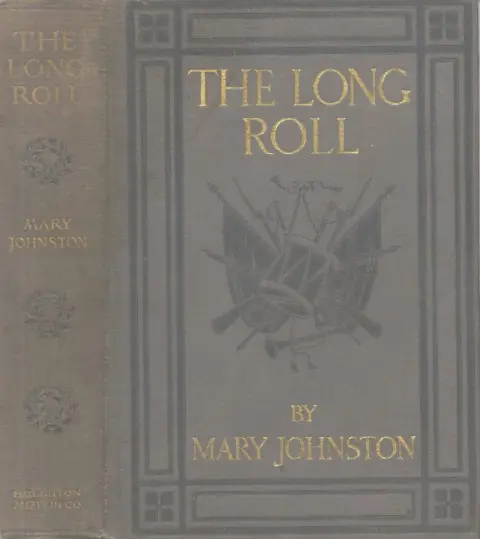
"The Long Roll" by Mary Johnston is a historical novel written in the early 20th century. Set against the backdrop of the American Civil War, the story captures the sentiments, struggles, and moral dilemmas faced by the people of Virginia as tensions escalate between the North and South. The narrative likely follows several key characters, including Richard Cleave and Judith Cary, who navigate personal and patriotic challenges as their nation heads toward conflict. At the start of the novel, the small town of Botetourt is filled with excitement as the Botetourt Resolutions are read aloud, expressing the community’s determination to protect their rights amidst the growing sectional strife. The speech highlights Virginia's historical role and sets the stage for a burgeoning sense of conflict, with characters reflecting on their allegiances and the implications of approaching war. The contrasting perspectives of the local citizens, including young men looking toward potential enlistment, further illustrate the emotional turmoil of the time, as they ponder the weighty consequences of their decisions in this deeply divided nation.
Introduction adapted from the source catalogue; source summaries may be automatically generated.
Free to read · English · 261,148 words · No account needed
MAKE TIME FOR A GOOD BOOK
On by default. Untick to stop anonymous reading totals. Each page counts after 10 seconds in view. How this works.
Anonymous counting is on unless you have switched it off.
October drifted on, smooth as the Opequon. Red and yellow leaves drifted down, wood smoke arose, sound was wrapped as in fine wool, dulled everywhere to sweetness. Whirring insects, rippling water, the wood-chopper's axe, the whistling soldiers, the drum-beat, the bugle-call, all were swept into a smooth current, steady, almost droning, somewhat dream-like. The 2d Corps would have said that it was a long time on the Opequon, but that on the whole it found the place a pleasing land of drowsy-head.
Visitors came to the Opequon; parties from Winchester, officers from the 1st Corps commanded by Longstreet and encamped a few miles to the eastward, officers from the headquarters of the commander-in-chief. General Lee came himself on Traveller, and with Stonewall Jackson rode along the Opequon, under the scarlet maples. One day there appeared a cluster of Englishmen, Colonel the Honourable Garnet Wolseley; the Special Correspondent of the Times, the Honourable Francis Lawley, and the Special Correspondent of the Illustrated London News, Mr. Frank Vizetelly. General Lee had sent them over under the convoy of an officer, with a note to Stonewall Jackson.
MY DEAR GENERAL,--These gentlemen very especially wish to make your
acquaintance. Yours,
They made it, beneath a beautiful, tall, crimson gum tree, where on a floor of fallen leaves Lieutenant-General T. J. Jackson's tent was pitched. A camp-stool, a wooden chair, and two boxes were placed. There was a respectful silence while the Opequon murmured by, then Garnet Wolseley spoke of the great interest which England--Virginia's mother country--was taking in this struggle.
"Yes, sir," said Jackson. "It would be natural for a mother to take an
even greater interest."
"And the admiration, general, with which we have watched your career--the career of genius, if I may say so! By Jove--"
"Yes, sir. It is not my career. God has the matter in hand."
"Well, He knows how to pick his lieutenants!--You have the most ideal place for a camp, general! But, I suppose, before these coloured leaves all fall you will be moving?"
"It is an open secret, I suppose, sir," said the correspondent of the Times, "that when McClellan does see fit to cross you will meet him east of the Blue Ridge?"
"May I ask, sir," said the correspondent of the Illustrated News, "what you think of this latest move on the political chess-board--I mean Mr. Lincoln's Proclamation of Emancipation?"
"The leaves are," said Jackson, "a beautiful colour. I was in England one autumn, Colonel Wolseley, but I did not observe our autumn colours in your foliage. Climate, doubtless. But what was my admiration were your cathedrals."
Your reading position is saved on this browser. Take it to another device with a library code. Reading pages adapt to text, rather than matching a printed edition.
Mary Johnston
Mary Johnston

Mary Johnston

Mary Johnston
BEHIND THE BOOK
This eBook is for the use of anyone anywhere in the United States and most other parts of the world at no cost and with almost no restrictions whatsoever. You may copy it, give it away or re-use it under the terms of the Project Gutenberg License included with this eBook or online at www.gutenberg.org. If you are not located in the United States, you will have to check the laws of the country where you are located before using this eBook. Read the source licence.
The original source file, including credits and licence, is retained by this library. Request an original-format copy at no charge. Please include the book title and Project Gutenberg identifier #22066.
KEEP YOUR CURIOSITY GOING
Cécile Tormay

Moritz Busch
Coulson Kernahan
John L. Ransom

Maurice Baring
Frances Wright