
The slave ship
Mary Johnston
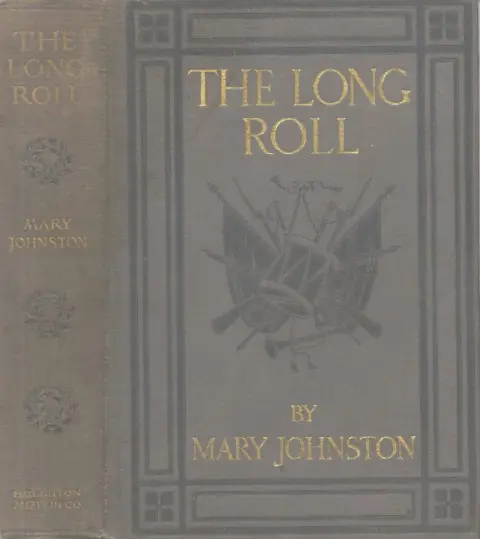
THE CLASSIC COLLECTION · 1911
"The Long Roll" by Mary Johnston is a historical novel written in the early 20th century. Set against the backdrop of the American Civil War, the story captures the sentiments, struggles, and moral dilemmas faced by the people of Virginia as tensions escalate between the North and South. The narrative likely follows several key characters, including Richard Cleave and Judith Cary, who navigate personal and patriotic challenges as their nation heads toward conflict. At the start of the novel, the small town of Botetourt is filled with excitement as the Botetourt Resolutions are read aloud, expressing the community’s determination to protect their rights amidst the growing sectional strife. The speech highlights Virginia's historical role and sets the stage for a burgeoning sense of conflict, with characters reflecting on their allegiances and the implications of approaching war. The contrasting perspectives of the local citizens, including young men looking toward potential enlistment, further illustrate the emotional turmoil of the time, as they ponder the weighty consequences of their decisions in this deeply divided nation.
Introduction adapted from the source catalogue; source summaries may be automatically generated.
Free to read · English · 261,148 words · No account needed
MAKE TIME FOR A GOOD BOOK
On by default. Untick to stop anonymous reading totals. Each page counts after 10 seconds in view. How this works.
Anonymous counting is on unless you have switched it off.
Stafford gave his statement. All over the field the staff had suffered heavily. Some were dead, many were wounded. Those who were left did treble duty. Lee sent this officer on to Longstreet, holding the long ridge on the right.
Stafford rode through the withering storm across that withered field. There seemed no light from the sky; the light was the glare from the guns. He marked, through a rift in the smoke, a battery where it stood upon a height, above felled trees. He thought it was Pelham's--the Horse Artillery. It stood for a moment, outlined against the orange-bosomed cloud, then, like an army of wraiths, the smoke came between and hid it. His horse frightened at a dead man in his path. The start and plunging were unusual, and the rider looked to see the reason. The soldier had drawn letters from his breast and had died with them in his hands. The unfolded, fluttering sheets stirred as though they had life. Stafford, riding on, found the right and found Longstreet looking sombrely, like an old eagle from his eyrie. "I told General Lee," he said "that we ought never to have divided. I don't see A. P. Hill. You tell General Lee that I've only got D. R. Jones and the knowledge that we fight like hell, and that Burnside is before me with fourteen thousand men."
Stafford retraced his way. The ground beneath was burned and scarred, the battle cloud rolled dark, the minies sang beside his ear. Now he was in a barren place, tasting of powder, smelling of smoke, now lit, now darkened, but vacant of human life, and now he was in a press of men, grey forms advancing and retreating, or standing firing, and now he was where fighting had been and there was left a wrack of the dead and dying. He reached the centre and gave his message, then turned toward the left again. A few yards and his horse was killed under him. He disengaged himself and presently caught at the bridle and stayed another. There were many riderless horses on the field of Sharpsburg, but he had hardly mounted before this one, too, was killed. He went on afoot. He entered a sunken road, dropped between rough banks overhung by a few straggling trees. The road was filled with men lying down, all in shadow beneath the rolling battle smoke. Stafford thought it a regiment waiting for orders; then he saw that they were all dead men. He must go back to the Dunkard wood, and this seemed his shortest way. He entered the lane and went up it as quickly as he might for the forms that lay thick in the discoloured light. It looked as though the earth were bleeding, and all the people were fantastic about him. Some lay as straight as on a sculptured tomb, and some were hooped, and some lay like a cross, and some were headless. As he stepped with what care he might, a fierce yelling broke out on the side that was the grey side. There was a charge coming--already he saw the red squares tossing! He moved to the further side of the sunken road and braced himself against the bank, putting his arm about a twisted, protruding cedar. D. H. Hill's North Carolinians hung a moment, tall, gaunt, yelling, then swooped down into the sunken lane, passed over the dead, mounted the other ragged bank and went on. Stafford waited to hear the shock. It came; full against a deep blue wave. Richardson had been killed and Hancock commanded here. The blue wave was strong. The sound of the melee was frightful; then out of it burst a loud huzzahing. Stafford straightened himself. The grey were coming back, and after them the blue. Almost before he could unclasp his arm from the cedar, the first spray of gaunt, exhausted, bleeding men came over and down into the sunken lane. All the grey wave followed. At the moment there outburst a renewed and tremendous artillery battle. The smoke drifting across the Bloody Lane was like the fall of night, a night of cloud and storm. Orange flashes momentarily lit the scene, and the sullen thunders rolled. The grey, gaunt and haggard, but their colours with them, overpassed the dead and wounded, now choking the sunken road. Behind them were heard the blue, advancing and huzzahing. The grey wave remounted the bank down which it plunged fifteen minutes before. At the top it stayed a moment, thin and grey, spectral in the smoke pall, the battle flags like hovering, crimson birds. A line of flame leaped, one long crackle of musketry, then it resumed its retreat, falling back on the west wood. The blue, checked a moment by that last volley, now poured down into the sunken road, overpassed the thick ranks of the dead and wounded, mounted, and swept on in a counter charge.
Your reading position is saved on this browser. Take it to another device with a library code. Reading pages adapt to text, rather than matching a printed edition.
Mary Johnston
Mary Johnston

Mary Johnston

Mary Johnston
BEHIND THE BOOK
This eBook is for the use of anyone anywhere in the United States and most other parts of the world at no cost and with almost no restrictions whatsoever. You may copy it, give it away or re-use it under the terms of the Project Gutenberg License included with this eBook or online at www.gutenberg.org. If you are not located in the United States, you will have to check the laws of the country where you are located before using this eBook. Read the source licence.
The original source file, including credits and licence, is retained by this library. Request an original-format copy at no charge. Please include the book title and Project Gutenberg identifier #22066.
KEEP YOUR CURIOSITY GOING
Cécile Tormay

Moritz Busch
Coulson Kernahan
John L. Ransom

Maurice Baring
Frances Wright