
The slave ship
Mary Johnston
THE CLASSIC COLLECTION · 1911
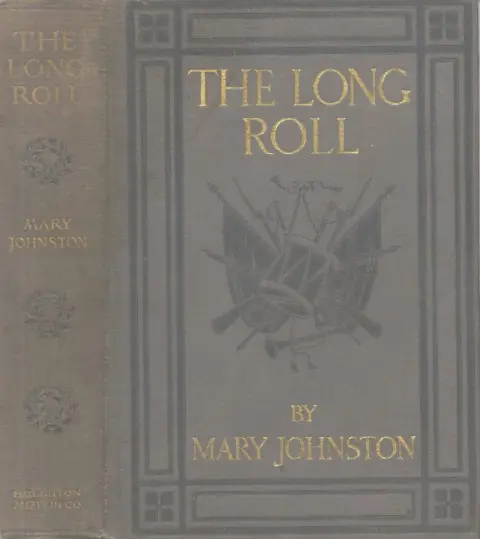
"The Long Roll" by Mary Johnston is a historical novel written in the early 20th century. Set against the backdrop of the American Civil War, the story captures the sentiments, struggles, and moral dilemmas faced by the people of Virginia as tensions escalate between the North and South. The narrative likely follows several key characters, including Richard Cleave and Judith Cary, who navigate personal and patriotic challenges as their nation heads toward conflict. At the start of the novel, the small town of Botetourt is filled with excitement as the Botetourt Resolutions are read aloud, expressing the community’s determination to protect their rights amidst the growing sectional strife. The speech highlights Virginia's historical role and sets the stage for a burgeoning sense of conflict, with characters reflecting on their allegiances and the implications of approaching war. The contrasting perspectives of the local citizens, including young men looking toward potential enlistment, further illustrate the emotional turmoil of the time, as they ponder the weighty consequences of their decisions in this deeply divided nation.
Introduction adapted from the source catalogue; source summaries may be automatically generated.
Free to read · English · 261,148 words · No account needed
MAKE TIME FOR A GOOD BOOK
On by default. Untick to stop anonymous reading totals. Each page counts after 10 seconds in view. How this works.
Anonymous counting is on unless you have switched it off.
Stonewall Jackson was coming toward them. He was walking apparently in deep thought, and leading Little Sorrel. He was quite alone. The two officers shouted. They saw him look up, take in the situation, and put his hand on the saddle bow. Then, to give him time, the two turned. "Yaaiih! Yaaaaiiahh!" they yelled, and charged the enemy.
The blue, taken by surprise, misinterpreted the first shout and the ensuing action. There must, of course, be coming over the hill a grey force detached on some reconnoissance or other from the rebel horde known to be reposing at Frederick. Presumably it would be cavalry--and coming at a gallop! To stop to cut down these two yelling grey devils might be to invite destruction. The blue troopers first emptied their revolvers, then wheeled horse, and retired to Sweet Auburn, out of which a little later the grey cavalry did indeed drive them.
In the last of the rosy light the two officers, now again at the hilltop, saw the camp outspread below it and coming at a double quick the regiment which Jackson had sent to the rescue. One checked his horse. "What's that?" asked the other.
"The general's gloves. He dropped them when he mounted."
He stooped from his horse and gathered them up. Later, back in camp, he went to headquarters. Jackson was talking ammunition with his chief of ordnance, an aide of A. P. Hill's standing near, waiting his turn. "Well, Major Douglas?"
"Your gloves, general. You dropped them on the hilltop."
"Good! put them there, major, if you please.--Colonel Crutchfield, the ordnance train will cross first. As the batteries come up from the river see that every caisson is filled. That is all. Now, Captain Scarborough--"
"General Hill very earnestly asks, sir, that he may be permitted to
speak to you."
"Where is General Hill? Is he here?"
"Yes, sir, he is outside the tent."
"Tell him to come in. You have a very good fast horse, Major Douglas. There is nothing more, I think, to-night. Good-night."
A. P. Hill entered alone, without his sword. "Good-evening, General
Hill," said Jackson.
Hill stood very straight, his red beard just gleaming a little in the dusky tent. "I am come to prefer a request, sir."
"Yes. What is it?"
"A week ago, upon the crossing of the Potomac, you placed me under arrest for what you conceived--for disobedience to orders. Since then General Branch has commanded the Light Division."
"Yes."
"I feel certain, sir, that battle is imminent. General Branch is a good and brave soldier, but--but--I am come to beg, sir, that I may be released from arrest till the battle is over."
Your reading position is saved on this browser. Take it to another device with a library code. Reading pages adapt to text, rather than matching a printed edition.
Mary Johnston
Mary Johnston

Mary Johnston

Mary Johnston
BEHIND THE BOOK
This eBook is for the use of anyone anywhere in the United States and most other parts of the world at no cost and with almost no restrictions whatsoever. You may copy it, give it away or re-use it under the terms of the Project Gutenberg License included with this eBook or online at www.gutenberg.org. If you are not located in the United States, you will have to check the laws of the country where you are located before using this eBook. Read the source licence.
The original source file, including credits and licence, is retained by this library. Request an original-format copy at no charge. Please include the book title and Project Gutenberg identifier #22066.
KEEP YOUR CURIOSITY GOING
Cécile Tormay

Moritz Busch
Coulson Kernahan
John L. Ransom

Maurice Baring
Frances Wright