
The slave ship
Mary Johnston
THE CLASSIC COLLECTION · 1911
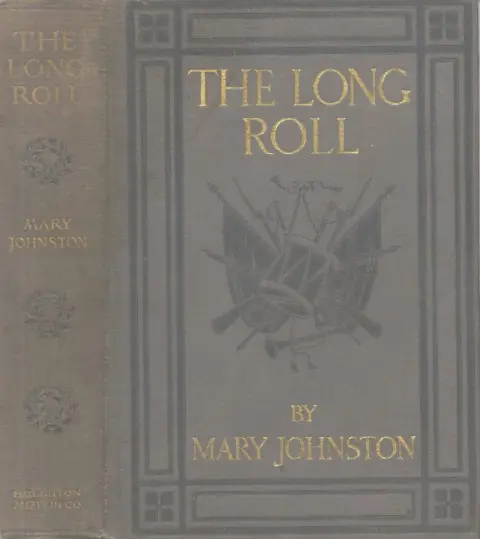
"The Long Roll" by Mary Johnston is a historical novel written in the early 20th century. Set against the backdrop of the American Civil War, the story captures the sentiments, struggles, and moral dilemmas faced by the people of Virginia as tensions escalate between the North and South. The narrative likely follows several key characters, including Richard Cleave and Judith Cary, who navigate personal and patriotic challenges as their nation heads toward conflict. At the start of the novel, the small town of Botetourt is filled with excitement as the Botetourt Resolutions are read aloud, expressing the community’s determination to protect their rights amidst the growing sectional strife. The speech highlights Virginia's historical role and sets the stage for a burgeoning sense of conflict, with characters reflecting on their allegiances and the implications of approaching war. The contrasting perspectives of the local citizens, including young men looking toward potential enlistment, further illustrate the emotional turmoil of the time, as they ponder the weighty consequences of their decisions in this deeply divided nation.
Introduction adapted from the source catalogue; source summaries may be automatically generated.
Free to read · English · 261,148 words · No account needed
MAKE TIME FOR A GOOD BOOK
On by default. Untick to stop anonymous reading totals. Each page counts after 10 seconds in view. How this works.
Anonymous counting is on unless you have switched it off.
Cleave turned with sharp precision and obeyed. Three paces took him out of the firelight into the overhanging shadow. He made a gesture of sorrow and anger. "Who says that magic's dead? Now, how long will that potion hold him?" He stumbled in the loose, bare earth, swamp and creek below him. He looked down into that trough of death. "I gained nothing, and I have done for myself! If I know him--Ugh!"
He shook himself, went on through the sultry, smoky night, alternate lantern-slides of glare and darkness, to the eastern face of the plateau. Here he found Winder, reported, and with him encountered D. H. Hill coming with Fauquier Cary from the McGehee house. "What's that?" said Hill. "He won't pursue to-night? Very well, that settles it! Maybe they'll be there in the morning, maybe not. Look here, Winder! Reynolds's taken--you remember Reynolds?"
Cary and Cleave had a moment apart. "All well, Fauquier? The
general?--Edward?"
"I think so. I saw Warwick for a moment. A minie had hurt his hand--not serious, he said. Edward I have not seen."
"I had a glimpse of him this morning.--This morning!"
"Yes--long ago, is it not? You'll get your brigade after this."
The other looked at him oddly. "Will I? I strongly doubt it. Well, it seems not a large thing to-night."
Beyond the main battlefield where A. P. Hill's and Longstreet's shattered brigades lay on their arms, beyond the small farmhouse where Lee waked and watched, beyond the Chickahominy and its swamps, beyond forest and farm land, lay Richmond under the stars. Eastwardly, within and without its girdling earthworks, that brilliant and histrionic general, John Bankhead Magruder, El Capitan Colorado, with a lisping tongue, a blade like Bayard's, and a talent for drama and strategy, kept General McClellan under the impression, confirmed by the whole Pinkerton force, that "at least eighty thousand men" had remained to guard Richmond, when Lee with "at least eighty thousand men" had crossed the Chickahominy. Richmond knew better, but Richmond was stoically calm as to the possibility of a storming. What it had been hard to be calm over was the sound, this Friday, of the guns beyond the Chickahominy. Mechanicsville, yesterday, was bad enough, but this was frightful. Heavy, continuous, it took away the breath and held the heart in an iron grip. All the loved ones there--all the loved ones there!--and heavier and heavier toward night grew the fearful sound.... Then began the coming of the wounded. In the long dusk of the summer evening, the cannonading ceased. A little after nine arrived couriers, announcing the victory. The church bells of Richmond, not yet melted into cannon, began to ring. "It was a victory--it was a victory," said the people to one another.... But the wounded continued to come in, ambulance, cart, and wagon rolling like tumbrels over the stones. To many a mother was brought tidings of the death of her son, and many a wife must say, "I am widowed," and many children cried that night for their father. The heat was frightful. The city tossed and moaned, without sleep, or nursed, or watched, or wandered fevered through the streets. The noise of the James around its rocky islands was like the groaning of the distant battlefield. The odour of the June flowers made the city like a chamber of death. All windows were open wide to the air, most houses lighted. Sometimes from these there came forth a sharp cry; sometimes womens' forms, restless in the night, searching again the hospitals. "He might be here."--"He might be at this one." Sometimes, before such or such a house, cart or carriage or wagon stopped. "Oh, God! wounded or--?" All night long fared the processions from the field of Gaines's Mill to the hospitals. Toward dawn it began to be "No room. Try Robinson's--try the De Sales."--"Impossible here! We can hardly step between the rows. The beds gave out long ago. Take him to Miss Sally Tompkins."--"No room. Oh, the pity of it! Take him to the St. Charles or into the first private house. They are all thrown open."
Your reading position is saved on this browser. Take it to another device with a library code. Reading pages adapt to text, rather than matching a printed edition.
Mary Johnston
Mary Johnston

Mary Johnston

Mary Johnston
BEHIND THE BOOK
This eBook is for the use of anyone anywhere in the United States and most other parts of the world at no cost and with almost no restrictions whatsoever. You may copy it, give it away or re-use it under the terms of the Project Gutenberg License included with this eBook or online at www.gutenberg.org. If you are not located in the United States, you will have to check the laws of the country where you are located before using this eBook. Read the source licence.
The original source file, including credits and licence, is retained by this library. Request an original-format copy at no charge. Please include the book title and Project Gutenberg identifier #22066.
KEEP YOUR CURIOSITY GOING
Cécile Tormay

Moritz Busch
Coulson Kernahan
John L. Ransom

Maurice Baring
Frances Wright