
The slave ship
Mary Johnston
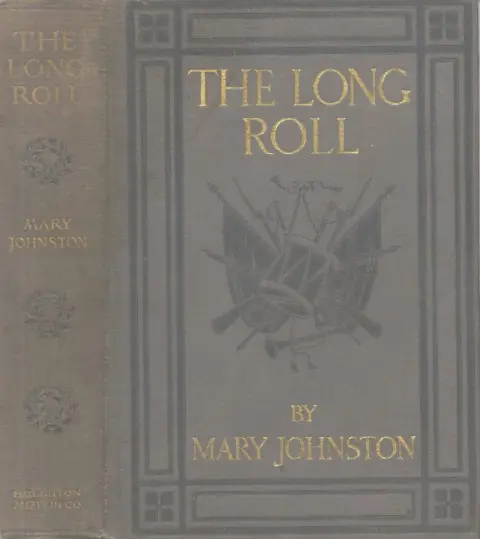
THE CLASSIC COLLECTION · 1911
"The Long Roll" by Mary Johnston is a historical novel written in the early 20th century. Set against the backdrop of the American Civil War, the story captures the sentiments, struggles, and moral dilemmas faced by the people of Virginia as tensions escalate between the North and South. The narrative likely follows several key characters, including Richard Cleave and Judith Cary, who navigate personal and patriotic challenges as their nation heads toward conflict. At the start of the novel, the small town of Botetourt is filled with excitement as the Botetourt Resolutions are read aloud, expressing the community’s determination to protect their rights amidst the growing sectional strife. The speech highlights Virginia's historical role and sets the stage for a burgeoning sense of conflict, with characters reflecting on their allegiances and the implications of approaching war. The contrasting perspectives of the local citizens, including young men looking toward potential enlistment, further illustrate the emotional turmoil of the time, as they ponder the weighty consequences of their decisions in this deeply divided nation.
Introduction adapted from the source catalogue; source summaries may be automatically generated.
Free to read · English · 261,148 words · No account needed
MAKE TIME FOR A GOOD BOOK
On by default. Untick to stop anonymous reading totals. Each page counts after 10 seconds in view. How this works.
Anonymous counting is on unless you have switched it off.
He helped himself as best he could, staunched some blood, drew his own conclusions as to his wounds. He was not suffering much; not over much. By nature he matched increasing danger with increasing coolness. All that he especially wanted was for that charge to succeed--for the grey to succeed. His position here, on the rim of the gully, was an admirable one for witnessing all that the shifting smoke might allow to be witnessed. It was true that a keening minie or one of the monstrous shells might in an instant shear his thread of life, probably would do so; all the probabilities lay that way. But he was cool and courageous, and had kept himself ready to go. An absorbing interest in the field of Gaines's Mill, a passionate desire that Victory should wear grey, dominated all other feeling. Half in the seam of the gully, half in the sedge at the top, he made himself as easy as he could and rested a spectator.
The battle smoke, now heavily settling, now drifting like clouds before a wind, now torn asunder and lifting from the scene, made the great field to come and go in flashes, or like visions of the night. He saw that A. P. Hill was sending in his brigades, brigade after brigade. He looked to the left whence should come Jackson, but over there, just seen through the smoke, the forest stood sultry and still. Behind him, however, in the wood at the base of the armed hill, there rose a clamour and deep thunder as of Armageddon. Like a grey wave broken against an iron shore, the troops with whom he had charged streamed back disordered, out of the shadowy wood into the open, where in the gold sedge lay many a dead man and many a wounded. Allan saw the crimson flag with the blue cross shaken, held on high, heard the officers crying, "Back, men, back! Virginians, do your duty!" The wave formed again. He tried to rise so that he might go with it, but could not. It returned into the wood. Before him, racing toward the gully, came another wave--Branch's brigade, yelling as it charged. He saw it a moment like a grey wall, with the colours tossing, then it poured down into the gully and up and past him. He put up his arms to shield his face, but the men swerved a little and did not trample him. The worn shoes, digging into the loose earth covered him with dust. The moving grey cloth, the smell of sweat-drenched bodies, of powder, of leather, of hot metal, the panting breath, the creak and swing, the sudden darkening, heat and pressure--the passage of that wave took his own breath from him, left him white and sick. Branch went on. He looked across the gully and saw another wave coming--Pender, this time. Pender came without yelling, grim and grey and close-mouthed. Pender had suffered before Beaver Dam Creek; to-day there was not much more than half a brigade. It, too, passed, a determined wave. Allan saw Field in the distance coming up. He was tormented with thirst. Three yards from the gully lay stretched the trunk of a man, the legs blown away. He was almost sure he caught the glint of a canteen. He lay flat in the sedge and dragged himself to the corpse. There was the canteen, indeed; marked with a great U. S., spoil taken perhaps at Williamsburg or at Seven Pines. It was empty, drained dry as a bone. There was another man near. Allan dragged himself on. He thought this one dead, too, but when he reached him he opened large blue eyes and breathed, "Water!" Allan sorrowfully shook his head. The blue eyes did not wink nor close, they glazed and stayed open. The scout dropped beside the body, exhausted. Field's charge passed over him. When he opened his eyes, this portion of the plain was like a sea between cross winds. All the broken waves were wildly tossing. Here they recoiled, fled, even across the gully; here they seethed, inchoate; there, regathering form and might, they readvanced to the echoing hill, with its three breastworks and its eighty cannon. Death gorged himself in the tangled slashing, on the treacherous banks of the slow-moving creek. A. P. Hill was a superb fighter. He sent in his brigades. They returned, broken; he sent them in again. They went. The 16th and 22d North Carolina passed the three lines of blazing rifles, got to the head of the cliff, found themselves among the guns. In vain. Morrell's artillerymen, Morrell's infantry, pushed them back and down, down the hillside, back into the slashing. The 35th Georgia launched itself like a thunderbolt and pierced the lines, but it, too, was hurled down. Gregg's South Carolinians and Sykes Regulars locked and swayed. Archer and Pender, Field and Branch, charged and were repelled, to charge again. Save in marksmanship, the Confederate batteries could not match the Federal; strength was with the great, blue rifled guns, and yet the grey cannoneers wrought havoc on the plateau and amid the breastworks. The sound was enormous, a complex tumult that crashed and echoed in the head. The whole of the field existed in the throbbing, expanded brain--all battlefields, all life, all the world and other worlds, all problems solved and insoluble. The wide-flung grey battlefront was now sickle-shaped, convex to the foe. The rolling dense smoke flushed momently with a lurid glare. In places the forest was afire, in others the stubble of the field. From horn to horn of the sickle galloped the riderless horses. Now and again a wounded one among them screamed fearfully.
Your reading position is saved on this browser. Take it to another device with a library code. Reading pages adapt to text, rather than matching a printed edition.
Mary Johnston
Mary Johnston

Mary Johnston

Mary Johnston
BEHIND THE BOOK
This eBook is for the use of anyone anywhere in the United States and most other parts of the world at no cost and with almost no restrictions whatsoever. You may copy it, give it away or re-use it under the terms of the Project Gutenberg License included with this eBook or online at www.gutenberg.org. If you are not located in the United States, you will have to check the laws of the country where you are located before using this eBook. Read the source licence.
The original source file, including credits and licence, is retained by this library. Request an original-format copy at no charge. Please include the book title and Project Gutenberg identifier #22066.
KEEP YOUR CURIOSITY GOING
Cécile Tormay

Moritz Busch
Coulson Kernahan
John L. Ransom

Maurice Baring
Frances Wright