
The slave ship
Mary Johnston
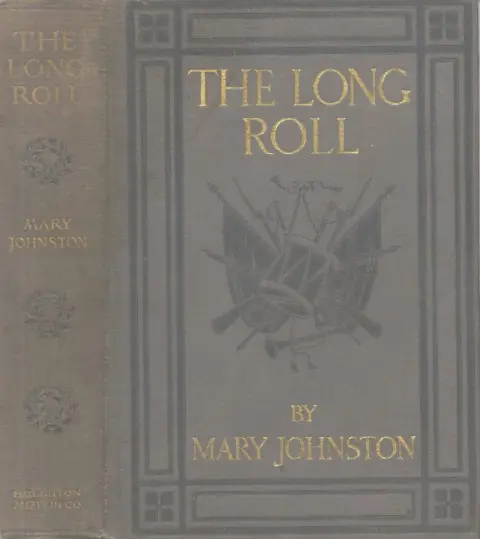
THE CLASSIC COLLECTION · 1911
"The Long Roll" by Mary Johnston is a historical novel written in the early 20th century. Set against the backdrop of the American Civil War, the story captures the sentiments, struggles, and moral dilemmas faced by the people of Virginia as tensions escalate between the North and South. The narrative likely follows several key characters, including Richard Cleave and Judith Cary, who navigate personal and patriotic challenges as their nation heads toward conflict. At the start of the novel, the small town of Botetourt is filled with excitement as the Botetourt Resolutions are read aloud, expressing the community’s determination to protect their rights amidst the growing sectional strife. The speech highlights Virginia's historical role and sets the stage for a burgeoning sense of conflict, with characters reflecting on their allegiances and the implications of approaching war. The contrasting perspectives of the local citizens, including young men looking toward potential enlistment, further illustrate the emotional turmoil of the time, as they ponder the weighty consequences of their decisions in this deeply divided nation.
Introduction adapted from the source catalogue; source summaries may be automatically generated.
Free to read · English · 261,148 words · No account needed
MAKE TIME FOR A GOOD BOOK
On by default. Untick to stop anonymous reading totals. Each page counts after 10 seconds in view. How this works.
Anonymous counting is on unless you have switched it off.
Scattered in groups, through the large room, were men in uniform and civilians in broadcloth and fine linen. So peculiarly constituted were the Confederate armies that it was usual to find here a goodly number of private soldiers mingling with old schoolmates, friends, kindred wearing the bars and stars of lieutenants, captains, majors, colonels, and brigadiers. But to-night all privates and all company officers were with their regiments; there were not many even of field and staff. It was known to be the eve of a fight, a very great fight; passes into town were not easy to obtain. Those in uniform who were here counted; they were high in rank. Mingling with them were men of the civil government,--cabinet officers, senators, congressmen, judges, heads of bureaus; and with these, men of other affairs: hardly a man but was formally serving the South. If he were not in the field he was of her legislatures; if not there, then doing his duty in some civil office; if not there, wrestling with the management of worn-out railways; or, cool and keen, concerned in blockade running, bringing in arms and ammunition, or in the Engineer Bureau, or the Bureau of Ordnance or the Medical Department, or in the service of the Post, or at the Treasury issuing beautiful Promises to Pay, or at the Tredegar moulding cannon, or in the newspaper offices wrestling with the problem of worn-out type and wondering where the next roll of paper was to come from, or in the telegraph service shaking his head over the latest raid, the latest cut wires; or he was experimenting with native medicinal plants, with balloons, with explosives, torpedoes, submarine batteries; or thinking of probable nitre caves, of the possible gathering of copper from old distilleries, of the scraping saltpetre from cellars, of how to get tin, of how to get chlorate of potassium, of how to get gutta-percha, of how to get paper, of how to get salt for the country at large; or he was running sawmills, building tanneries, felling oak and gum for artillery carriages, working old iron furnaces, working lead mines, busy with foundry and powder mill.... If he was old he was enlisted in the City Guard, a member of the Ambulance Committee, a giver of his worldly substance. All the South was at work, and at work with a courage to which were added a certain colour and elan not without value on her page of history. The men, not in uniform, here to-night were doing their part, and it was recognized that they were doing it. The women, no less; of whom there were a number at the President's House this evening. With soft, Southern voices, with flowers banded in their hair, with bare throat and arms, with wide, filmy, effective all-things-but-new dresses, they moved through the rooms, or sat on the rosewood sofas, or walking on the portico above the roses looked out to the flare in the east. Some had come from the hospitals,--from the Officer's, from Chimborazo, Robinson's, Gilland's, the St. Charles, the Soldier's Rest, the South Carolina, the Alabama,--some from the sewing-rooms, where they cut and sewed uniforms, shirts, and underclothing, scraped lint, rolled bandages; several from the Nitre and Mining Bureau, where they made gunpowder; several from the Arsenal, where they made cartridges and filled shells. These last would be refugee women, fleeing from the counties overrun by the enemy, all their worldly wealth swept away, bent on earning something for mother or father or child. One and all had come from work, and they were here now in the lights and flowers, not so much for their own pleasure as that there might be cheer, music, light, laughter, flowers, praise, and sweetness for the men who were going to battle. Men and women, all did not come or go at once; they passed in and out of the President's House, some tarrying throughout the evening, others but for a moment. The violins left "Il Trovatore," began upon "Les Huguenots."
Your reading position is saved on this browser. Take it to another device with a library code. Reading pages adapt to text, rather than matching a printed edition.
Mary Johnston
Mary Johnston

Mary Johnston

Mary Johnston
BEHIND THE BOOK
This eBook is for the use of anyone anywhere in the United States and most other parts of the world at no cost and with almost no restrictions whatsoever. You may copy it, give it away or re-use it under the terms of the Project Gutenberg License included with this eBook or online at www.gutenberg.org. If you are not located in the United States, you will have to check the laws of the country where you are located before using this eBook. Read the source licence.
The original source file, including credits and licence, is retained by this library. Request an original-format copy at no charge. Please include the book title and Project Gutenberg identifier #22066.
KEEP YOUR CURIOSITY GOING
Cécile Tormay

Moritz Busch
Coulson Kernahan
John L. Ransom

Maurice Baring
Frances Wright