
The slave ship
Mary Johnston
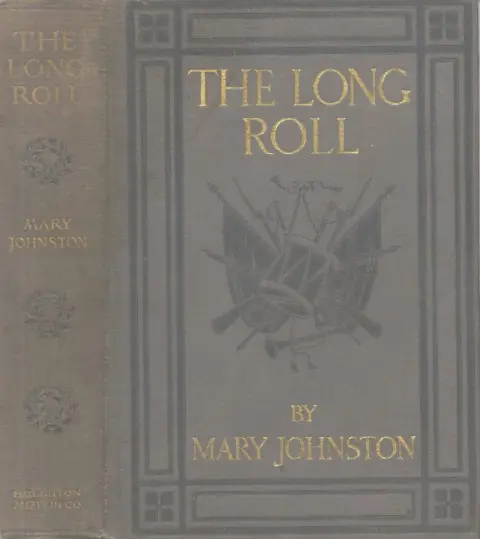
THE CLASSIC COLLECTION · 1911
"The Long Roll" by Mary Johnston is a historical novel written in the early 20th century. Set against the backdrop of the American Civil War, the story captures the sentiments, struggles, and moral dilemmas faced by the people of Virginia as tensions escalate between the North and South. The narrative likely follows several key characters, including Richard Cleave and Judith Cary, who navigate personal and patriotic challenges as their nation heads toward conflict. At the start of the novel, the small town of Botetourt is filled with excitement as the Botetourt Resolutions are read aloud, expressing the community’s determination to protect their rights amidst the growing sectional strife. The speech highlights Virginia's historical role and sets the stage for a burgeoning sense of conflict, with characters reflecting on their allegiances and the implications of approaching war. The contrasting perspectives of the local citizens, including young men looking toward potential enlistment, further illustrate the emotional turmoil of the time, as they ponder the weighty consequences of their decisions in this deeply divided nation.
Introduction adapted from the source catalogue; source summaries may be automatically generated.
Free to read · English · 261,148 words · No account needed
MAKE TIME FOR A GOOD BOOK
On by default. Untick to stop anonymous reading totals. Each page counts after 10 seconds in view. How this works.
Anonymous counting is on unless you have switched it off.
Out of Virginia, before Corinth in Tennessee, and at Cumberland Gap, Armies of the Ohio, of the Mississippi, of the West--one hundred and ten thousand in blue, eighty thousand in grey, Halleck and Beauregard--listened for news from Virginia. "Has Richmond fallen?" "No. McClellan is cautious. Lee and Johnston are between him and the city. He will not attack until he is further strengthened by McDowell." "Where is McDowell?" "He was moving south from Fredericksburg. His outposts almost touched those of McClellan. But now he has been sent across the Blue Ridge to the Valley, there to put a period to the activities of Stonewall Jackson. That done, he will turn and join McClellan. The two will enfold Lee and Jackson--the Anaconda Scheme--and crush every bone in their bodies. Richmond will fall and the war end."
Tennessee watched and north Alabama. In Arkansas, on the White River were twelve thousand men in blue, and, arrayed against them, six thousand, white men and Indians, clad in grey. Far, far away, outer edges of the war, they, too, looked toward the east and wondered how it went in Virginia. Grey and blue, Missouri, Louisiana, New Mexico, Arizona--at lonely railway or telegraph stations, at river landings, wherever, in the intervals between skirmishes, papers might be received or messages read, soldiers in blue or soldiers in grey asked eagerly "What news from Richmond?"--"Stonewall Jackson? Valley of Virginia?"--"Valley of Virginia! I know!--saw it once. God's country."
At New Orleans, on the levees, in the hot streets, under old balconies and by walled gardens, six thousand men in blue under Butler watched, and a sad-eyed captive city watched. From the lower Mississippi, from the blue waters of the Gulf, from the long Atlantic swells, the ships looked to the land. All the blockading fleets, all the old line-of-battle ships, the screw-frigates, the corvettes, the old merchant steamers turned warrior, the strange new iron-clads and mortar boats, engaged in bottling up the Confederacy, they all looked for the fall of Richmond. There watched, too, the ram-fitted river boats, the double-enders, lurking beneath Spanish moss, rocking beside canebrakes, on the far, sluggish, southern rivers. And the other ships, the navy all too small, the scattered, shattered, despairing and courageous ships that flew the stars and bars, they listened, too, for a last great cry in the night. The blockade-runners listened, the Gladiators, the Ceciles, the Theodoras, the Ella Warleys faring at headlong peril to and fro between Nassau in the Bahamas and small and hidden harbours of the vast coast line, inlets of Georgia, Florida, Carolina. Danger flew with them always through the rushing brine, but with the fall of Richmond disaster might be trusted to swoop indeed. Then woe for all the wares below--the Enfield rifles, the cannon powder, the cartridges, the saltpetre, bar steel, nitric acid, leather, cloth, salt, medicines, surgical instruments! Their outlooks kept sharp watch for disaster, heaving in sight in the shape of a row of blue frigates released from patrol duty. Let Richmond fall, and the Confederacy, war and occupation, freedom, life, might be gone in a night, blown from existence by McClellan's siege guns!
Your reading position is saved on this browser. Take it to another device with a library code. Reading pages adapt to text, rather than matching a printed edition.
Mary Johnston
Mary Johnston

Mary Johnston

Mary Johnston
BEHIND THE BOOK
This eBook is for the use of anyone anywhere in the United States and most other parts of the world at no cost and with almost no restrictions whatsoever. You may copy it, give it away or re-use it under the terms of the Project Gutenberg License included with this eBook or online at www.gutenberg.org. If you are not located in the United States, you will have to check the laws of the country where you are located before using this eBook. Read the source licence.
The original source file, including credits and licence, is retained by this library. Request an original-format copy at no charge. Please include the book title and Project Gutenberg identifier #22066.
KEEP YOUR CURIOSITY GOING
Cécile Tormay

Moritz Busch
Coulson Kernahan
John L. Ransom

Maurice Baring
Frances Wright