
The slave ship
Mary Johnston
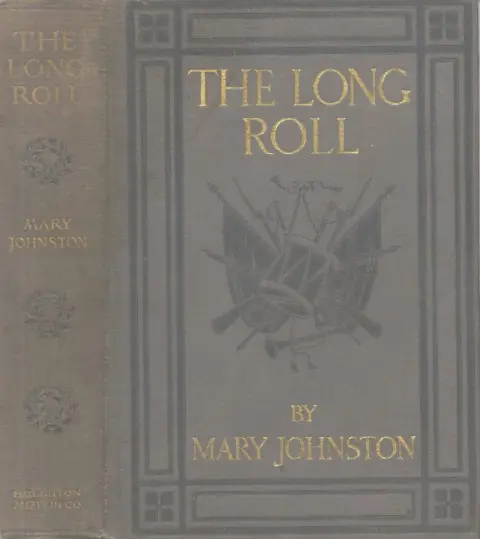
THE CLASSIC COLLECTION · 1911
"The Long Roll" by Mary Johnston is a historical novel written in the early 20th century. Set against the backdrop of the American Civil War, the story captures the sentiments, struggles, and moral dilemmas faced by the people of Virginia as tensions escalate between the North and South. The narrative likely follows several key characters, including Richard Cleave and Judith Cary, who navigate personal and patriotic challenges as their nation heads toward conflict. At the start of the novel, the small town of Botetourt is filled with excitement as the Botetourt Resolutions are read aloud, expressing the community’s determination to protect their rights amidst the growing sectional strife. The speech highlights Virginia's historical role and sets the stage for a burgeoning sense of conflict, with characters reflecting on their allegiances and the implications of approaching war. The contrasting perspectives of the local citizens, including young men looking toward potential enlistment, further illustrate the emotional turmoil of the time, as they ponder the weighty consequences of their decisions in this deeply divided nation.
Introduction adapted from the source catalogue; source summaries may be automatically generated.
Free to read · English · 261,148 words · No account needed
MAKE TIME FOR A GOOD BOOK
On by default. Untick to stop anonymous reading totals. Each page counts after 10 seconds in view. How this works.
Anonymous counting is on unless you have switched it off.
The two arose and faced Stonewall Jackson. He had come upon them silently, out from the screen of blackening cedars. Now he blocked their path, his lips iron, his eyes a mere gleaming line. "Two squabblers rolling in the snow--two staff officers brawling before a disheartened army! What have you to say for yourselves? Nothing!"
Stafford broke the silence. "Major Cleave has my leave to explain his
action, sir."
Jackson's eyes drew to a yet narrower line. "Your leave is not necessary, sir. What was this brawl about, Major Cleave?"
"We quarrelled, sir," said Cleave slowly. "Major Stafford gave utterance to certain sentiments with which I did not agree, and ... we quarrelled."
"What sentiments? Yes, sir, I order you to answer."
"Major Stafford made certain statements as to the army and the
campaign--statements which I begged to contradict. I can say no more,
sir."
"You will tell me what statements, major."
"It is impossible for me to do that, sir."
"My orders are always possible of execution, sir. You will answer me."
Cleave kept silence. The twilight settled closer; the dark wall of the cedars seemed to advance; a hollow wind blew through the forest. "Why, I will tell you, sir!" said Stafford impatiently. "I said--"
Jackson cut him short. "Be silent, sir! I have not asked you for your report. Major Cleave, I am waiting."
Cleave made a slight gesture, sullen, weary, and determined. "I am very sorry, sir. Major Stafford made certain comments which I resented. Hence the action of a moment. That is all that I can say, sir."
Stafford spoke with curt rapidity. "I said that these were Russian steppes and that this was a march from Moscow, but that we had not a Napoleon to soften privation for us. I said that the Stonewall Brigade was unduly favoured, that the general commanding was--"
He got no further. "Silence, sir," said Jackson, "or I will bring you before a court martial! You will come with me now to my tent. I will hear General Loring's latest communication there." He turned upon Cleave. "As for you, sir, you will consider yourself under arrest, first for disobedience of orders, second for brawling in camp. You will march to-morrow in the rear of your regiment."
He towered a moment, then with a jerk of his hand went away, taking with him the officer from Loring. Stafford had a moment in which to make a gesture of anger and deprecation--a gesture which the other acknowledged with a nod; then he was gone, looking back once. Cleave returned to Tullius and the small fire by the pawpaw bushes.
Your reading position is saved on this browser. Take it to another device with a library code. Reading pages adapt to text, rather than matching a printed edition.
Mary Johnston
Mary Johnston

Mary Johnston

Mary Johnston
BEHIND THE BOOK
This eBook is for the use of anyone anywhere in the United States and most other parts of the world at no cost and with almost no restrictions whatsoever. You may copy it, give it away or re-use it under the terms of the Project Gutenberg License included with this eBook or online at www.gutenberg.org. If you are not located in the United States, you will have to check the laws of the country where you are located before using this eBook. Read the source licence.
The original source file, including credits and licence, is retained by this library. Request an original-format copy at no charge. Please include the book title and Project Gutenberg identifier #22066.
KEEP YOUR CURIOSITY GOING
Cécile Tormay

Moritz Busch
Coulson Kernahan
John L. Ransom

Maurice Baring
Frances Wright