
The slave ship
Mary Johnston
THE CLASSIC COLLECTION · 1911
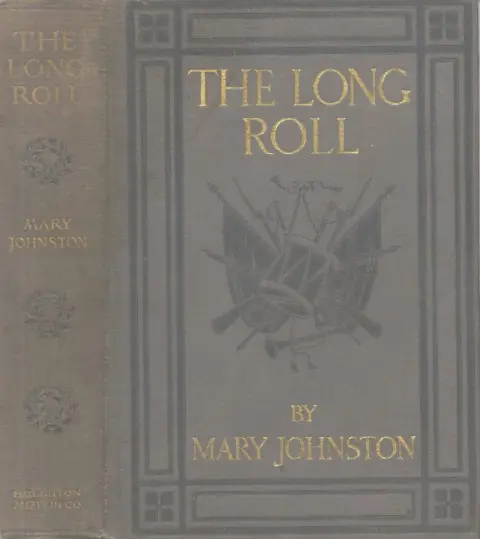
"The Long Roll" by Mary Johnston is a historical novel written in the early 20th century. Set against the backdrop of the American Civil War, the story captures the sentiments, struggles, and moral dilemmas faced by the people of Virginia as tensions escalate between the North and South. The narrative likely follows several key characters, including Richard Cleave and Judith Cary, who navigate personal and patriotic challenges as their nation heads toward conflict. At the start of the novel, the small town of Botetourt is filled with excitement as the Botetourt Resolutions are read aloud, expressing the community’s determination to protect their rights amidst the growing sectional strife. The speech highlights Virginia's historical role and sets the stage for a burgeoning sense of conflict, with characters reflecting on their allegiances and the implications of approaching war. The contrasting perspectives of the local citizens, including young men looking toward potential enlistment, further illustrate the emotional turmoil of the time, as they ponder the weighty consequences of their decisions in this deeply divided nation.
Introduction adapted from the source catalogue; source summaries may be automatically generated.
Free to read · English · 261,148 words · No account needed
MAKE TIME FOR A GOOD BOOK
On by default. Untick to stop anonymous reading totals. Each page counts after 10 seconds in view. How this works.
Anonymous counting is on unless you have switched it off.
Mid-day arrived, and the halt for dinner. Alas for the men without haversacks! They looked as though they had borne all the burdens of the march. There was hunger within and scant sympathy without. "Didn't the damned fools know that Old Jack always keeps five miles ahead of wagon trains and hell fire?" "Here, Saunders! take these corn pones over to those damned idiots with the compliments of Mess No. 4. We know that they have Cherrystone oysters, canvas-back ducks, terrapin, and peach brandy in their haversacks, and that they meant to ask us to join them. So unfortunate!"
The cavalry marched on, the artillery marched on, the infantry marched on. The bright skies subtly changed. The blue grew fainter; a haze, white, harsh, and cold, formed gradually, and a slight wind began to blow. The aster and goldenrod, the dried ironweed and sumach, the red rose hips and magenta pokeberry stalks looked dead enough now, dead and dreary upon the weary, weary road. The men sang no more; the more weakly shivered. Before long the sky was an even greyish-white, and the wind had much increased. Coming from the northwest, it struck the column in the face; moreover, it grew colder and colder. All types shivered now, the strong and the weak, the mounted officer and the leg-weary private, the men with overcoats, and the men without. The column moved slower and slower, all heads bent before the wind, which now blew with violence. It raised, too, a blinding dust. A curt order ran down the lines for less delay. The regiments changed gait, tried quick time along a level stretch, and left behind a large number of stragglers. The burst of speed was for naught, they went the slower thereafter, and coming to a long, bleak hill, crept up it like tortoises--but without protecting shells. By sunset the cold was intense. Word came back that the head of the column was going into camp, and a sigh of approbation arose from all. But when brigade by brigade halted, deployed, and broke ranks, it appeared that "going into camp" was rather a barren phrase. The wagons had not come up; there were no tents, no blankets, no provisions. A northwester was blowing, and the weather-wise said that there would be snow ere morning. The regiments spread over bare fields, enclosed by rail fences. There were a small, rapidly freezing stream and thick woods, skirting the fields. In the woods were fallen boughs and pine cones enough to make the axes in the company wagons not greatly missed, and detachments were sent to gather fagots. The men, cold and exhausted, went, but they looked wistfully at the rail fences all around them, so easy to demolish, so splendid to burn! Orders on the subject were stringent. Officers will be held responsible for any destruction of property. We are here to protect and defend, not to destroy. The men gathered dead branches and broke down others, heaped them together in the open fields, and made their camp-fires. The Rockbridge Artillery occupied a fallow field covered with fox grass, dead Michaelmas daisy, and drifted leaves. It was a good place for the poor horses, the battery thought. But the high wind blew sparks from the fires and lighted the grass. The flames spread and the horses neighed with terror. The battery was forced to move, taking up position at last in a ploughed field where the frozen furrows cut the feet, and the wind had the sweep of an unchained demon. An infantry regiment fared better. It was in a stretch of fenced field between the road and the freezing brook. A captain, native of that region, spoke to the lieutenant-colonel, and the latter spoke to the men. "Captain ---- says that we are camping upon his land, and he's sorry he can't give us a better welcome! But we can have his fence rails. Give him a cheer, and build your fires!" The men cheered lustily, and tore the rails apart, and had rousing fires and were comfortable; but the next morning Stonewall Jackson suspended from duty the donor of his own fences. The brigades of Loring undoubtedly suffered the most. They had seen, upon the Monterey line, on the Kanawha, the Gauley, and the Greenbriar, rough and exhausting service. And then, just when they were happy at last in winter quarters, they must pull up stakes and hurry down the Valley to join "Fool Tom Jackson" of the Virginia Military Institute and one brief day of glory at Manassas! Loring, a gallant and dashing officer, was popular with them. "Fool Tom Jackson" was not. They complained, and they very honestly thought that they had upon their side justice, common sense, and common humanity--to say nothing of military insight! The bitter night was bitterer to them for their discontent. Many were from eastern Virginia or from the states to the south, not yet inured to the winter heights and Stonewall Jackson's way. They slept on frozen ground, surrounded by grim mountains, and they dreamed uneasily of the milder lowlands, of the yet green tangles of bay and myrtle, of quiet marshes and wide, unfreezing waters. In the night-time the clouds thickened, and there came down a fine rain, mixed with snow. In the morning, fields, hillsides, and road appeared glazed with ice--and the wagons were not up!
Your reading position is saved on this browser. Take it to another device with a library code. Reading pages adapt to text, rather than matching a printed edition.
Mary Johnston
Mary Johnston

Mary Johnston

Mary Johnston
BEHIND THE BOOK
This eBook is for the use of anyone anywhere in the United States and most other parts of the world at no cost and with almost no restrictions whatsoever. You may copy it, give it away or re-use it under the terms of the Project Gutenberg License included with this eBook or online at www.gutenberg.org. If you are not located in the United States, you will have to check the laws of the country where you are located before using this eBook. Read the source licence.
The original source file, including credits and licence, is retained by this library. Request an original-format copy at no charge. Please include the book title and Project Gutenberg identifier #22066.
KEEP YOUR CURIOSITY GOING
Cécile Tormay

Moritz Busch
Coulson Kernahan
John L. Ransom

Maurice Baring
Frances Wright