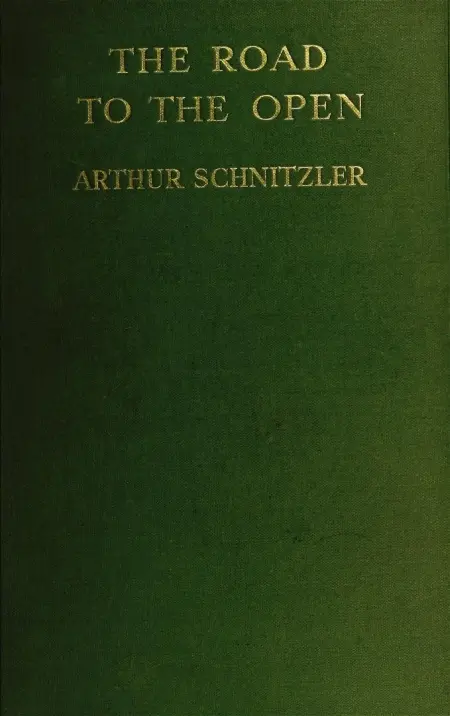
The Road to the Open
Arthur Schnitzler
THE CLASSIC COLLECTION · 1915
"The Lonely Way—Intermezzo—Countess Mizzie" by Arthur Schnitzler is a collection of three plays written in the early 20th century. The works delve into themes of love, personal struggle, and the complexities of human relationships, set against the backdrop of early modern Vienna. The characters in Schnitzler's plays often embody the tensions between societal expectations and individual desires, making the collection a poignant exploration of human intimacy and existential themes. The opening of the first play, "The Lonely Way," introduces a family dynamic within the garden of Professor Wegrat's house, highlighting his interactions with his wife and children, as well as their acquaintances. As the characters converse, they navigate the weight of familial expectations, personal aspirations, and the looming presence of illness, which adds an undercurrent of melancholy. The dialogue reveals deep-seated fears and desires, particularly through the character of Johanna, who grapples with her mother's illness and the implications of their growing distance. This opening sets the stage for the unfolding emotional conflicts, inviting readers into the intricate webs of relationships that Schnitzler masterfully explores.
Introduction adapted from the source catalogue; source summaries may be automatically generated.
Free to read · English · 70,089 words · No account needed
MAKE TIME FOR A GOOD BOOK
On by default. Untick to stop anonymous reading totals. Each page counts after 10 seconds in view. How this works.
Anonymous counting is on unless you have switched it off.
But, Countess--a coachman, you say?! Only in the same manner as when your papa himself--beg your pardon!--happens to be taking the bay out for a spin at times. Cab owner, that's what my fiance is--and house owner, and a burgess of Vienna, who gets on the box himself only when it pleases him and when there is somebody of whom he thinks a whole lot. Now he is driving for a certain Baron Radeiner--whom he has just brought out here to see your father, Countess. And I am having my doubts about that Baron Radeiner.
Permit me to introduce myself--Baron Radeiner.
So that's you, Your Highness?
I have let nobody but Wasner drive me since I came here.
And under an assumed name at that, Your Highness? Well, we are finding out a lot of nice things about you!
COUNT (appears, very hot)
Well, here I am. (Taking in the situation) Ah!
Your humble servant, Count! I have taken the liberty--I wanted to thank you for the magnificent flowers.
Oh, please--it was a great pleasure....
And here, old friend, is my son Philip.
I regard myself as greatly honored, Count.
COUNT (giving his hand to Philip)
I bid you welcome to my house. Please consider yourself at home here.--I don't think any further introductions are required.
No, papa.
COUNT (slightly embarrassed)
It's very charming of you, my dear lady. Of course, you know better than anybody that I have always been one of your admirers.... But tell me, please, how in the world did you get out here? I have just been taking a walk along the main road, where every carriage has to pass, and I didn't see you.
What do you take me for, Count? My cab days are past now. I came by the train, which is the proper thing for me.
I see.... But I hear that your fiance himself....
Oh, he has more pretentious customers to look after.
Yes, I have just had the pleasure of being conducted here by the fiance
of Miss Pallestri.
Is Wasner driving for you? Well, that settles it--of course--clear psychological connection! (Offers his cigar case) Want a smoke?
PHILIP (accepting)
Thank you.
But, Philip...! A monster like that before lunch!
Excellent. Nothing better for the health. And I like you. Suppose we
sit down.
[The Count, the Prince and Philip seat themselves, while Mizzie and Lolo remain standing close to them.
So you'll be off with your father to-morrow?
Yes, Count. And I'm tremendously pleased to think of it.
Will you be gone long?
Your reading position is saved on this browser. Take it to another device with a library code. Reading pages adapt to text, rather than matching a printed edition.
Arthur Schnitzler
Arthur Schnitzler
BEHIND THE BOOK
This eBook is for the use of anyone anywhere in the United States and most other parts of the world at no cost and with almost no restrictions whatsoever. You may copy it, give it away or re-use it under the terms of the Project Gutenberg License included with this eBook or online at www.gutenberg.org. If you are not located in the United States, you will have to check the laws of the country where you are located before using this eBook. Read the source licence.
The original source file, including credits and licence, is retained by this library. Request an original-format copy at no charge. Please include the book title and Project Gutenberg identifier #29745.
KEEP YOUR CURIOSITY GOING
Maurice Baring
W. B. (William Butler) Yeats
Edward Martyn

John Brougham & Charlotte Brontë
Marguerite Merington
Leonid Andreyev