THE CLASSIC COLLECTION✦An outlaw’s diary: the CommuneCLASSIC FREE BOOKS
An outlaw’s diary: the Commune
Cécile Tormay
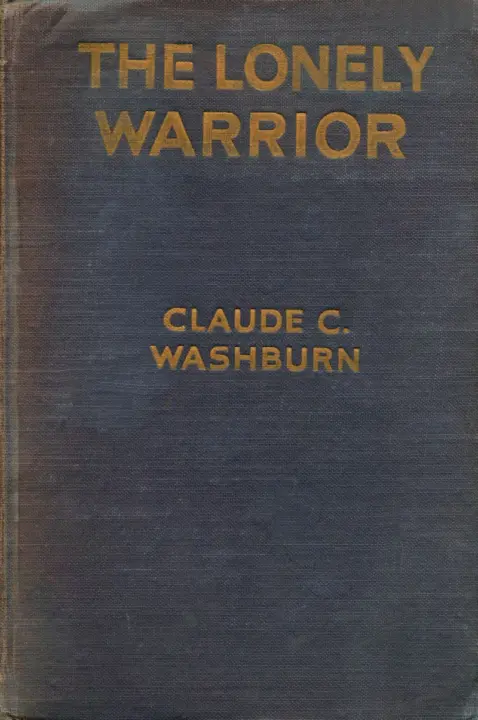
THE CLASSIC COLLECTION · 1922
"The Lonely Warrior" by Claude C. Washburn is a novel written in the early 20th century. The story centers around Edward Carroll, his son Stacey, and their emotional conflicts during the backdrop of World War I. The book explores themes of duty, bravery, and the personal costs of war through the lens of familial relationships and societal expectations. At the start of the novel, we meet Edward Carroll, a successful businessman who engages in a poignant conversation with his son Stacey, who is determined to enlist for military service in the ongoing war. Despite Edward's fears for his son’s safety and his belief that the war may not directly involve Americans yet, Stacey argues passionately for the necessity of joining the fight. The opening segment highlights the generational clash in perceptions of duty and honor, with Stacey embodying a youthful idealism contrasted against his father's pragmatic concerns. Their dialogue reveals deep emotional undercurrents and foreshadows the personal struggles both will face as the broader conflict of the Great War looms over their lives.
Introduction adapted from the source catalogue; source summaries may be automatically generated.
Free to read · English · 103,179 words · No account needed
MAKE TIME FOR A GOOD BOOK
On by default. Untick to stop anonymous reading totals. Each page counts after 10 seconds in view. How this works.
Anonymous counting is on unless you have switched it off.
Stacey set patiently about the game, In a way it was a relief—like knitting, he supposed. But, as he played it, he heard his father at the other end of the room proudly telling Phil and Catherine of the Omaha adventure, and an odd dream-like sensation came over Stacey of not knowing which was real—this, the childish game with the boys, or that, the story his father was repeating. Neither, perhaps.
Phil came over and stood near him. “A sad day for you that you introduced that game!” he remarked.
“Oh, I don’t know! I don’t mind it,” Stacey returned. “‘Come back, Jack! Come back, Jill!’”
(“Did I really introduce it?” he thought hazily. “Was it really I or some ancestor of mine?”)
“The dreadful monotony of it!” Phil added, with a laugh.
“That’s its charm.”
“Enough! That will do now,” said Phil presently. “Up you go, boys! To bed! Run! Beat it!”
“Beat it! Beat it!” Jack repeated delightedly.
“Mother won’t let me say ‘beat it,’” Carter remarked.
“Won’t she? Well, I suppose she’ll let me say it.”
Carter rushed across the room. “Mother! Mother!” he cried, both on the way and after arrival, “daddy says you’ll let him say ‘beat it!’ Will you? Then why won’t you let me?”
“Sh!” said Catherine, looking a little dazed. “Carter, this is Uncle Stacey’s father. What will he think of you if you shout that way?”
The boy shook Mr. Carroll’s extended hand politely. “But, mother,” he repeated, “daddy said—”
“Yes, I know. You tell daddy that I say he’s a great goose and that geese can say what they please, I suppose. Then run up to bed and see if you can help Jack undress nicely. I’ll come up and kiss you both good night when you’re ready.”
The boys went—reluctantly, with dragging steps, but without protest.
However, at the door Carter turned and ran back, his brother following
like a faithful dog.
“I guess I forgot to say thank you, Uncle Stacey, for Jack and Jill,” he
observed.
“That’s all right, Carter,” said Stacey. “’Night! Sleep tight!”
“Don’t let the bed-bugs bite!” Carter shouted joyfully.
“Carter!” called his mother, but he was really gone this time.
“Triumphant exit, wasn’t it?” Phil remarked. “Come out on the porch with me, Stacey. It will rest you.”
They went out and walked up and down together. There was a pleasant coolness in the air. The city glittered beneath them.
Your reading position is saved on this browser. Take it to another device with a library code. Reading pages adapt to text, rather than matching a printed edition.
BEHIND THE BOOK
This eBook is for the use of anyone anywhere in the United States and most other parts of the world at no cost and with almost no restrictions whatsoever. You may copy it, give it away or re-use it under the terms of the Project Gutenberg License included with this eBook or online at www.gutenberg.org. If you are not located in the United States, you will have to check the laws of the country where you are located before using this eBook. Read the source licence.
The original source file, including credits and licence, is retained by this library. Request an original-format copy at no charge. Please include the book title and Project Gutenberg identifier #60719.
KEEP YOUR CURIOSITY GOING
Cécile Tormay

Moritz Busch
Coulson Kernahan
John L. Ransom

Maurice Baring
Frances Wright