THE CLASSIC COLLECTION✦An outlaw’s diary: the CommuneCLASSIC FREE BOOKS
An outlaw’s diary: the Commune
Cécile Tormay
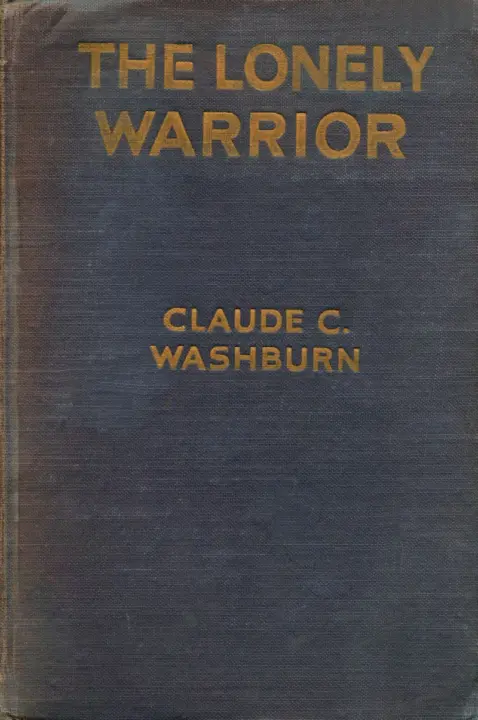
THE CLASSIC COLLECTION · 1922
"The Lonely Warrior" by Claude C. Washburn is a novel written in the early 20th century. The story centers around Edward Carroll, his son Stacey, and their emotional conflicts during the backdrop of World War I. The book explores themes of duty, bravery, and the personal costs of war through the lens of familial relationships and societal expectations. At the start of the novel, we meet Edward Carroll, a successful businessman who engages in a poignant conversation with his son Stacey, who is determined to enlist for military service in the ongoing war. Despite Edward's fears for his son’s safety and his belief that the war may not directly involve Americans yet, Stacey argues passionately for the necessity of joining the fight. The opening segment highlights the generational clash in perceptions of duty and honor, with Stacey embodying a youthful idealism contrasted against his father's pragmatic concerns. Their dialogue reveals deep emotional undercurrents and foreshadows the personal struggles both will face as the broader conflict of the Great War looms over their lives.
Introduction adapted from the source catalogue; source summaries may be automatically generated.
Free to read · English · 103,179 words · No account needed
MAKE TIME FOR A GOOD BOOK
On by default. Untick to stop anonymous reading totals. Each page counts after 10 seconds in view. How this works.
Anonymous counting is on unless you have switched it off.
“I’m going to run over to see Phil and Catherine Blair for a little while,” Stacey said. “They don’t even know where I’ve been, and I ought to go. It occurred to me, sir, that just possibly you’d like to drive over there with me. Would you care to?”
Stacey had not the slightest idea that his father would accept. Mr. Carroll disliked going out in the evening. But, to Stacey’s surprise, he dropped his cards and rose at once.
“Why, yes, son, I’ll be glad to go along, if you really want me,” he replied. “I like your friends, the Blairs,” he added, in an apologetic tone, when he and Stacey were in the car. “Phil’s a thoughtful fellow, with talent, too, I should judge, though I don’t pretend to know anything about architecture. And Catherine’s a fine girl, an unusual girl.”
Again Stacey was surprised.
Phil himself opened the door, a look of warm pleasure glowing in his face. “Well, where the deuce have you been, Stacey?” he cried. “This is awfully good of you, Mr. Carroll! Come in! Come in!” And he ushered them into the house.
The sitting-room glowed, too. Light from a shaded reading-lamp fell on Catherine’s hair and face, illuminating the fine close-grained skin and accentuating the firm bony structure beneath it. Catherine was sitting in a low easy chair, over the arms of which her two sons leaned closely to gaze down at the large book that lay open on her knees. She rose swiftly at sight of her guests, but with a shy grace. Her hand went to her hair.
As for the two boys, they dashed at Stacey immediately.
For just an instant, while he held them off, he considered the scene wistfully. It all seemed so far from any mood his tortured inharmonious spirit was able to achieve.
But Catherine, after a faint smile at him, was shaking hands with his father, and the boys were growing importunate.
“Come on, Uncle Stacey!” Carter shouted. “Do ‘Fly away, Jack!’ for him! Come on! Over here!”
“Carter! Carter!” said his mother. “Not so loud! And let Uncle Stacey
alone.”
“No, but he wants to play, don’t you, Uncle Stacey?” Carter insisted, moderating his voice, however.
“Sure!” said Stacey. “Only wouldn’t you—er—just as lief try some other
game?”
“No. ‘Fly away, Jack!’” the boy returned firmly. “I do it for him sometimes, and he can’t ever find them. Only,” he added in a tremendous whisper, “they come off kind of often.”
Your reading position is saved on this browser. Take it to another device with a library code. Reading pages adapt to text, rather than matching a printed edition.
BEHIND THE BOOK
This eBook is for the use of anyone anywhere in the United States and most other parts of the world at no cost and with almost no restrictions whatsoever. You may copy it, give it away or re-use it under the terms of the Project Gutenberg License included with this eBook or online at www.gutenberg.org. If you are not located in the United States, you will have to check the laws of the country where you are located before using this eBook. Read the source licence.
The original source file, including credits and licence, is retained by this library. Request an original-format copy at no charge. Please include the book title and Project Gutenberg identifier #60719.
KEEP YOUR CURIOSITY GOING
Cécile Tormay

Moritz Busch
Coulson Kernahan
John L. Ransom

Maurice Baring
Frances Wright