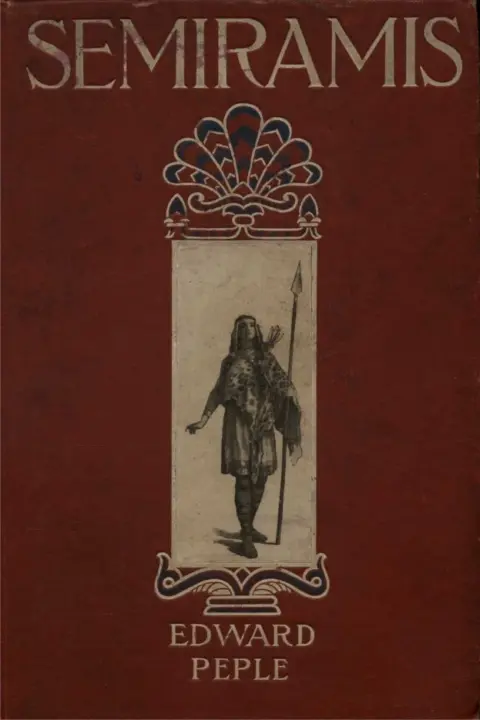
Semiramis: A Tale of Battle and of Love
Edward Peple
THE CLASSIC COLLECTION · 1914
"The Littlest Rebel" by Edward Peple is a novel written in the early 20th century. The story revolves around a young girl named Virginia "Virgie" Cary, who navigates the complexities and harsh realities of life during the Civil War, particularly the impact that the conflict has on her family and home. With a blend of childhood innocence and the burdens of war, the novel touches on themes of loyalty, bravery, and the spirit of humanity amidst strife. At the start of the narrative, we are introduced to Mrs. Cary and her daughter Virgie, who are struggling to maintain a semblance of normalcy despite the looming war. Virgie's playful imagination brings a moment of levity as she and her playmate, Sally Ann, engage in a game based on the story of Blue Beard. However, the play is interrupted by the harsh realities of war and its effects on their lives. Through Mrs. Cary and Uncle Billy, we learn about the family's challenges, including poverty and the looming threat of Union soldiers, while Virgie's innocent and spirited responses highlight her resilience in the face of adversity. As the chapter unfolds, we sense the growing tension and uncertainty that permeates their lives, setting the stage for the conflicts to come.
Introduction adapted from the source catalogue; source summaries may be automatically generated.
Free to read · English · 43,847 words · No account needed
MAKE TIME FOR A GOOD BOOK
On by default. Untick to stop anonymous reading totals. Each page counts after 10 seconds in view. How this works.
Anonymous counting is on unless you have switched it off.
The head and shoulders disappeared. A short pause followed, then the ladder came slowly down, and the Southerner descended, while Virgie crouched, a sobbing little heap, beside her doll. But when he reached the bottom rung, she rose to her feet and ran to meet him, weeping bitterly.
"Oh, Daddy, Daddy, I didn't do it right! I didn't do it right!"
She buried her head in his tattered coat, while he slipped an arm about her and tried to soothe a sorrow too great for such a tiny heart to bear.
"But you did do it right," he told her. "It was my fault. Mine! My leg got cramped, and I had to move." He stooped and kissed her. "It was my fault, honey; but you?--you did it splendidly!" He patted her tear-stained cheek, then turned to his captor, with a grim, hard smile of resignation to his fate.
"Well, Colonel, you've had a long chase of it; but you've gotten my
brush at last."
The Union soldier faced him, speaking earnestly:
"Captain Cary, you're a brave man--and one of the best scouts in the Confederate army. I regret this happening--more than I can say." The Southerner shrugged his shoulders. His Northern captor asked: "Are you carrying dispatches?"
"No."
"Any other papers?--of any kind?" No answer came, and he added sternly: "It is quite useless to refuse. Give them to me."
He held out his hand, but his captive only looked him in the eyes; and
the answer, though spoken in an undertone, held a world of quiet
meaning:
"You can take it--afterwards."
The Federal officer bit his lip; and yet he could not, would not, be denied. His request became demand, backed by authority and the right of might, till Virgie broke in, in a piping voice of indignation:
"You can't have it! It's mine! My pass to Richmon'--from Gen'ral Lee."
Morrison turned slowly from the little rebel to the man.
"Is this true?" he asked.
The Southerner flushed, and for reply produced the rumpled paper from his boot leg, and handed it over without a word. The Northerner read it carefully.
"Pass Virginia Cary and escort through all Confederate lines and give safe-conduct wherever possible.
"R.E. LEE, General."
The reader crushed the paper in his fist, while his hand sank slowly to his side, then he raised his head and asked, in a voice which was strangely out of keeping with a Lieutenant-Colonel of the Union Cavalry:
"And who was to be her escort? You?"
Your reading position is saved on this browser. Take it to another device with a library code. Reading pages adapt to text, rather than matching a printed edition.
BEHIND THE BOOK
This eBook is for the use of anyone anywhere in the United States and most other parts of the world at no cost and with almost no restrictions whatsoever. You may copy it, give it away or re-use it under the terms of the Project Gutenberg License included with this eBook or online at www.gutenberg.org. If you are not located in the United States, you will have to check the laws of the country where you are located before using this eBook. Read the source licence.
The original source file, including credits and licence, is retained by this library. Request an original-format copy at no charge. Please include the book title and Project Gutenberg identifier #15414.
KEEP YOUR CURIOSITY GOING
Cécile Tormay

Moritz Busch
Coulson Kernahan
John L. Ransom

Maurice Baring
Frances Wright