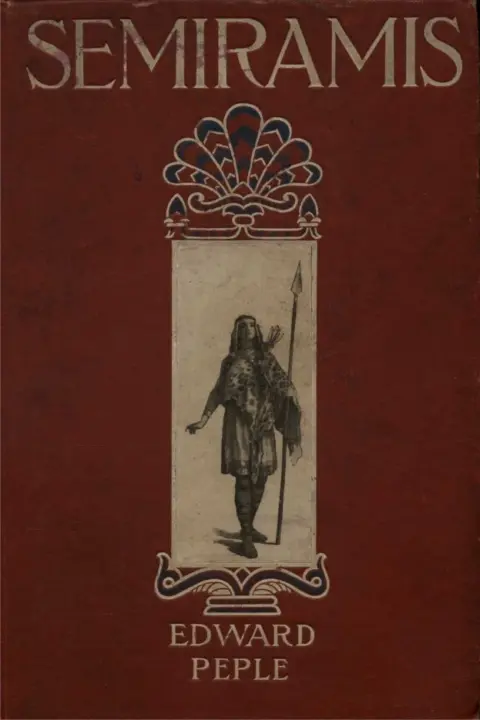
Semiramis: A Tale of Battle and of Love
Edward Peple
THE CLASSIC COLLECTION · 1914
"The Littlest Rebel" by Edward Peple is a novel written in the early 20th century. The story revolves around a young girl named Virginia "Virgie" Cary, who navigates the complexities and harsh realities of life during the Civil War, particularly the impact that the conflict has on her family and home. With a blend of childhood innocence and the burdens of war, the novel touches on themes of loyalty, bravery, and the spirit of humanity amidst strife. At the start of the narrative, we are introduced to Mrs. Cary and her daughter Virgie, who are struggling to maintain a semblance of normalcy despite the looming war. Virgie's playful imagination brings a moment of levity as she and her playmate, Sally Ann, engage in a game based on the story of Blue Beard. However, the play is interrupted by the harsh realities of war and its effects on their lives. Through Mrs. Cary and Uncle Billy, we learn about the family's challenges, including poverty and the looming threat of Union soldiers, while Virgie's innocent and spirited responses highlight her resilience in the face of adversity. As the chapter unfolds, we sense the growing tension and uncertainty that permeates their lives, setting the stage for the conflicts to come.
Introduction adapted from the source catalogue; source summaries may be automatically generated.
Free to read · English · 43,847 words · No account needed
MAKE TIME FOR A GOOD BOOK
On by default. Untick to stop anonymous reading totals. Each page counts after 10 seconds in view. How this works.
Anonymous counting is on unless you have switched it off.
The child had been standing opposite, with Susan Jemima and the acorn-coffee pot between them; but gradually she began to edge a little nearer, till presently she stood beside him, fingering a shiny button on his coat.
"An' the blue boys ate up everything we had--an' took our corn. An' when they went away from our house, they--a man set it on fire. But another man got real mad with him, an'--an' shot him. I know, 'cause Uncle Billy put him in the ground." She paused, then sank her voice to a whisper of mysterious dread, "An'--an' I saw him!"
"Don't think about it, Virgie," begged Morrison, slipping his arm about the mite, and trying not to put his own beloved ones in the little rebel's place. "What happened then?"
"We came to live here," said Virgie; "but Mamma got sick. Oh, she got terrible sick--an' one night Daddy came through, and put her in the ground, too. But he says she's jus' asleep."
The soldier started. Mrs. Cary dead? This poor tot motherless? He drew the baby closer to him, stroking her hair, as her sleeping mother might have done, and waited for the rest.
"An' las' Friday, Sally Ann went away--I don't know where--an'--"
"What?" asked Morrison. "She left you here--all by yourself?"
"Yes, sir," said the child, with a careless laugh. "But I don't mind. Sally Ann was a triflin' nigger, anyhow. You see--"
"Wait a minute," he interrupted, "what became of the old colored man
who--"
"Uncle Billy? Yes, sir. We sent him up to Richmond--to get some things, but he can't come back--the Yankees won't let him."
"Won't they?"
"No, sir. An' Daddy's been tryin' to get me up to Richmon', where my Aunt Margaret lives at, but he can't--'cause the Yankees are up the river an' down the river, an'--an' everywhere--an' he can't." She paused, as Morrison turned to her from his restless pacing up and down. "My, but you've got fine clo'es! Daddy's clo'es are all rags--with--with holes in 'em."
He could not answer. There was nothing for him to say, and Virgie scorched him with another question:
"What did you come after Daddy for?"
"Oh, not because I wanted to, little girl," he burst out harshly. "But you wouldn't understand." He had turned away, and was gazing through the open door, listening to the muttered wrath of the big black guns far down the river. "It's war! One of the hateful, pitiful things of war! I came because I had my orders."
"From your Gen'ral?"
He lowered his chin, regarding her in mild astonishment.
"Yes--my General."
"An' do you love him--like I love Gen'ral Lee?"
Your reading position is saved on this browser. Take it to another device with a library code. Reading pages adapt to text, rather than matching a printed edition.
BEHIND THE BOOK
This eBook is for the use of anyone anywhere in the United States and most other parts of the world at no cost and with almost no restrictions whatsoever. You may copy it, give it away or re-use it under the terms of the Project Gutenberg License included with this eBook or online at www.gutenberg.org. If you are not located in the United States, you will have to check the laws of the country where you are located before using this eBook. Read the source licence.
The original source file, including credits and licence, is retained by this library. Request an original-format copy at no charge. Please include the book title and Project Gutenberg identifier #15414.
KEEP YOUR CURIOSITY GOING
Cécile Tormay

Moritz Busch
Coulson Kernahan
John L. Ransom

Maurice Baring
Frances Wright