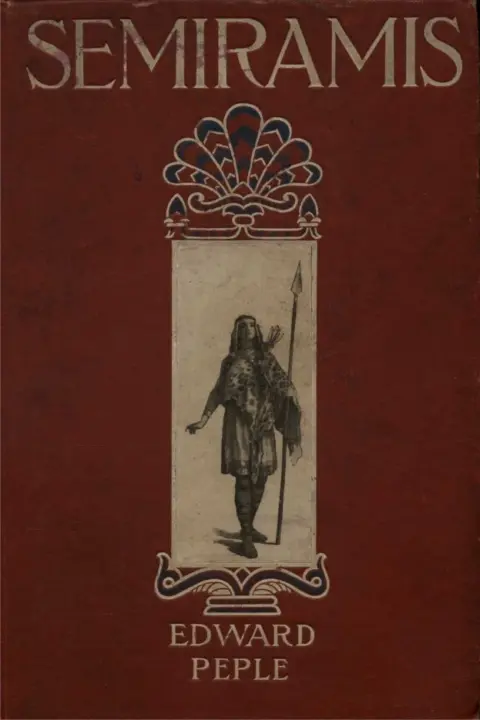
Semiramis: A Tale of Battle and of Love
Edward Peple
THE CLASSIC COLLECTION · 1914
"The Littlest Rebel" by Edward Peple is a novel written in the early 20th century. The story revolves around a young girl named Virginia "Virgie" Cary, who navigates the complexities and harsh realities of life during the Civil War, particularly the impact that the conflict has on her family and home. With a blend of childhood innocence and the burdens of war, the novel touches on themes of loyalty, bravery, and the spirit of humanity amidst strife. At the start of the narrative, we are introduced to Mrs. Cary and her daughter Virgie, who are struggling to maintain a semblance of normalcy despite the looming war. Virgie's playful imagination brings a moment of levity as she and her playmate, Sally Ann, engage in a game based on the story of Blue Beard. However, the play is interrupted by the harsh realities of war and its effects on their lives. Through Mrs. Cary and Uncle Billy, we learn about the family's challenges, including poverty and the looming threat of Union soldiers, while Virgie's innocent and spirited responses highlight her resilience in the face of adversity. As the chapter unfolds, we sense the growing tension and uncertainty that permeates their lives, setting the stage for the conflicts to come.
Introduction adapted from the source catalogue; source summaries may be automatically generated.
Free to read · English · 43,847 words · No account needed
MAKE TIME FOR A GOOD BOOK
On by default. Untick to stop anonymous reading totals. Each page counts after 10 seconds in view. How this works.
Anonymous counting is on unless you have switched it off.
"Well, that's a fact," he laughed. "Hanged if I'm not losing all my social polish." He gallantly removed his hat, bowed gravely to the cedar stick, and shook its hand. "Charmed to make your acquaintance, Miss Susan, believe me. My own name is Morrison--Lieutenant-Colonel Morrison--at your service." He turned to the little mother with a smile that showed a row of white and even teeth. "And now," he said, "since we are all informally introduced, suppose we have a quiet, comfortable chat." He paused, but she made no answer. "Well? Aren't you going to ask me to have some breakfast?"
Virgie cast a troubled gaze into the plate before her.
"Er--no, sir."
"What? Why not?"
She faltered, and answered slowly:
"'Cause--'cause you're one of the damn Yankees."
"Oh! oh! oh!" exclaimed the soldier, shocked to hear a baby's lips profaned. "Little girls shouldn't use such words. Why, Virgie!"
She raised her eyes, clear, fearless, filled with vindicating innocence.
"Well, it's your name, isn't it? Everybody calls you that."
"Um--yes," he admitted, striving to check the twitching of his lips; "I suppose they do--south of Washington. But don't you know we are just like other people?" She shook her head. "Oh, yes, we are. Why, I have a little girl at home--not any bigger than you."
"Have you?" asked Virgie, her budding racial prejudice at war with youthful curiosity. "What's her name?"
"Gertrude," he answered softly, tenderly. "Gertrude Morrison. Would you like to see her picture?"
"Yes," said the little rebel, and stepped across the gulf which had lain between her and her enemy. "You can sit down if you want to. Jus' put Susan Jemima on the table."
"Thank you," returned her visitor, obeying instructions, seating himself and loosening the upper buttons of his coat. On his neck, suspended by a chain, was a silver locket containing the miniature of a plump and pretty child. It had lain there since the war began, through many a bivouac, many a weary march, and even in the charge he could feel it tapping against his breast; so now, as he held it out to Virgie, the father's hand was trembling.
"There she is. My Gertrude--my little Gertrude."
Virgie leaned forward eagerly.
"Oh!" she said, in unaffected admiration, "She's mighty pretty. She's--" The child stopped suddenly, and raised her eyes. "An' she's fat, too. I reckon Gertrude gets lots to eat, doesn't she?"
"Why, yes," agreed the father, thinking of his comfortable Northern home; "of course. Don't you?"
Virgie weighed the question thoughtfully before she spoke.
"Sometimes--when Daddy gets through the lines and brings it to me."
Your reading position is saved on this browser. Take it to another device with a library code. Reading pages adapt to text, rather than matching a printed edition.
BEHIND THE BOOK
This eBook is for the use of anyone anywhere in the United States and most other parts of the world at no cost and with almost no restrictions whatsoever. You may copy it, give it away or re-use it under the terms of the Project Gutenberg License included with this eBook or online at www.gutenberg.org. If you are not located in the United States, you will have to check the laws of the country where you are located before using this eBook. Read the source licence.
The original source file, including credits and licence, is retained by this library. Request an original-format copy at no charge. Please include the book title and Project Gutenberg identifier #15414.
KEEP YOUR CURIOSITY GOING
Cécile Tormay

Moritz Busch
Coulson Kernahan
John L. Ransom

Maurice Baring
Frances Wright